What Medical Equipment Can and Can't Be Recycled
- Free pickupFor eligible jobs
- Own teamNo subcontractors
- Blancco erasureFor data bearing devices
- Recycling certificateFor every job
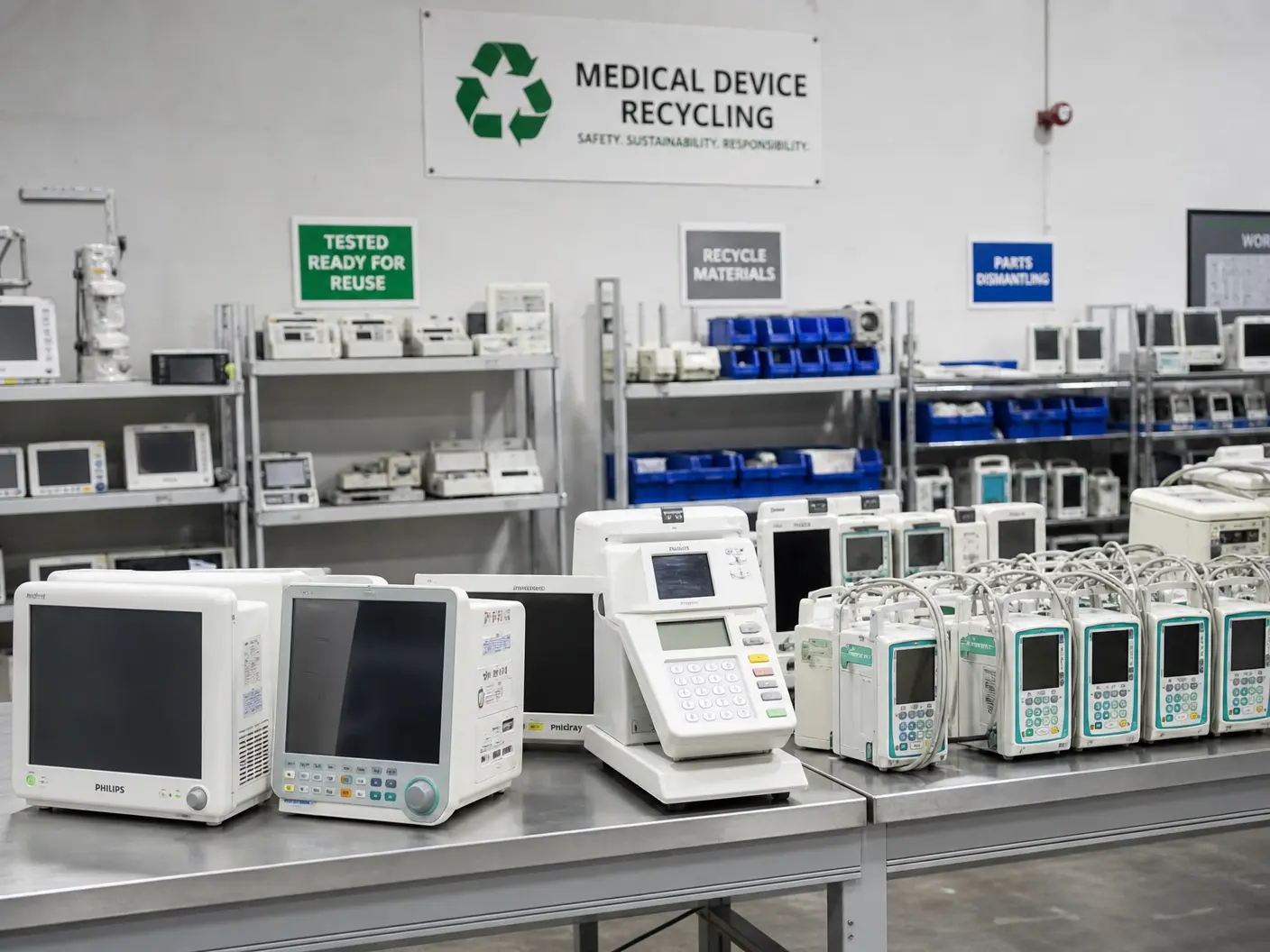
Medical equipment recycling starts with one simple question: which healthcare, laboratory and diagnostic devices can be recycled and which items need a separate clinical, hazardous, chemical or specialist disposal pathway? This guide gives Australian clinics, hospitals, pathology laboratories and healthcare facilities a practical device list.
Medical equipment recycling is not the same as throwing old healthcare equipment into a general e-waste bin. Medical and laboratory devices can contain circuit boards, batteries, screens, motors, wiring, stainless steel, copper, internal storage, sensitive data, fluids, tubing, sample pathways, refrigeration components and specialist materials. Some items are suitable for recycling after preparation, while others must be excluded because they are clinical waste, sharps, pharmaceutical waste, chemical waste, radioactive materials or contaminated consumables.
This guide explains what can and can’t be recycled in a practical way. It is designed for practice managers, facility managers, biomedical engineers, pathology teams, clinic owners, dental practices, imaging centres and aged care operators who need to clear retired equipment safely and responsibly. If you want the main service overview, read our pillar page for medical equipment recycling in Australia.
The goal is to make equipment classification easier before collection. When the right items are separated early, recycling is safer, pickup is faster, reporting is clearer and healthcare facilities avoid mixing recyclable equipment with waste streams that need different controls.
Quick Answer: What Medical Equipment Recycling Covers
Most durable electrical or electronic medical equipment can be considered for recycling if it is safe to handle, free from loose clinical waste and properly prepared. This includes many types of patient monitors, ECG machines, infusion pumps, ultrasound systems, laboratory analysers, centrifuges, autoclaves, medical computers, imaging workstations, microscopes with electronic components, fridges, freezers and other data-bearing healthcare equipment.
In general, a device may be suitable for recycling if it has a plug, battery, screen, motor, circuit board, sensor, internal electronics, cable, controller, data storage component or electronic power system. It does not need to be working. Broken, obsolete, surplus, damaged, replaced and end-of-life devices may still contain valuable recoverable materials.
A Simple Rule for Equipment Recycling
If the item is a durable healthcare or laboratory asset, contains electrical or electronic components and can be made safe for transport, it may be recyclable. If it is a contaminated consumable, sharp, chemical, medicine, biological material or radioactive source, it should not be placed into the standard medical e-waste stream.
Why This Matters
Correct separation protects staff, collection teams, recycling facilities and the environment. It also helps your organisation create a clear audit trail for equipment removal, data security and sustainability reporting.
Key Point
The equipment itself may be recyclable, but loose clinical waste inside or attached to it can change the handling requirements.
Australia-Wide Context
Healthcare facilities in Australia should always follow their own infection-control, privacy, work health and safety and waste management procedures before arranging pickup.
Device Recycling Device List: What Can Be Recycled?
The following list covers common device categories that are often suitable for recycling after assessment and preparation. The exact process depends on condition, size, data risk, contamination status, batteries, access requirements and whether deinstallation is required.
| Device Category | Examples That Can Often Be Recycled | Preparation Notes | Common Recoverable Materials |
|---|---|---|---|
| Patient monitoring | Patient monitors, ECG/EKG machines, pulse oximeters, fetal monitors, telemetry units | Check for patient data, batteries, accessories and cables | Plastics, circuit boards, screens, wiring, batteries |
| Laboratory and pathology | Centrifuges, analysers, PCR machines, incubators, spectrophotometers, microscopes | Remove samples, consumables, fluids and reagents before collection | Steel, aluminium, motors, circuit boards, optics |
| Imaging and diagnostics | Ultrasound systems, imaging workstations, CR/DR components, monitors, medical printers | Review data storage, probes, accessories and deinstallation needs | Copper, circuit boards, screens, plastics, metal frames |
| Sterilisation equipment | Autoclaves, ultrasonic cleaners, sterilisation support equipment | Empty, cool, clean and disconnect according to site procedures | Stainless steel, heating elements, controls, wiring |
| Healthcare IT | Clinical computers, servers, tablets, laptops, printers, scanners, network devices | Sanitise, remove or destroy storage media before recycling | Hard drives, SSDs, circuit boards, metals, plastics |
Patient Monitoring and Clinical Devices
Patient monitoring equipment is one of the most common categories in recycling. These devices are regularly upgraded because of technology changes, software requirements, failed screens, battery issues, sensor compatibility or hospital asset replacement cycles.
Retiring bedside monitors, central stations or defibrillators? See our guide to patient monitor disposal.
For ICU, transport and anaesthesia ventilators, see our guide to ventilator disposal.
Common Recyclable Monitoring Devices
- Patient monitors and bedside monitors
- ECG and EKG machines
- Pulse oximeters and monitoring modules
- Fetal monitors and telemetry units
- Vital signs monitors
- Central monitoring station components
- Defibrillators and related powered accessories after assessment
- Blood pressure monitors with electronic components
These items may contain screens, boards, batteries, plastics, wiring, sensors and in some cases stored data or device logs. Before pickup, remove disposable accessories, clean the unit according to internal procedures and identify any battery or data concern.
Laboratory and Pathology Equipment That Can Be Recycled
Laboratory equipment can be highly recyclable because many devices contain metal frames, motors, stainless steel, optics, circuit boards, copper, power supplies and electronic controls. However, laboratory equipment can also contain residues, reagents, sample contact areas or fluids, so preparation is essential.
A laboratory device may be accepted into a equipment recycling stream only after loose consumables, samples, reagent packs and hazardous residues are removed. If the equipment has handled biological or chemical materials, the facility should follow its internal cleaning and decontamination procedure before collection.
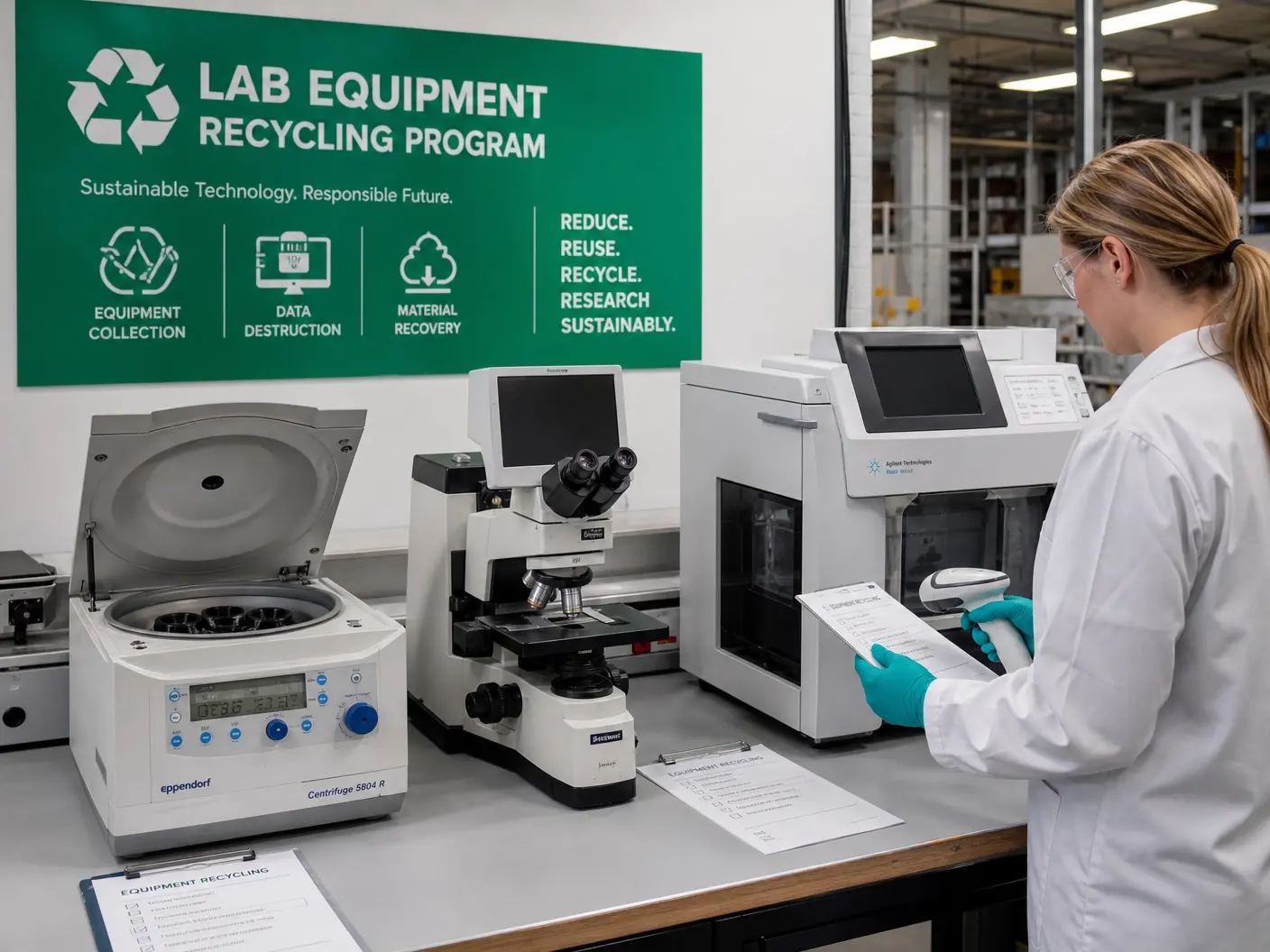
For a full guide to certified collection and data destruction, see our dedicated page on pathology equipment disposal Australia.
Common Recyclable Laboratory Devices
- Centrifuges and refrigerated centrifuges
- Chemistry analysers and clinical analysers
- Hematology analysers and coagulation analysers
- PCR machines and thermal cyclers
- Microplate readers and spectrophotometers
- Incubators, lab ovens and water baths
- Laboratory refrigerators and ULT freezers
- Microscopes with cameras, lighting or digital systems
- Electrophoresis systems and gel documentation systems
- Flow cytometers, genetic analysers and sample processing devices
- Shakers, mixers, vortex units and sample preparation systems
Preparation Notes for Laboratory Equipment
- Remove all samples, tubes, plates, tips, reagents and disposable consumables.
- Drain fluids where applicable and safe to do so.
- Clean accessible surfaces according to laboratory procedures.
- Label units that have been decontaminated or prepared for transport.
- Identify refrigeration equipment, batteries, fluids or unusual hazards.
- Take photos of the unit, model plate, rear connections and accessories.
Imaging and Diagnostic Equipment That Can Be Recycled
Imaging equipment is often more complex than small clinical equipment because it may be heavy, networked, data-bearing, installed, connected to accessories, or located in rooms with restricted access. It may still be recyclable, but the project usually needs planning.
Imaging Examples for Device Recycling
- Ultrasound machines and carts
- Ultrasound probes and accessories after assessment
- Imaging workstations and diagnostic monitors
- Medical printers and scanners
- CR and DR detector components
- X-ray system accessories and electronic components
- C-arm components after deinstallation review
- Mammography-related electronic equipment
- CT scanner support electronics and selected components
Data review is especially important for imaging equipment. Ultrasound systems, workstations and diagnostic computers may store patient images, names, study files, logs or network settings. Before recycling, storage media should be identified and handled according to the organisation’s data security requirements.
Sterilisation Equipment and Recycling
Sterilisation equipment can often be recycled when it is empty, disconnected, cooled, cleaned and safe to handle. Autoclaves and ultrasonic cleaners are common examples. These devices may contain stainless steel chambers, electrical controls, heating elements, boards, wiring and metal housings.
Dental practices retire chairs, delivery units, compressors and sterilisers too. See our guide to dental chair disposal for dental equipment recycling across Australia.
Recyclable Sterilisation Devices
- Bench autoclaves
- Large autoclaves after deinstallation assessment
- Ultrasonic cleaners
- Sterilisation support equipment
- Washer-disinfector electronic components after review
- Control panels and related powered accessories
These items should not be collected with instruments, sharps, loose clinical waste or unclean consumables inside them. Before pickup, remove trays and loose items where appropriate, make sure chambers are empty and confirm whether professional disconnection is required.
Healthcare IT and Data-Bearing Devices
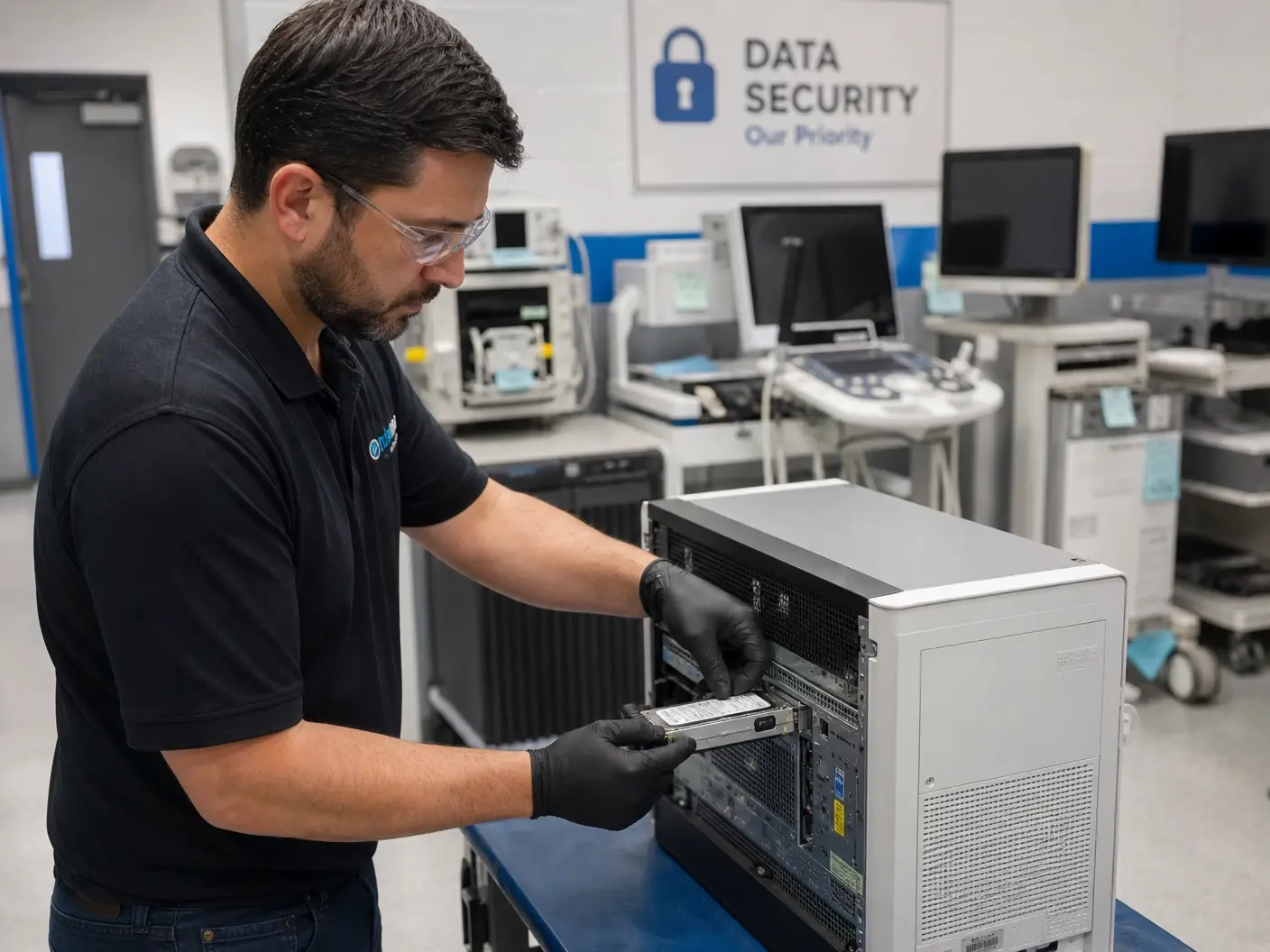
Healthcare IT equipment is often recyclable, but it can carry serious privacy risks. Computers, laptops, tablets, servers, printers, workstations and medical-grade IT devices may contain patient data, business records, diagnostic images, software credentials or network information.
For data-bearing devices, equipment recycling should include a clear data handling step. Storage media may need to be wiped, removed, destroyed or documented before the device is processed. The Australian Cyber Security Centre provides guidance for media sanitisation and healthcare organisations should apply their own data protection policies before releasing equipment.
Healthcare IT in Device Recycling
- Clinical desktop computers and all-in-one workstations
- Medical laptops and tablets
- Servers, backup units and network equipment
- Medical printers, scanners and multifunction devices
- Hard drives, SSDs, USB media and memory cards after secure handling
- Diagnostic workstations connected to analysers or imaging systems
What Can’t Be Recycled Through Standard Medical E-Waste Channels?
Not every healthcare item belongs in an electronic recycling stream. Some items are not electronic. Some are contaminated. Some are consumables. Some contain chemicals, medicines or biological materials. Some may require a licensed clinical, hazardous, pharmaceutical, chemical or radiation waste contractor before any recycling can be considered.
These exclusions are important because one contaminated or unsuitable item can create safety issues for staff, collection teams and recyclers. A clean patient monitor may be suitable for recycling. A box of used needles is not. A retired centrifuge may be suitable after preparation. Unremoved sample tubes and biological residues are not part of standard recycling.
| Not Suitable for Standard E-Waste Recycling | Examples | Why It Is Excluded | Likely Alternative Pathway |
|---|---|---|---|
| Sharps | Needles, scalpels, lancets, blades | Injury and infection risk | Approved sharps container and sharps disposal |
| Clinical waste | Blood-contaminated items, dressings, gowns, swabs | Potential infection or contamination risk | Clinical waste stream |
| Pharmaceutical waste | Expired medicines, medicine residue, drug containers with contents | Chemical and regulatory risk | Pharmaceutical waste disposal |
| Chemical waste | Reagents, solvents, disinfectants, chemical containers with residue | Hazardous substance risk | Hazardous chemical waste contractor |
| Radioactive materials | Radiation sources, isotopes, contaminated shielding | Specialist radiation control requirements | Licensed radiation waste pathway |
Items That Need Assessment Before Equipment Recycling
Some equipment is not automatically accepted or rejected. It needs assessment. This usually applies to equipment that is large, installed, contaminated, unknown, data-bearing, fluid-filled, battery-powered, refrigerated or connected to gases, water, drains, vacuum, network systems or building services.
Devices That May Need Extra Review
- Large imaging systems and installed equipment
- Equipment connected to water, gas, vacuum, drains or building services
- Refrigerators, freezers and devices with refrigeration components
- Laboratory analysers with internal fluid lines or reagent pathways
- Devices with unknown contamination history
- Battery-powered devices with damaged or swollen batteries
- Equipment that may contain hard drives, SSDs or embedded storage
- Devices that have been exposed to infectious or hazardous materials
Assessment does not mean the item cannot be recycled. It means the recycler needs more information before confirming the best pathway. Photos, model numbers, location details and condition notes can make this much easier.
Can Large Medical Equipment Be Recycled?
Yes, many large medical and laboratory assets can be recycled, but they usually require planning. Heavy devices may need deinstallation, disconnection, dismantling, lifting equipment, palletising, crating, access checks or project coordination. Examples include large autoclaves, imaging equipment, surgical tables, laboratory freezers, analysers and large laboratory systems.
Cardiac theatres and intensive care units also retire large perfusion systems. See our guide to heart lung machine disposal for ECMO consoles, heater cooler units and perfusion equipment.
Large-item device recycling works best when the facility provides clear details before pickup. This includes floor level, room access, doorway size, lift availability, loading dock access, parking restrictions, estimated weight, photos and whether the equipment is still connected.
Large Items Commonly Reviewed for Recycling
- Surgical tables and operating room equipment
- Large autoclaves and sterilisation systems
- Laboratory freezers and ULT freezers
- High-volume analysers and sample processing systems
- Ultrasound carts and imaging workstations
- C-arm and X-ray-related components
- Large fume hoods or cabinets with electrical components
What Equipment Recycling Recovers from a Device
Recyclable healthcare equipment can contain useful materials that should not be wasted. Depending on the device, materials may include stainless steel, aluminium, copper, plastics, screens, circuit boards, wiring, motors, transformers, batteries, glass, housings, pumps and mechanical parts.
The Australian Government describes e-stewardship as managing electrical and electronic products across their life cycle, with the aim of reducing waste and recovering valuable materials. This is why proper separation and preparation are important: the more clearly equipment is sorted, the better the recovery pathway can be.
Materials Recovered in Device Recycling
Steel and stainless steel
Frames, chambers, panels, trays and housings.
Aluminium
Lightweight frames, panels and internal structures.
Copper
Wiring, motors, transformers and cables.
Circuit boards
Controllers, displays, analyser electronics and IT hardware.
Plastics
Covers, trays, cases, knobs and non-contaminated components.
Batteries
Portable medical equipment, UPS systems and monitoring devices.
Glass and screens
Monitors, displays and diagnostic interfaces.
How to Decide if a Device Suits Recycling
A quick decision process can help staff classify equipment before contacting a recycling provider. The aim is not to make clinical staff recycling experts, but to separate obvious recyclable assets from items that need clinical, chemical, pharmaceutical or hazardous disposal.
- Does the item have a plug, battery, cable, screen, motor, circuit board or electronic control?
- Was it used in a clinic, hospital, laboratory, dental, veterinary, imaging or research setting?
- Has all loose clinical waste, sharps, samples and consumables been removed?
- Has the item been cleaned or decontaminated according to internal procedures?
- Does the device contain patient data, internal memory, hard drives or network settings?
- Does the item contain batteries, refrigerants, fluids, chemicals or hazardous components?
- Does it require deinstallation, lifting, palletising, crating or special access?
If the item meets the electronic equipment criteria and can be safely prepared, it may be suitable for equipment recycling. If any answer raises a safety, contamination, data or hazardous materials concern, flag it before collection.
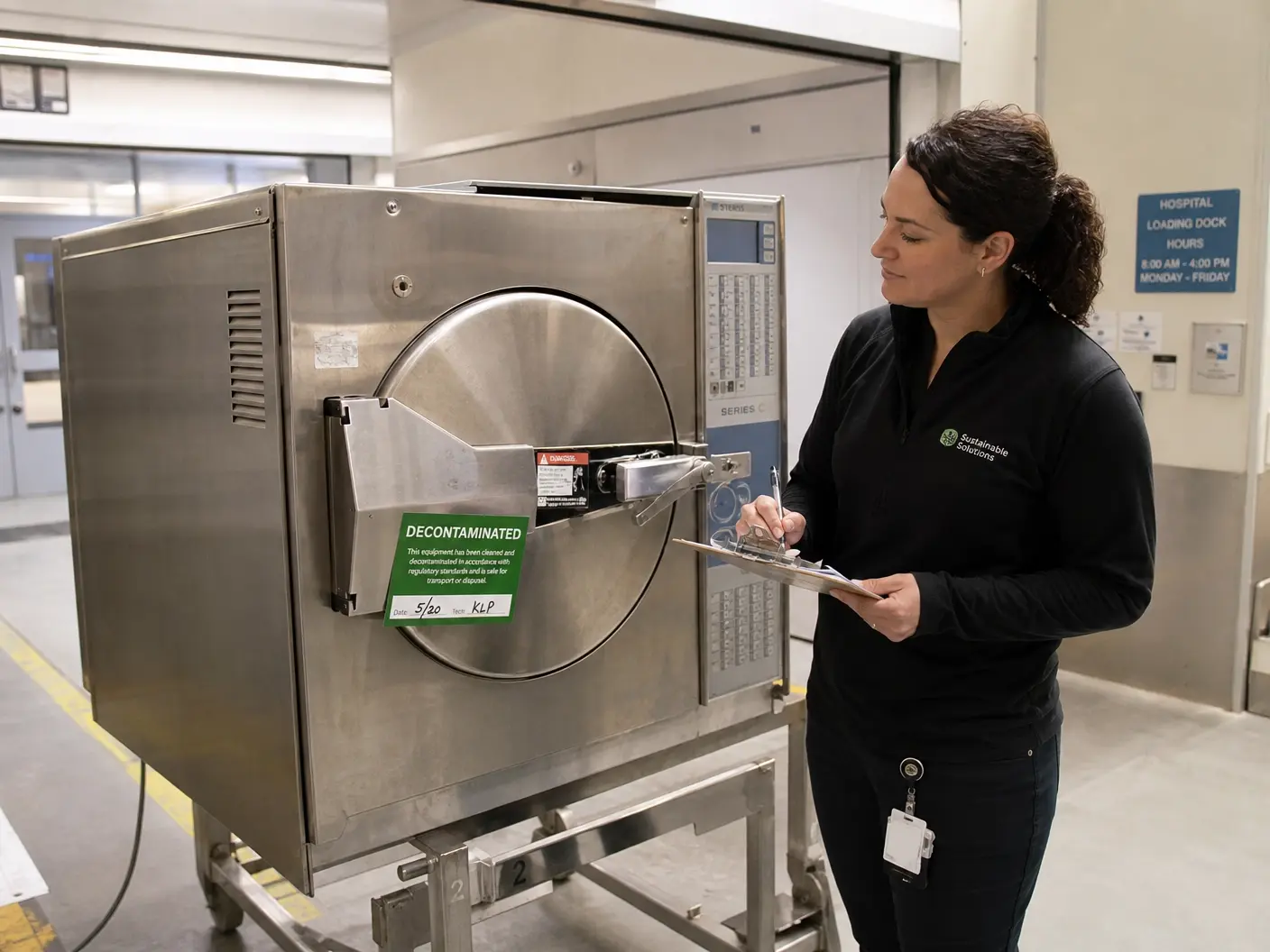
Device Recycling Preparation Checklist
Once you identify devices that can be recycled, preparation becomes the next step. A well-prepared pickup reduces delays and helps the recycling team plan the right vehicle, handling method and documentation.
Before Collection, Prepare These Details
- Equipment name, brand, model and quantity
- Photos of the front, back, label plate and accessories
- Location inside the facility and floor level
- Estimated size, weight and handling requirements
- Whether the device is working, faulty, damaged or unknown
- Whether it may contain patient data or storage media
- Whether batteries, fluids, refrigerants or hazards are present
- Whether the device has been cleaned or decontaminated
- Loading dock, lift, stairs, parking and access notes
Common Recycling Mistakes to Avoid
1. Mixing Recyclable Equipment with Clinical Waste
Clinical waste and e-waste should be kept separate. NSW Health describes clinical waste as waste from medical, nursing, dental, pharmaceutical, skin penetration or related clinical activity that can cause injury, infection or offence. NSW EPA also treats clinical and related waste as a special waste category with specific management requirements.
2. Forgetting About Data-Bearing Devices
Medical computers, imaging systems, printers, workstations and diagnostic devices can hold sensitive data. Always check for hard drives, SSDs, memory cards and internal storage before recycling.
3. Assuming Broken Equipment Has No Value
Non-working devices may still contain recoverable materials such as metals, circuit boards, batteries and screens. Broken does not mean unrecyclable.
4. Leaving Consumables Inside Equipment
Sample tubes, reagent packs, pipette tips, disposable sensors, sharps and tubing should be removed through the appropriate internal waste pathway before collection.
5. Booking Pickup Without Photos
Photos help confirm device type, condition, access needs and whether special handling is needed. This is especially important for large, installed or unusual items.
Useful Australian References
For broader national policy on electrical and electronic product stewardship, see Australian Government e-stewardship information. For product stewardship frameworks, see DCCEEW Product Stewardship in Australia.
For clinical waste separation and handling context, see NSW Health clinical waste management and NSW EPA clinical and related waste. For data-bearing equipment, see the Australian Cyber Security Centre media sanitisation guidance.
Conclusion: A Clear List Makes Equipment Recycling Safer
Device recycling becomes much easier when facilities know which devices belong in the recycling stream and which items need another pathway. Durable electronic medical, laboratory, imaging and healthcare IT equipment can often be recycled after assessment and preparation. Sharps, clinical waste, biological materials, pharmaceuticals, chemicals and radioactive materials should not be mixed into standard e-waste collections.
The best approach is to create a simple asset list, take photos, remove consumables, clean equipment according to internal procedures, check data-bearing devices, identify batteries or hazards and confirm access requirements before pickup. This protects staff, supports safe transport, improves documentation and helps recover valuable materials from retired healthcare technology.
If your clinic, hospital, laboratory or imaging centre is unsure whether a device can be recycled, start with the device list in this guide and request an assessment before collection. A structured approach helps your organisation avoid landfill, reduce risk and manage end-of-life equipment responsibly.
Book a Recycling Pickup
Send your equipment list, photos and location details to E-Waste Collect. We can help assess what can be recycled, what needs special handling and how to prepare your medical or laboratory equipment for pickup.
Book a Free PickupWho Uses This Equipment Recycling List
Practice managers, biomedical engineers, pathology supervisors and facility teams use this device recycling list in three moments: at an annual asset review, during a refit or relocation and when a device fails and has to leave the building the same week. In each case the question is the same, which items go into recycling and which ones belong in a clinical, chemical or pharmaceutical stream.
Hospitals and health services
Ward and department clear-outs where equipment recycling runs floor by floor.
Pathology and research laboratories
Analysers, centrifuges and cold storage retired in batches.
GP, dental, ophthalmic and veterinary practices
Single devices and full fit-out replacements.
Aged care and allied health
Monitoring and mobility electronics at end of service life.
Universities and manufacturers
Teaching labs and QC equipment at project close.
If your item is not on this list, send a photo. Device recycling eligibility depends on the device type, condition, quantity, location and access and we confirm all of that before a booking is made.
Recycling FAQ: What Can and Can’t Be Recycled
1) What medical equipment can be recycled?
Many electronic healthcare devices can be recycled, including patient monitors, ECG machines, infusion pumps, centrifuges, analysers, autoclaves, ultrasound systems, medical computers, laboratory equipment and imaging workstations after assessment and preparation.
2) Can laboratory equipment be recycled?
Yes. Laboratory equipment such as centrifuges, analysers, PCR machines, incubators, microscopes, spectrophotometers and lab freezers can often be recycled if samples, reagents, consumables and hazardous residues are removed first.
3) What items cannot go into medical e-waste recycling?
Sharps, needles, contaminated consumables, biological waste, pharmaceutical waste, chemical waste, radioactive materials and unclean sample materials should not be mixed with recyclable electronic equipment.
4) Are broken medical devices recyclable?
Often, yes. Broken or non-working devices may still contain recoverable materials such as metal, copper, circuit boards, screens, batteries and plastic housings. They still need assessment for safety, data and contamination risks.
5) Can ultrasound machines be recycled?
Ultrasound machines can often be recycled after data review, accessory assessment and safe handling planning. Probes, workstations and carts should be listed and photographed before pickup.
6) Can autoclaves be recycled?
Many autoclaves can be recycled if they are empty, cooled, cleaned, disconnected and safe to move. Larger units may need access planning or deinstallation support.
7) Do medical computers need data wiping before recycling?
Yes. Computers, servers, tablets, printers, imaging workstations and diagnostic systems may contain sensitive data. Storage media should be wiped, removed or destroyed according to the facility’s data security process.
8) Can contaminated equipment be recycled?
Potentially contaminated equipment must be assessed and prepared first. The facility should follow internal cleaning, decontamination and infection-control procedures before recycling is considered.
9) Are batteries recyclable?
Batteries from medical equipment often require separate handling. If a device contains removable, damaged, swollen or unknown batteries, flag this before pickup so the correct process can be planned.
10) How do I know if my device can be recycled?
Start by checking whether it has electronic components, whether it is free from loose clinical waste, whether it has data storage and whether it contains batteries, fluids or hazardous parts. Then send photos and device details for assessment.
Tip: For multi-site clinics and laboratories, prepare one spreadsheet with site location, device type, quantity, condition and photos.What We Do Not Accept
We collect equipment, not waste streams. Please keep the following separate and use your existing licensed providers:
- Hospital beds, bed frames and mattresses
- X-ray film and radiology film archives
- Clinical and biohazard waste
- Sharps such as needles, blades, lancets and scalpels
- Chemicals, solvents, reagents and fixatives
- Samples and biological material, including sample tubes, plates and used consumables
- Pharmaceuticals and medicines
- Pressurised gas cylinders and liquid nitrogen
- Contaminated consumables
- Loose radioactive sources on their own. Equipment with a sealed source still fitted is assessed case by case.
Everything else is welcome, including working, non-working, surplus, outdated, damaged and end-of-life equipment and single personal or home devices such as CPAP machines, nebulisers, blood pressure monitors and mobility equipment.
Laboratory Equipment Recycling and Medical Device Recycling
Laboratory equipment recycling and medical device recycling follow the same logic but hit different obstacles. A clinical device is usually portable and data bearing. Lab equipment recycling is usually heavy, plumbed in, refrigerated or contaminated. The list below is the practical version of what each stream contains and what has to happen before collection.
Lab Equipment Recycling
Analysers and diagnostic platforms
Haematology, biochemistry, immunoassay and molecular systems, drained of reagents and decontaminated.
Centrifuges
Rotors removed, chambers cleaned, refrigerated models processed under refrigerant licence.
Cold storage
Ultra low temperature freezers, plasma freezers, pharmacy and blood bank fridges, emptied and defrosted.
Sterilisers and washer disinfectors
Isolated, drained and cooled before removal.
Microscopes, spectrophotometers, incubators, ovens, water baths and shakers
Fume hoods and biosafety cabinets
, after your decontamination and certification process.
Medical Device Recycling
- Patient monitors, ECG and EEG systems, defibrillators and pulse oximeters
- Infusion and syringe pumps, ventilators and anaesthesia machines
- Ultrasound systems and probes, including ultrasound recycling for cart based and portable units
- Dental chairs, units, compressors and suction systems
- Ophthalmic devices, slit lamps, OCT, phoropters and field analysers
- Imaging hardware, including X-ray machine recycling for fixed, mobile and dental units
Medical Battery Recycling
Almost every portable device now carries a lithium cell and a damaged or swollen cell is a fire risk in transit. Medical battery recycling is handled as its own step: cells are identified during assessment, terminals are taped and batteries travel in fire rated containment rather than inside the device. Flag any swollen, leaking or unknown battery when you book and leave it in place rather than attempting removal.
Medical Device Metal Recovery
Once parts recovery is complete, medical device metal recovery is what gives scrap medical equipment its value. Stainless steel frames and chambers, aluminium castings and rotors, copper motor windings and cabling and the gold, silver and palladium in circuit boards are all recovered through licensed downstream processors. Plastics, glass and insulation are separated at the same time. A broken device is still worth collecting for exactly this reason.
Running a Equipment Recycling Program
For a single clinic a one off booking is enough. For a hospital network, pathology group or university, a device recycling program works better: an agreed asset list format, scheduled collections, a named contact per site, data destruction certificates and a consolidated recycling report. If you retire equipment continuously rather than once a year, this is the setup to ask for.
To see the full service and book a collection, visit medical and laboratory equipment recycling across Australia.