Phacoemulsification Machine Recycling Australia | Phaco Equipment Disposal for Eye Clinics
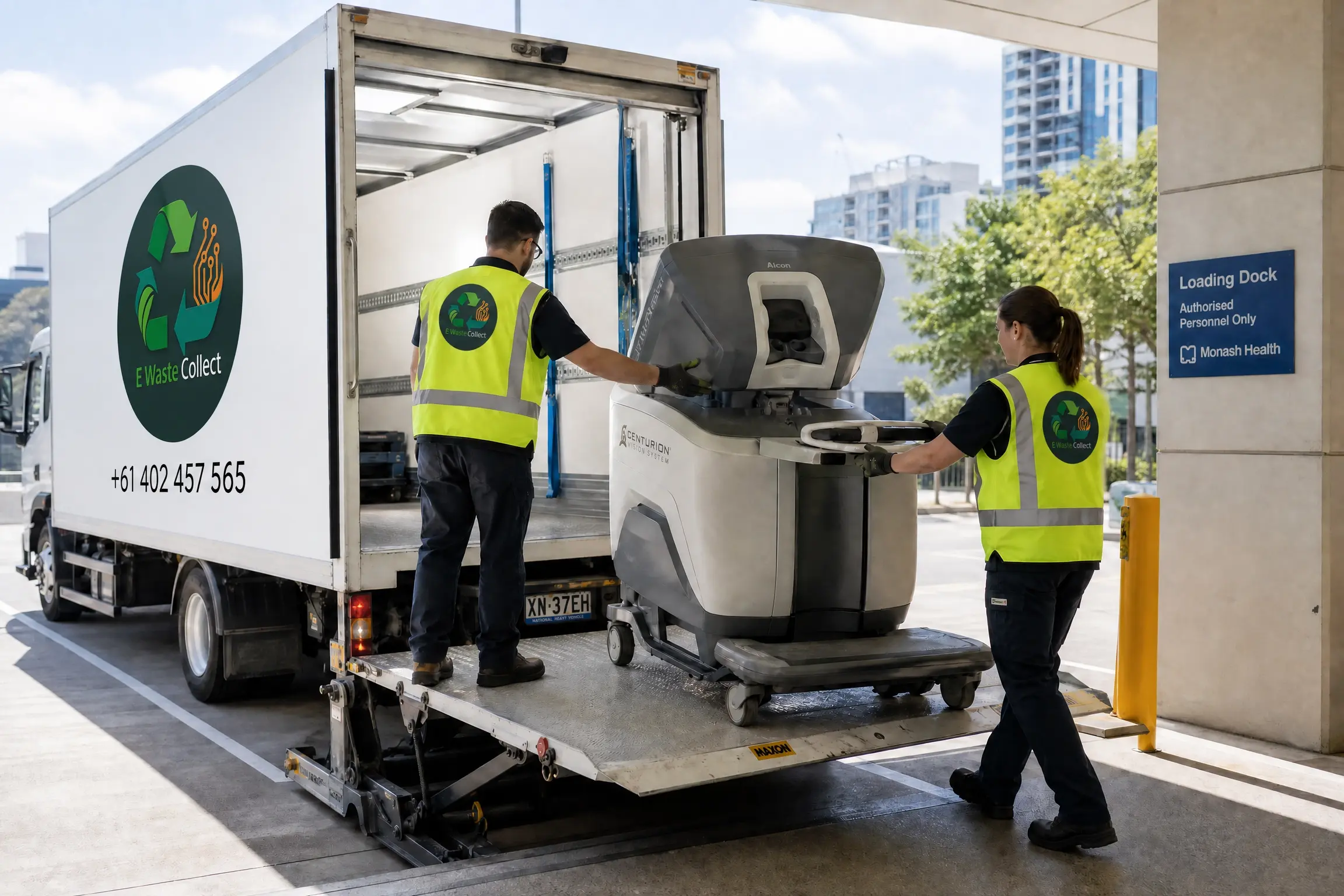
Phacoemulsification machine recycling Australia is a specialist disposal service for ophthalmology practices, day surgery centres, private hospitals, and public hospital eye departments that need to decommission old phaco units safely and with proper documentation. EwasteCollect manages collection, data sanitisation where applicable, and compliant recycling of phacoemulsification machines from all major surgical equipment brands across every Australian state and territory.
When an eye surgery facility is ready to decommission an old phaco unit, phacoemulsification machine recycling Australia is the correct pathway. Phacoemulsification machines are among the highest value pieces of capital equipment in any ophthalmology surgical environment. When a phaco unit reaches end of life, is replaced by a newer platform, or is surplus after a practice merger or closure, it cannot be treated as ordinary rubbish. Phacoemulsification machine recycling Australia requires a structured approach that accounts for the complexity of surgical equipment, the potential presence of digital patient records, and the compliance obligations that apply to healthcare organisations under Australian law.
EwasteCollect provides a dedicated collection and recycling service for phacoemulsification machines across Australia. We work with solo ophthalmology surgeons, private day surgery groups, large private hospital networks, and public hospital procurement teams to manage phaco equipment disposal in a way that is documented, compliant, and straightforward for clinical staff to coordinate.
This page is part of our broader ophthalmology equipment recycling Australia service for eye healthcare providers.
Book Phacoemulsification Machine Collection
Send us your phaco machine brand, model, facility location, and preferred timing. EwasteCollect responds within one business day with a collection plan tailored to your surgical environment.
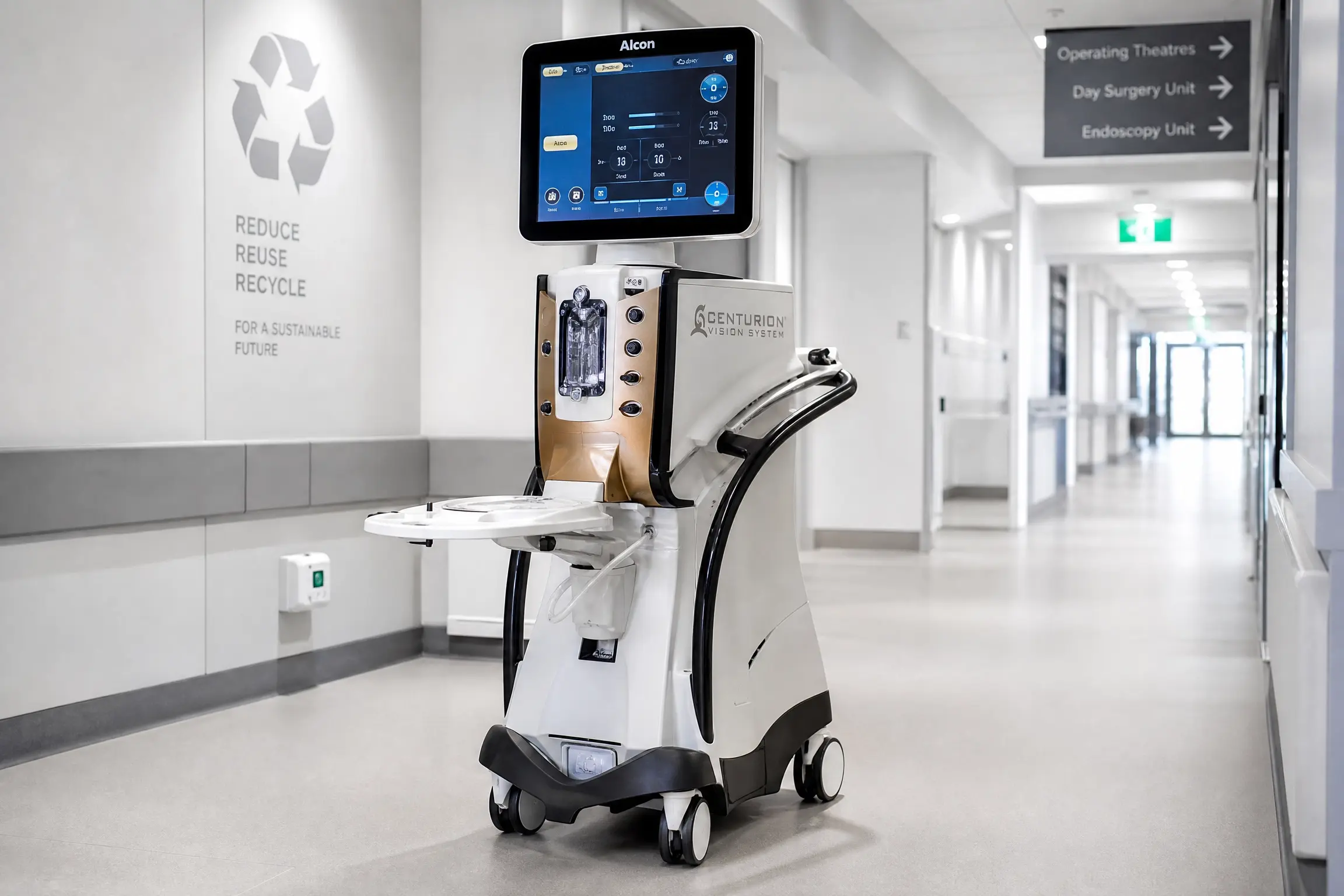
What Is a Phacoemulsification Machine?
Phacoemulsification is the surgical technique used in the vast majority of cataract operations performed in Australia. The phaco machine generates ultrasonic energy that is delivered through a handpiece to emulsify the natural lens of the eye, allowing it to be aspirated and replaced with an intraocular lens. Phacoemulsification has been the gold standard for cataract surgery since the 1990s and remains the dominant technique across Australian public and private eye surgery settings.
What a Phaco Machine Contains and Why It Needs Specialist Recycling
A phacoemulsification machine is a sophisticated surgical instrument. It contains an ultrasonic generator, irrigation and aspiration systems, a console with a touchscreen or digital control panel, foot pedal controls, a range of handpieces and accessories, internal electronics, circuit boards, power supplies, and in modern units, digital logging and software systems that may record case data, surgeon settings, and patient identifiers. Some platforms also integrate vitrectomy and anterior segment surgery capabilities, expanding the hardware footprint further.
Why Phaco Machines Are Replaced Frequently in Australia
Understanding upgrade cycles is important context for phacoemulsification machine recycling Australia. The cataract surgery equipment market moves quickly. Phacoemulsification platforms are upgraded regularly as manufacturers release systems with improved fluidics, ultrasonic efficiency, torsional handpiece technology, femtosecond laser integration capability, and enhanced safety profiles. Australian ophthalmology practices and day surgery centres often upgrade on a 5 to 10 year cycle, or sooner when preferred handpiece systems are discontinued, when service and parts support ends for older models, or when group purchasing decisions standardise a facility across a newer platform.
Common Reasons for Phaco Machine Disposal in Australia
- Upgrade to a newer generation phaco platform with improved fluidics or torsional technology
- End of manufacturer service and parts support for the existing model
- Practice merger, acquisition, or closure resulting in surplus equipment
- Hospital or day surgery capital equipment refresh cycle
- Lease or finance agreement reaching end of term
- Transition to femtosecond laser assisted cataract surgery reducing reliance on older phaco systems
- Multi site ophthalmology group standardising equipment across locations
Why Phacoemulsification Machine Recycling Australia Needs a Specialist
A phacoemulsification machine is not a simple electronic device. It is a complex surgical instrument with multiple subsystems, specialised components, and in many cases digital records that constitute part of the clinical environment. Disposing of a phaco unit through general rubbish removal or handing it to an unqualified party creates regulatory, environmental, and privacy risks for your practice or facility.
Hazardous and Specialist Components Inside a Phaco Machine
Phacoemulsification machines contain components that require specialist recycling pathways. These include printed circuit boards containing lead, cadmium, and brominated flame retardants; ultrasonic transducers and piezoelectric elements; precision fluidic systems with tubing, pumps, and pressure sensors; digital control systems with internal storage; power supplies and capacitors; foot pedal assemblies with electronic controls; display panels and touchscreen components; and handpiece sterilisation interfaces. Each of these requires appropriate handling to avoid hazardous material release and to maximise material recovery.
What a General Rubbish Removal Service Misses
A general rubbish removal team will not ask whether the phaco machine logs case data, whether the console stores surgeon settings linked to patient identifiers, whether the foot pedal or handpiece accessories contain separate recyclable components, or whether the unit requires specific access planning to remove from a surgical suite. A specialist medical equipment recycling service addresses each of these questions as a standard part of the collection process.
Why This Matters for Your Facility
Healthcare organisations in Australia are subject to environmental protection legislation, federal product stewardship obligations, and the Privacy Act 1988.All three are simultaneously satisfied by an appropriate phacoemulsification machine recycling Australia, with supporting paperwork.
Patient Data and Privacy in Phaco Machine Disposal
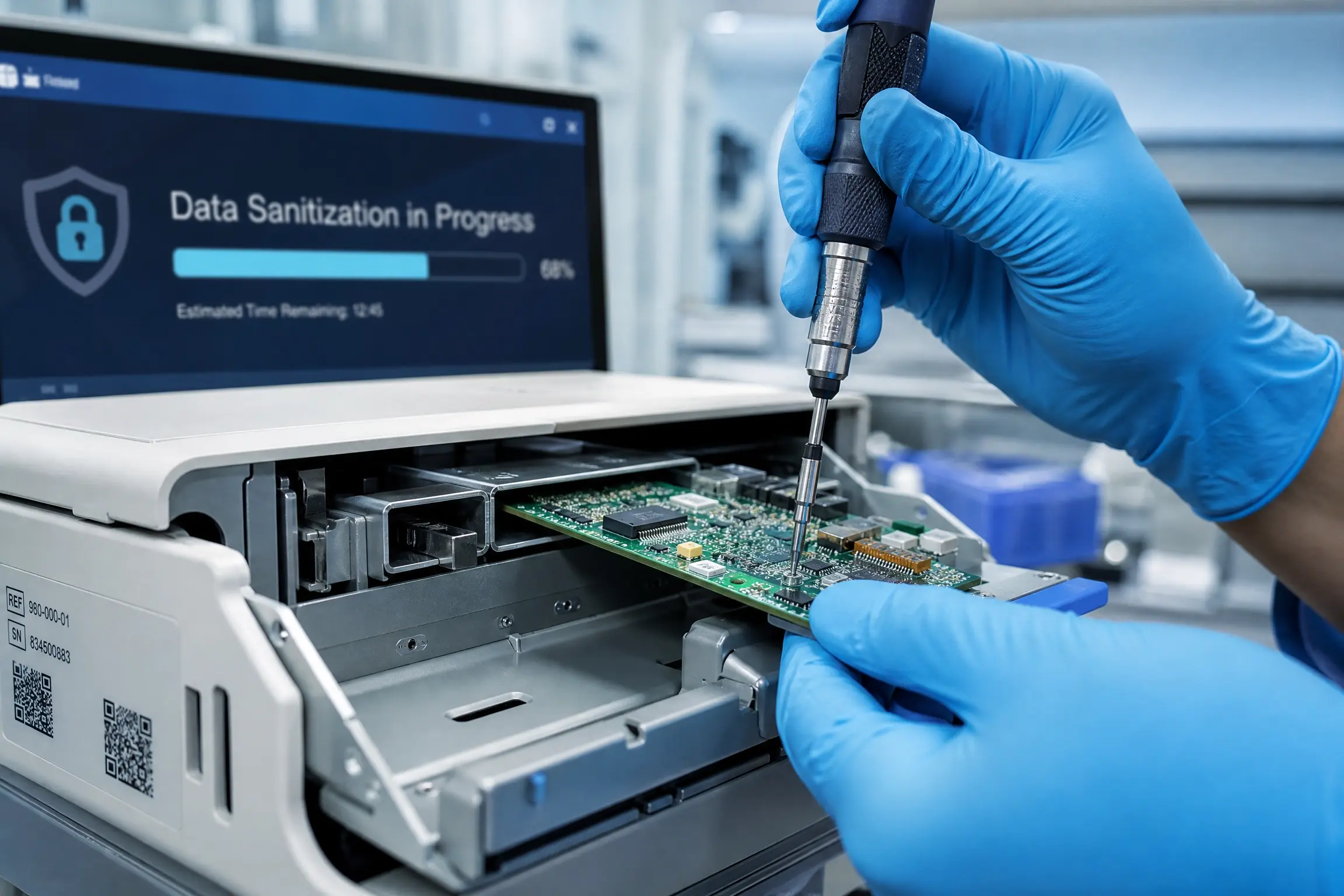
Modern phacoemulsification platforms increasingly include digital systems that log surgical parameters, case counts, surgeon performance metrics, and in some configurations, patient identifiers linked to individual procedures. Before any phaco machine leaves your facility, your team should assess whether the console or connected systems store data that falls within the scope of the Privacy Act 1988 and the Australian Privacy Principles.
EwasteCollect applies a documented data review and sanitisation process to any phaco machine with digital storage capability. You receive a data handling record confirming how the device was assessed and what steps were taken before collection. This is suitable for your facility governance file, hospital procurement records, and any future compliance audit.
Note for Public Hospital Facilities
Public hospital ophthalmology departments are subject to state health department asset disposal frameworks as well as federal privacy obligations. EwasteCollect provides the documentation trail required by public sector procurement and asset retirement processes.
Phacoemulsification Brands We Collect Across Australia
EwasteCollect collects phacoemulsification machines for recycling from all brands used in Australian ophthalmology surgical settings. The most prevalent platforms in Australian facilities are listed in the table below.
| Brand | Common Australian Models | Key Features at Disposal | Data Considerations |
|---|---|---|---|
| Alcon | Centurion Vision System, Infiniti Vision System, Legacy | Active Fluidics, OZil torsional handpiece, digital console | Centurion logs case data and surgeon settings internally |
| Johnson and Johnson Vision | Whitestar Signature Pro, Stellaris Elite | Ellips FX handpiece technology, integrated vitrectomy | Digital console with case logging capability |
| Bausch and Lomb | Stellaris PC, Stellaris Elite | Gravity fluidics, vitreoretinal integration | Console storage dependent on configuration |
| DORC | EVA, Spectalis phaco vitrectomy platforms | Combined phaco and vitrectomy, digital logging | Digital case records may be present |
| Oertli | OS4 Surgical System | Swiss engineering, anterior and posterior segment | Digital settings storage |
| Legacy and Older Systems | Alcon Legacy, early Infiniti, Storz Millennium | Analogue or early digital controls | Minimal digital storage in most older units |
If your phaco machine brand or model is not listed, contact our team. Our phacoemulsification machine recycling Australia service covers all manufacturers and generations of surgical phaco equipment used in Australian clinical practice.
How Phacoemulsification Machine Recycling Australia Works
The phacoemulsification machine recycling Australia process at EwasteCollect is built around the realities of the surgical environment. Operating theatres and day surgery suites have scheduling constraints, infection control requirements, and access limitations that general waste services are not equipped to navigate.
Step 1: Submit Your Collection Request
Contact our team with the phaco machine brand and model, the name and address of your facility, any connected accessories or systems included in the collection, your data handling requirements, and your preferred collection timeframe. We respond within one business day with a confirmed collection plan.
Step 2: Pre Collection Assessment
For phaco machines in active surgical suites or day procedure centres, a pre collection assessment is standard. This covers the physical access pathway from the theatre to the loading area, lift and door clearances for the console, whether the unit is still connected to theatre pendants or gas lines, infection control requirements for entry to the surgical zone, and scheduling around operating lists.
Step 3: Scheduled Collection with Data Review
Our collection team arrives at the agreed time. We safely disconnect and prepare the phaco machine and all included accessories for transport. If the console has digital storage capability, data review and sanitisation is performed as part of this step. A data handling record is generated before the equipment leaves your facility.
What Accessories Are Typically Included
A phaco machine collection often includes more than the console itself. Handpieces, foot pedals, irrigation tubing sets, fluidics cassettes, power cables, connection leads, handpiece storage cases, and reference manuals may all be part of the collection. Listing these items in advance ensures nothing is left behind and the full system is processed correctly.
Step 4: Compliant Recycling and Component Processing
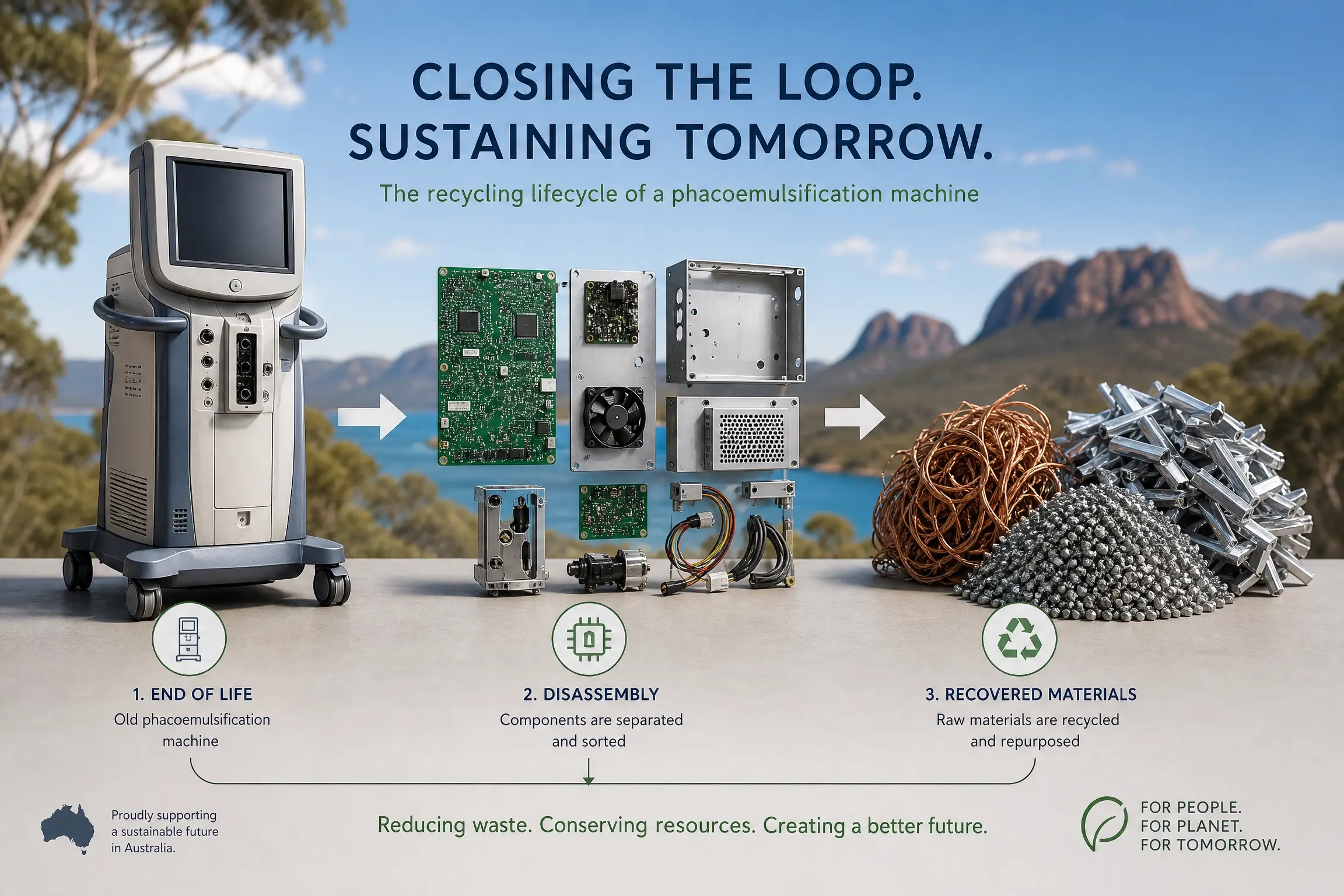
Once collected, phaco machine components are directed to appropriate certified recycling pathways. Electronic assemblies and circuit boards go to specialist e-waste recyclers who recover metals and manage hazardous materials safely. Structural metals including steel and aluminium chassis components are directed to metal recycling. Precision mechanical components receive specialist handling. The result is maximum material recovery with no landfill contribution from your phaco equipment.
Step 5: Documentation for Your Facility
Following collection and processing, EwasteCollect provides your facility with a collection certificate, an asset manifest listing all equipment collected by brand, model, and serial number, and a data handling record. These documents are suitable for hospital asset management systems, day surgery facility governance records, ESG sustainability reporting, and professional college or accreditation body requirements.
Who Uses Phacoemulsification Machine Recycling Australia
Private Ophthalmology Day Surgery Centres
Specialist eye surgery day procedure centres are the most common source of phacoemulsification machine recycling Australia requests. These facilities perform high volumes of cataract surgery and regularly upgrade their phaco platforms. EwasteCollect coordinates collections around operating schedules to minimise disruption to your surgical calendar.
Private Hospital Ophthalmology Departments
Private hospital groups including Ramsay Health Care, Healthscope, and St John of God Health Care operate ophthalmology theatres across Australia. We understand the procurement, asset register, and approval workflows that apply in private hospital settings for capital equipment disposal.
Public Hospital Ophthalmology Departments
Public hospital ophthalmology departments are subject to state health department asset disposal frameworks. EwasteCollect provides the documentation, audit trail, and compliant recycling pathway required for public sector equipment retirement.
Solo and Group Ophthalmology Practices with Surgical Suites
Many Australian ophthalmologists operate their own surgical suites alongside clinical consulting rooms. When a phaco machine is replaced in this setting, EwasteCollect manages the collection as a scheduled, documented process that fits around your surgical calendar.
Multi Site Ophthalmology Groups
Large ophthalmology groups operating across multiple locations often undertake coordinated equipment refreshes. EwasteCollect works with group operations managers to schedule collections across all affected sites with consolidated documentation for the group.
Australian States and Territories We Service
New South Wales and ACT
We collect phacoemulsification machines from surgical facilities across Sydney including the CBD medical precincts, Macquarie Park, North Shore, Parramatta, and Westmead, as well as Newcastle, Wollongong, and regional NSW. Canberra facilities in the ACT are fully serviced.
Victoria
Victorian facilities from Melbourne including St Kilda Road, Box Hill, Dandenong, Ringwood, and Frankston to regional centres including Geelong, Ballarat, and Bendigo are within our phacoemulsification machine recycling Australia service area.
Queensland
We service Brisbane including the South Brisbane and Greenslopes private hospital precincts, Gold Coast, Sunshine Coast, Toowoomba, Cairns, and Townsville for phaco machine and ophthalmic surgical equipment collection.
Western Australia
Perth facilities across the metropolitan area including the Nedlands and Subiaco medical precincts, the Murdoch precinct, Joondalup, Fremantle, Rockingham, and Cannington are fully serviced. We also cover regional WA for larger equipment projects.
South Australia, Tasmania, and Northern Territory
We collect from Adelaide and surrounding South Australia, Hobart and Launceston in Tasmania, and Darwin in the Northern Territory. Contact our team early for regional and remote facility collections so we can plan logistics accordingly.
Preparation Checklist for Phaco Machine Collection
- Record the phaco machine brand, model, and serial number from the console label plate.
- Photograph the console, foot pedal, handpieces, accessories, and label plates.
- List all items to be included: console, foot pedal, handpieces, cables, cassettes, manuals.
- Check whether the console stores case data, surgeon settings, or patient identifiers.
- Advise our team if the machine is still connected to theatre pendants, power, or gas lines.
- Confirm access details including theatre location, floor level, lift clearance, and loading area.
- Check infection control requirements for collection team entry to the surgical zone.
- Confirm scheduling around operating lists so collection does not disrupt surgical sessions.
- Request a collection certificate, asset manifest, and data handling record if your facility requires documentation.
Compliance Framework for Phacoemulsification Machine Recycling in Australia
Australian healthcare facilities disposing of phacoemulsification machines must satisfy obligations under several regulatory frameworks simultaneously. The Product Stewardship Act 2011 (Commonwealth) governs co regulatory schemes for electronic equipment including computers, monitors, and associated IT hardware connected to phaco systems. State environmental protection legislation applies in every state and territory. The Privacy Act 1988 and Australian Privacy Principles apply where phaco consoles or connected systems store patient data. TGA decommissioning guidance is relevant to regulated medical devices at end of life.
For clinical governance context specific to ophthalmology surgical practice in Australia, the Royal Australian and New Zealand College of Ophthalmologists (RANZCO) provides standards relevant to surgical practice management and equipment governance.
EwasteCollect provides the documentation, certificates, and audit trail your facility needs to demonstrate compliance with all applicable frameworks. For a complete overview of our eye clinic services, see our ophthalmology equipment recycling Australia hub. Contact our team today to arrange phacoemulsification machine recycling Australia for your facility.
Ready to Book Phacoemulsification Machine Recycling?
Whether you have a single phaco console or a full surgical suite to decommission, EwasteCollect provides a specialist, documented, and compliant phacoemulsification machine recycling Australia service for eye clinics, day surgery centres, and hospitals nationwide.
Frequently Asked Questions, Phacoemulsification Machine Recycling Australia
1) How much does phacoemulsification machine recycling cost in Australia?
Pricing depends on the brand and model of the phaco machine, your facility location, the volume of accessories included, whether data sanitisation is required, and access or scheduling constraints at your surgical facility. Contact EwasteCollect for a no obligation quote. Some phaco systems may qualify for a reduced or waived collection fee.
2) Can you collect a phaco machine that is still in working order?
Yes. Many phacoemulsification machines collected for recycling are fully functional. They are being replaced by newer generation platforms rather than because they have failed. Working condition does not affect our ability to collect and recycle the equipment compliantly.
3) Do phacoemulsification machines store patient data?
Modern phaco platforms increasingly include digital systems that log case counts, surgical parameters, and in some configurations, patient identifiers linked to individual procedures. Older analogue systems typically do not store patient data. Our team assesses the console during collection and applies data sanitisation where required, issuing a data handling record for your facility.
Tip: If you are unsure whether your phaco machine stores patient data, contact our team with the brand and model and we will advise you based on that specific platform.
4) Can you collect from an active operating theatre or day surgery suite?
Yes. We coordinate scheduling around operating lists, confirm access pathways and infection control requirements in advance, and plan the collection to avoid any disruption to your surgical sessions.
5) Do you collect phaco machine accessories such as handpieces and foot pedals?
Yes. We collect the full phaco system including the console, foot pedal, handpieces, cassette systems, cables, and associated accessories. Please list all included items when you submit your collection request so we can ensure everything is captured in the asset manifest.
6) How quickly can you arrange a phaco machine collection?
For metropolitan facilities, we can typically schedule within 3 to 7 business days of your request. For regional facilities or collections requiring pre collection assessment, allow 7 to 14 business days. If you have a specific deadline such as a facility closure or lease expiry, contact us early and we will prioritise your collection.
7) Can you collect other ophthalmology equipment at the same time as the phaco machine?
Yes. If your facility is also replacing a surgical microscope, OCT machine, slit lamp, visual field analyser, or other equipment alongside the phaco unit, we can coordinate a single collection visit for all items. This reduces disruption and often reduces the overall cost compared to separate collections.
8) What documentation do I receive after phaco machine recycling?
EwasteCollect provides a collection certificate, an asset manifest listing all equipment collected by brand, model, and serial number, and a data handling record confirming how digital storage was addressed. These documents are suitable for hospital asset registers, day surgery governance files, ESG reporting, and professional college compliance requirements.
9) Do you service regional and rural Australian facilities for phaco machine collection?
Yes. We service regional and rural facilities across Australia. For regional collections, logistics and scheduling may differ from metropolitan collections. Contact our team with your facility location early in the process and we will plan a practical collection arrangement.
10) How do I start the phacoemulsification machine recycling process?
Use our booking form to send the phaco machine brand, model, facility suburb, access details, a list of accessories included, and whether data handling documentation is required. EwasteCollect will respond within one business day with a collection plan. To expedite planning, create a spreadsheet with each location, device, quantity, and access notes for multi-site groups.
Tip:Before getting in touch with us, take pictures of the phaco console, foot pedal, handpieces, and label plates. This makes it possible for most accurate assessment.