
CT Scanner Disposal Australia
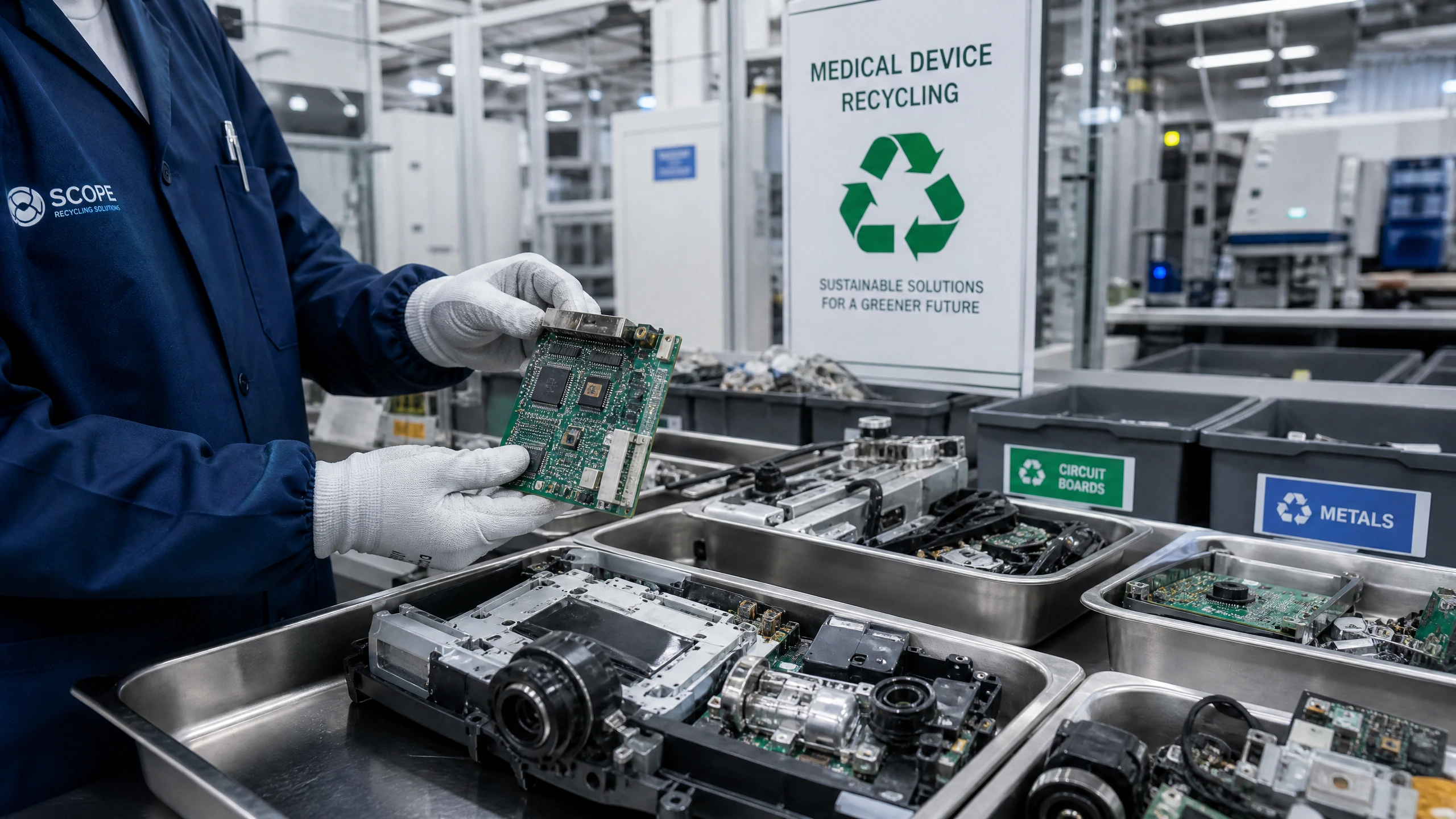
CT scanner disposal Australia is a specialist process. These large, complex imaging systems contain ionising radiation components, hazardous materials, data-bearing workstations, and structural elements requiring planned deinstallation before removal. EwasteCollect provides end-to-end CT scanner disposal Australia decommissioning and collection services for hospitals, radiology centres, and imaging facilities across Australia.
Planning a CT scanner decommission? Get a free site assessment.
Request Site AssessmentWhy CT Scanner Disposal Australia Requires a Specialist
Unlike standard medical equipment, CT scanners present several unique challenges:
- Ionising radiation compliance : CT systems capable of producing ionising radiation must be rendered inoperable before disposal under state radiation regulations. In Victoria this is governed by health.vic.gov.au radiation disposal guidelines. Similar requirements apply in all states and territories.
- Size and weight : a typical CT gantry weighs 1500 to 3000 kg. Safe removal requires rigging equipment, structural assessment, and route planning through the facility.
- X-ray tube oil : CT X-ray tubes contain oil that may be contaminated with polychlorinated biphenyls (PCBs). A PCB determination must be made prior to disposal, as regulated thresholds apply under state EPA frameworks.
- Data-bearing workstations : CT systems include control workstations, image storage servers, and PACS-connected infrastructure containing patient imaging data requiring certified destruction.
Regulatory Requirements for CT Scanner Disposal in Australia
CT scanner disposal involves compliance with multiple Australian regulatory frameworks:
- Radiation safety legislation : each state and territory has radiation safety legislation governing the decommissioning of X-ray producing equipment. The Australian Radiation Protection and Nuclear Safety Agency (ARPANSA) publishes national radiation protection standards applicable to CT decommissioning.
- TGA requirements : CT scanners are Class IIb medical devices regulated by the Therapeutic Goods Administration. Decommissioning records should be maintained as part of your device lifecycle documentation.
- Privacy Act 1988 (Cth) : patient images and demographic data stored on CT workstations, PACS servers, and portable media must be destroyed under certified procedures before disposal.
- EPA hazardous waste regulations : X-ray tube oil, fluorinated refrigerants (in integrated cooling systems), and lead shielding components are regulated under state EPA hazardous waste frameworks.
CT Scanner Disposal Australia: Decommissioning Process
A compliant CT scanner disposal project typically follows these stages:
- Site survey : assessment of the CT room layout, access routes, structural constraints, utility connections (high-voltage power, chilled water, medical gases), and weight-bearing capacity.
- Regulatory notification : where required by state radiation safety legislation, notification to the relevant authority prior to decommissioning.
- Data destruction : certified wiping or physical destruction of all patient data on workstations and associated storage. Certificate of Data Destruction issued.
- Controlled disconnection : isolation and disconnection of high-voltage power, data cabling, cooling systems, and any other utility connections by qualified personnel.
- Deinstallation and removal : systematic disassembly and removal of the gantry, patient table, power electronics, and ancillary equipment using appropriate rigging and transport equipment.
- Site reinstatement : removal of associated infrastructure, room preparation as agreed with the facility.
- Compliant disposal and recycling : components sorted by material stream and processed through certified recycling and disposal pathways, with hazardous materials handled by licensed contractors.
- Documentation : recycling certificate, Certificate of Data Destruction, and chain-of-custody manifest provided.
CT Scanner Components and Recycling Value
CT scanners contain a range of recoverable materials with recycling value:
| Component | Primary Materials | Recycling Outcome |
|---|---|---|
| Gantry housing | Steel, aluminium | Metal recycling |
| Patient table | Steel, carbon fibre | Metal recycling |
| Power electronics | Copper, circuit boards | E-waste recycling |
| Control workstation | Aluminium, electronics | E-waste recycling (data destroyed) |
| Wiring and cabling | Copper | Copper recovery |
| X-ray tube oil | Oil (possible PCB) | Licensed hazardous disposal |
| Lead shielding | Lead | Licensed lead recycling |
How Long Does CT Scanner Removal Take?
The timeline for CT scanner disposal Australia depends on the system size, room configuration, and scope of work. As a guide:
- Planning and survey : 1 to 2 weeks prior to removal date
- Data destruction : typically completed on the day of or before removal
- Deinstallation and removal : most CT scanner removals take 1 to 3 days on-site
- Documentation : certificates and manifests issued within 5 business days of completion
For urgent CT scanner disposal Australia requirements, contact us to discuss expedited scheduling.
CT Scanner Disposal Across Australia
EwasteCollect provides medical imaging disposal and deinstallation services. Our CT scanner disposal Australia coverage includes and other large imaging systems across all Australian states and territories including Sydney, Melbourne, Brisbane, Perth, Adelaide, Hobart, Darwin and Canberra, as well as regional hospital networks.
Frequently Asked Questions : CT Scanner Disposal Australia
Do we need regulatory approval before decommissioning a CT scanner?
Requirements vary by state and territory. Some jurisdictions require notification to the relevant radiation safety authority before decommissioning X-ray producing equipment. EwasteCollect advises on applicable requirements during the site survey phase and can assist with notification documentation.
What happens to patient data on the CT workstation?
All patient imaging data on CT control workstations, image storage systems, and portable media undergoes certified data destruction before or during the disposal process. A Certificate of Data Destruction is provided for your Privacy Act 1988 compliance records.
Can CT scanner removal be scheduled around active clinical operations?
Yes. We coordinate with your facilities management and clinical services teams to schedule removal during planned shutdown periods, weekends, or off-peak hours to minimise impact on radiology operations and patient throughput.
How much does CT scanner disposal cost in Australia?
CT scanner disposal costs depend on the system size, room configuration, access constraints, distance from our processing facility, and scope of data destruction and documentation required. Contact EwasteCollect for a site-specific quote.
Do you also decommission MRI machines and other large imaging systems?
Yes. EwasteCollect provides decommissioning and disposal services for the full range of large medical imaging systems including MRI machines, C-arm fluoroscopy units, digital mammography systems, PET scanners, and linear accelerators.
What Documentation Do You Receive After CT Scanner Disposal?
Proper CT scanner disposal Australia generates several important documents that your facility will need for regulatory, compliance, and asset management purposes:
- Certificate of Data Destruction — confirms that all patient imaging data, demographic records, and proprietary software on CT workstations and storage systems has been destroyed using certified methods.
- Recycling Certificate — confirms that the CT scanner components have been processed through licensed recycling and waste management facilities, with hazardous materials handled in accordance with applicable state EPA regulations.
- Chain-of-Custody Manifest — documents the movement of the CT scanner from your facility to processing, providing a complete audit trail for asset management and regulatory purposes.
- Radiation Decommissioning Record — where required by state radiation safety legislation, a record confirming the system has been rendered inoperable for ionising radiation production.
These CT scanner disposal Australia documents support your facility’s accreditation obligations, environmental reporting requirements, and Privacy Act 1988 compliance records.
CT Scanner Disposal Across Australian States and Territories
CT scanner disposal Australia requirements and radiation notification obligations differ by state and territory. EwasteCollect provides CT scanner disposal and maintains current knowledge of applicable requirements in each jurisdiction.
In New South Wales, CT scanner decommissioning is subject to the Radiation Control Act and associated regulations administered by the NSW Environment Protection Authority. In Victoria, the Radiation Act 2005 and associated regulations apply, with the Department of Health administering radiation licences for diagnostic imaging equipment. In Queensland, the Radiation Safety Act 1999 applies. In Western Australia, the Radiation Safety Act 1975 governs X-ray producing equipment decommissioning. South Australia, Tasmania, the ACT, and the Northern Territory each have their own radiation safety legislation with similar decommissioning requirements.
EwasteCollect advises facilities on the notification requirements applicable in their jurisdiction as part of the pre-decommissioning planning process for CT scanner disposal Australia-wide.
CT Scanner Models We Handle
EwasteCollect provides CT scanner disposal Australia services for systems from all major manufacturers, including Siemens Healthineers, GE Healthcare, Philips Healthcare, Canon Medical Systems, and Hitachi. We handle systems across all generations, from legacy single-slice and multi-slice CT scanners through to current generation wide-bore and dual-energy systems. Our CT scanner disposal Australia service covers mobile and portable CT units used in intensive care, emergency, and remote settings.
Plan Your CT Scanner Decommission
Australia-wide. Compliant. Certified documentation included.
Request Free Site Assessment