Laboratory Equipment Disposal Australia
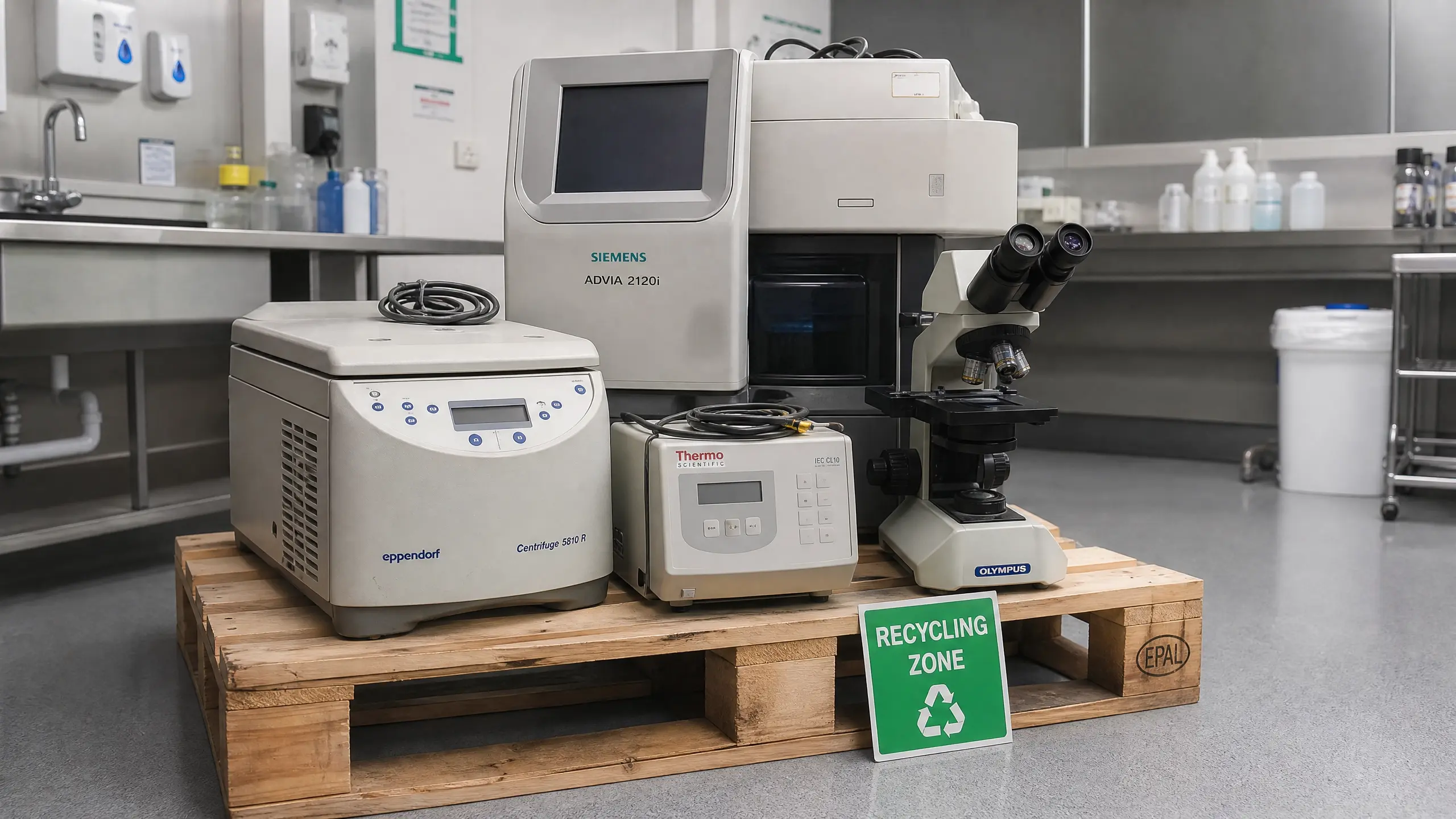
Laboratory equipment disposal Australia requires careful handling : many devices contain hazardous materials, data-bearing storage, and components regulated under state and federal environmental law. EwasteCollect provides certified collection, data destruction, and compliant recycling for laboratories across Australia.
Need laboratory equipment collected? Book a free assessment.
What Counts as Laboratory E-Waste?
Laboratory e-waste includes any electronic or electromechanical device used in a research, pathology, clinical, or industrial laboratory setting that has reached end of life. Common examples include:
- Analytical instruments : mass spectrometers, spectrophotometers, chromatography systems, pH meters
- Centrifuges and mixers : ultracentrifuges, microcentrifuges, vortex mixers
- PCR and molecular biology equipment : thermal cyclers, gel electrophoresis units, real-time PCR systems
- Imaging equipment : gel documentation systems, microscopes, fluorescence imagers
- Refrigeration : ultra-low temperature freezers, cryogenic storage units, laboratory refrigerators
- Pathology analysers : haematology analysers, biochemistry analysers, immunoassay platforms
- IT and data equipment : laboratory information management system (LIMS) servers, workstations, printers
Hazardous Components in Laboratory Equipment Disposal Australia Projects
Many laboratory instruments contain materials that require specialist disposal under Australian environmental regulations:
- Mercury : found in older thermometers, manometers, and some spectroscopy lamps. Regulated under state EPA hazardous waste frameworks.
- Lead : present in older circuit boards, solder, and CRT displays on legacy laboratory computers.
- Lithium batteries : common in portable analysers and backup power systems. Can cause thermal runaway if crushed or punctured.
- Refrigerants : ultra-low temperature freezers contain fluorinated gases regulated under the Australian Government ozone protection framework.
- Oils and lubricants : some analytical equipment contains PCB-contaminated oils. Refer to your state EPA guidelines for regulated disposal thresholds.
Regulatory Requirements for Laboratory Equipment Disposal in Australia
Laboratory operators and facility managers must comply with several regulatory frameworks when disposing of equipment:
- State EPA hazardous waste regulations : each state and territory has specific requirements for hazardous electronic and chemical waste. Consult your state EPA for applicable thresholds and licensing requirements.
- Privacy Act 1988 (Cth) : laboratory information systems, LIMS servers, and any device containing patient or research subject data must undergo certified data destruction before disposal.
- TGA device decommissioning : in vitro diagnostic (IVD) devices and medical laboratory equipment regulated by the Therapeutic Goods Administration require documented decommissioning.
- National Environment Protection (Movement of Controlled Waste) Measure : applies to interstate movement of hazardous laboratory waste.
How Laboratory Equipment Disposal Australia Collection Works
EwasteCollect follows a structured process for all laboratory equipment disposal projects:
- Asset audit : we compile a complete inventory of equipment for disposal, noting device types, data storage, and hazardous material flags.
- Free collection : our team collects equipment on-site at a time that minimises disruption to laboratory operations.
- Data destruction : all data-bearing storage (hard drives, SSDs, embedded systems) undergoes certified destruction with a Certificate of Data Destruction issued.
- Compliant processing : equipment is sorted by material stream and processed through certified recycling and disposal pathways.
- Documentation : you receive a recycling certificate and chain-of-custody manifest for your compliance records.
Laboratory Equipment Types and Disposal Considerations
| Equipment Type | Recyclable? | Data Risk | Hazardous Materials |
|---|---|---|---|
| PCR / Thermal Cycler | Yes | Low | None typically |
| Haematology Analyser | Yes | High (patient data) | Chemical reagents |
| Ultracentrifuge | Yes | Low | Refrigerants |
| Mass Spectrometer | Yes (partially) | Medium | Vacuum oils, solvents |
| ULT Freezer | Yes | None | Refrigerants (regulated) |
| LIMS Server / Workstation | Yes | High (patient/research data) | Lead, lithium battery |
Facility Types We Service
EwasteCollect provides laboratory equipment disposal for a wide range of facility types across Australia:
- Hospital and clinical pathology laboratories
- University and research institution laboratories
- Private pathology networks (e.g. decommissioning branch equipment)
- Pharmaceutical manufacturing quality control labs
- Industrial and environmental testing laboratories
- GP clinic point-of-care testing equipment
- Aged care facility diagnostic equipment
Sterilisers and Autoclaves
Autoclaves and sterilisers are heavy, often plumbed in, and may be connected to steam, water or dedicated power. Before collection they should be isolated by a qualified person, drained and cooled, with any chamber residue removed. Benchtop units can usually be collected directly; larger floor-standing units may need deinstallation and palletising.
Laboratory Refrigerators and Freezers
Pharmacy fridges, blood bank fridges and -80°C ultra-low temperature freezers contain refrigerant gas and often compressor oil. In Australia, refrigerant must be recovered by a licensed refrigerant technician, so these units are never crushed or scrapped with the gas still inside. Empty all samples and consumables, defrost, and clean the interior before pickup.
Bulk Laboratory and Hospital Clear-Outs
Lab closures, relocations, renovations and end-of-financial-year asset write-offs usually involve mixed equipment across several rooms. For a smooth clear-out:
- Prepare an asset list with make, model, quantity and room location.
- Separate working equipment that may be reused from end-of-life items.
- Confirm access details: loading dock, lifts, stairs and parking.
- Book deinstallation early for installed or heavy systems.
Consumables vs Regulated Components
Equipment recycling covers the hardware. Reagents, samples, biological material, sharps, chemicals and radioactive sources are separate waste streams and must be removed by the facility before collection. Batteries, lamps, gas cylinders and data-bearing parts are flagged during assessment so each is processed through the correct channel.
Why Recycling Lab Equipment Matters
Laboratory instruments contain recoverable metals, circuit boards and plastics. Reuse and parts recovery extend the life of working equipment, while proper processing keeps batteries, refrigerants and electronic components out of landfill.
Laboratory Equipment We Collect, by Type
Each equipment type below has its own handling requirements. Follow a link for preparation steps, hazards and collection details, or send us a mixed list and we will sort it out.
- Centrifuges: benchtop, floor-standing, refrigerated and ultracentrifuges, plus rotors and buckets.
- Freezers and laboratory fridges: -80 °C ULT freezers, plasma freezers, pharmacy, vaccine and blood bank fridges.
- Analysers and diagnostic platforms: haematology, biochemistry, immunoassay and molecular systems, including units with internal drives.
- Sterilisers and autoclaves: benchtop and floor-standing units, isolated and drained before collection.
- Microscopes and optics: light, stereo, fluorescence and digital imaging systems.
- Incubators, ovens, water baths and shakers.
- Fume hoods and biosafety cabinets: collected after your facility’s decontamination and certification process.
- Laboratory IT: LIMS servers, workstations and data-bearing controllers.
Who We Work With
- Hospital and private pathology laboratories
- University and research institute laboratories
- IVF, fertility and specialist clinics
- Pharmaceutical and manufacturing QC laboratories
- Environmental, food and industrial testing laboratories
- Facilities managers handling lab closures, relocations and refits
Lab Closures, Relocations and End-of-Financial-Year Clear-Outs
Most laboratory disposal happens in bulk: a lab closes, a department moves floors, a fit-out replaces a bench line, or assets are written off before 30 June. These jobs run more smoothly with an asset list, photos, and one contact who can confirm access and timing. We can stage collections over several days where a lab has to keep running during the move.
What We Do Not Accept
We collect equipment, not waste streams. Please keep the following separate and use your existing licensed providers:
- Hospital beds, bed frames and mattresses
- X-ray film and radiology film archives
- Clinical and biohazard waste
- Sharps such as needles, blades, lancets and scalpels
- Chemicals, solvents, reagents and fixatives
- Samples and biological material, including sample tubes, plates and used consumables
- Pharmaceuticals and medicines
- Pressurised gas cylinders and liquid nitrogen
- Contaminated consumables
- Loose radioactive sources on their own. Equipment with a sealed source still fitted is assessed case by case.
Everything else is welcome, including working, non-working, surplus, outdated, damaged and end-of-life equipment, and single personal or home devices such as CPAP machines, nebulisers and mobility equipment.
Frequently Asked Questions : Laboratory Equipment Disposal Australia
Is laboratory equipment disposal free in Australia?
Free collection is available for qualifying volumes of laboratory equipment from hospitals, pathology networks, universities and research institutions across Australia. Contact EwasteCollect to confirm eligibility based on your equipment type and volume.
Do I need a data destruction certificate for laboratory IT equipment?
Yes. Any laboratory workstation, LIMS server, or analyser containing patient or research subject data must be data-wiped or physically destroyed before disposal under the Privacy Act 1988. EwasteCollect provides a Certificate of Data Destruction for all data-bearing devices.
Can you collect decommissioned pathology analysers?
Yes. We regularly collect haematology analysers, biochemistry platforms, immunoassay systems, and other pathology equipment. We coordinate with your biomedical engineering team to ensure safe disconnection and transport.
What happens to the materials recovered from laboratory equipment?
Metals (steel, aluminium, copper), plastics, and circuit boards are recovered and processed through certified recycling streams. Hazardous materials such as mercury, refrigerants, and PCB-contaminated oils are processed by licensed handlers in accordance with state EPA requirements.
Do you service regional Australia for laboratory equipment disposal?
Yes. EwasteCollect provides laboratory equipment disposal across all states and territories including regional and remote locations. Contact us with your site location and we will advise on logistics and timing.
Who Uses Laboratory Equipment Disposal Australia Services?
Laboratory equipment disposal in Australia is required across a wide range of sectors. Hospitals and health services requiring laboratory equipment disposal Australia decommission clinical pathology labs when consolidating or upgrading laboratory infrastructure. Universities and research institutions require laboratory equipment disposal when research programs conclude, equipment reaches end of life, or facilities are repurposed. Private pathology companies, pharmaceutical manufacturers, biotechnology firms, food testing laboratories, and environmental testing facilities all generate laboratory e-waste that requires certified handling.
Government agencies use our laboratory equipment disposal Australia service including state health departments, the CSIRO, and defence research facilities also require compliant laboratory equipment disposal when upgrading analytical infrastructure or closing laboratory sites. EwasteCollect works with all of these sectors. For laboratory equipment disposal Australia wide, we provide a consistent, documented process regardless of facility type or location.
Benefits of Certified Laboratory Equipment Disposal
Choosing a certified laboratory equipment disposal Australia provider delivers several practical benefits beyond basic regulatory compliance:
- Documentation for audits: a recycling certificate and chain-of-custody manifest confirm that equipment left your facility responsibly. These records satisfy requirements under ISO 14001 environmental management systems, hospital accreditation standards, and government procurement sustainability obligations.
- Data security: laboratory information management systems (LIMS), instrument computers, and networked analysers hold patient data and proprietary research data. Certified data destruction with a written certificate protects your organisation under the Privacy Act 1988 and the Australian Privacy Principles.
- Hazardous material compliance: mercury, lead, lithium, and refrigerants in laboratory equipment require licensed disposal pathways. Using a certified laboratory equipment disposal provider ensures these materials are managed correctly and keeps your facility compliant with state EPA regulations.
- Zero landfill: certified laboratory equipment recycling diverts metals, circuit boards, and plastics from landfill, supporting your organisation’s environmental reporting and sustainability targets. This makes laboratory equipment disposal Australia a sound choice for sustainability commitments.
How to Prepare for Laboratory Equipment Disposal Australia Collection
Before your scheduled laboratory equipment disposal collection, a few simple steps help the process run smoothly:
- Compile an asset list of equipment to be collected, including make, model, and serial numbers where available.
- Ensure equipment is powered down and disconnected from laboratory gases, water supplies, and network connections.
- For equipment containing biological samples or reagents, ensure all samples are removed and the instrument decontaminated in line with your facility infection control procedures before collection.
- Identify any items containing hazardous materials such as mercury or radioactive components, flag these separately so our team can apply the correct handling procedures.
- Confirm access arrangements including parking, building access, and lift availability for our collection team.
EwasteCollect provides a pre-collection checklist on request. For large laboratory equipment disposal Australia projects involving multiple instrument types, a site survey is recommended prior to scheduling.
Ready to Arrange Laboratory Equipment Disposal?
Free collection for hospitals, pathology labs, universities and research facilities across Australia.