Endoscopy Equipment Disposal Australia: Certified Collection and Recycling for Hospitals and Day Surgeries
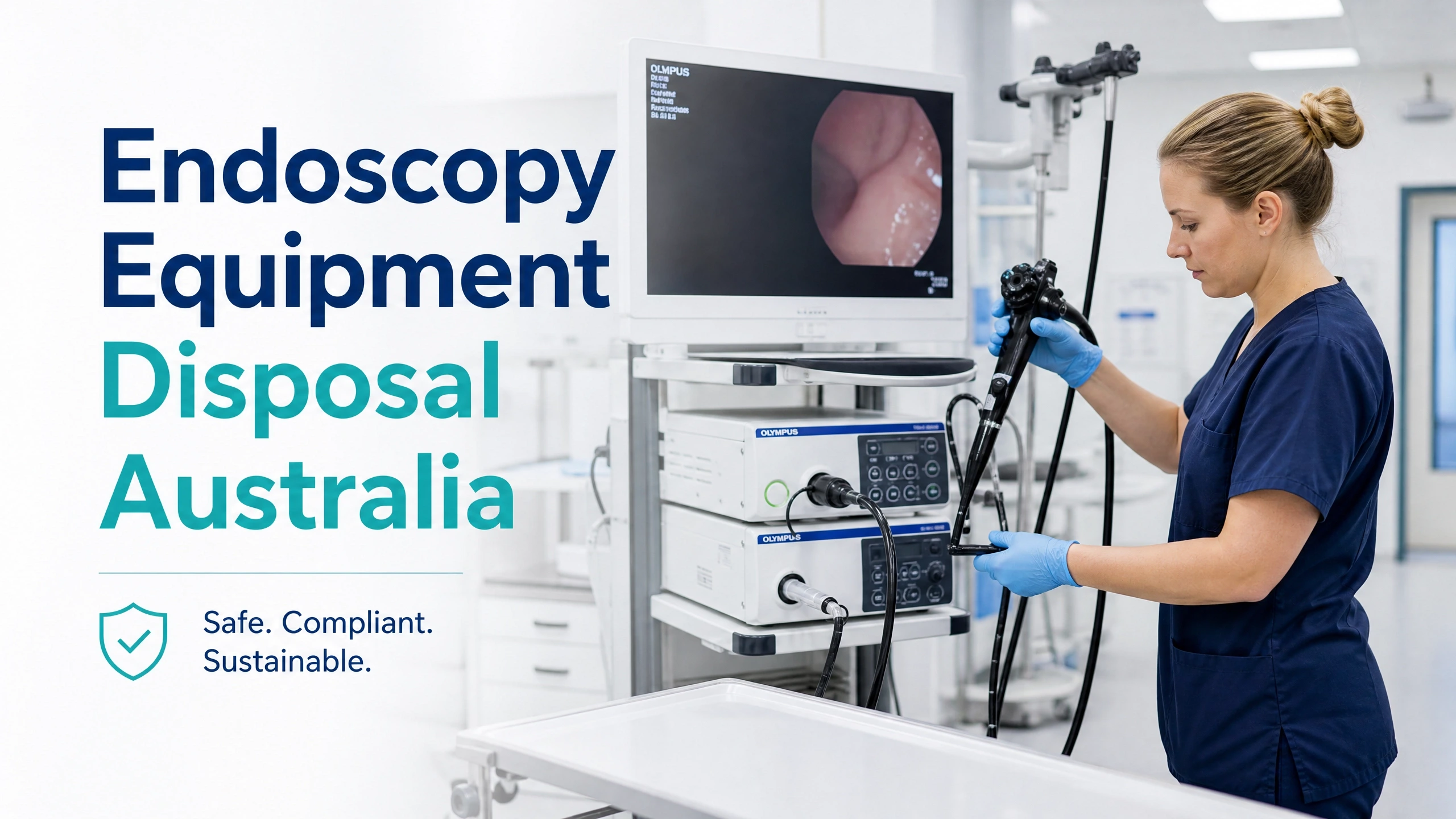
Endoscopy equipment disposal Australia presents unique challenges that standard e-waste collection cannot address. Endoscopes, video processors, light sources, insufflators, endoscopy towers, and reprocessing units contain high-value materials, patient-linked data, and components that require careful handling under Australian health and environmental regulations. EwasteCollect provides specialist endoscopy equipment disposal Australia services for public hospitals, private day surgeries, gastroenterology clinics, respiratory units, urology departments, and specialist endoscopy suites across every state and territory.
Whether you are upgrading a gastroenterology suite to the latest video endoscopy platform, closing an endoscopy day surgery, replacing an ageing fleet of colonoscopes and gastroscopes, or arranging endoscope disposal Australia wide for a complete tower system, EwasteCollect manages the process from collection through to certified endoscopy recycling Australia facilities and full documentation. Our national network means your facility can arrange endoscopy equipment disposal Australia regardless of whether you operate in Sydney, Melbourne, Brisbane, Perth, Adelaide, Hobart, Darwin, or Canberra.
This guide covers every aspect of responsible endoscopy equipment disposal in Australia, including equipment types, compliance considerations, the collection and recycling process, documentation issued, and how to prepare your department for a smooth and fully traceable removal.
Book Endoscopy Equipment Disposal Across Australia
Contact EwasteCollect to arrange certified collection and recycling for endoscopes, processors, towers, and reprocessing equipment. Facilities across all Australian states and territories are welcome.
Book Endoscopy Disposal TodayWhat Is Endoscopy Equipment Disposal?
Endoscopy equipment disposal is the structured process of collecting, transporting, and recycling end-of-life endoscopy instruments and supporting devices in a way that meets Australian environmental legislation, health sector data obligations, and infection control requirements. Unlike general office or IT equipment disposal, endoscopy equipment disposal requires specific knowledge of the instruments involved, the materials they contain, and the regulatory context in which Australian endoscopy facilities operate.
Endoscopy equipment disposal Australia typically applies to equipment that has reached end of service life, has been replaced by newer technology, is no longer supported by its manufacturer, has sustained damage that makes repair uneconomical, or is surplus following a department consolidation or facility closure. In all of these scenarios, the equipment must be removed and recycled in a way that does not expose the facility to environmental liability, data breach risk, or infection control concerns.
EwasteCollect collects endoscopy equipment for recycling. We do not buy, broker, or resell used medical devices, and we do not act as a secondary market intermediary. Our role is to collect your end-of-life equipment, transport it under appropriate controls, and process it at certified Australian recycling facilities, issuing full documentation throughout.
Endoscopy equipment disposal Australia sits at the intersection of medical device regulation, e-waste law, patient privacy obligations, and infection control standards. Using a specialist provider ensures your facility meets every one of these requirements in a single coordinated process.
Types of Endoscopy Equipment We Handle
EwasteCollect accepts the full range of endoscopy and endoscopy-related equipment for disposal and recycling. The following categories reflect the diversity of instruments and supporting systems used across Australian endoscopy facilities.
Flexible Endoscopes
Flexible endoscopes are the core instruments of any endoscopy suite and represent some of the highest-value items in the department. They include gastroscopes for upper gastrointestinal examination, colonoscopes for lower gastrointestinal investigation, bronchoscopes for respiratory and pulmonary procedures, duodenoscopes for biliary and pancreatic access, enteroscopes for small bowel examination, sigmoidoscopes for distal colon assessment, ureteroscopes for urological applications, and cystoscopes in their flexible configurations. These instruments contain optical fibre bundles or video chip imaging systems, complex insertion tube materials, and precision angulation mechanisms that include both recyclable and specialist materials.
Many flexible endoscopes are manufactured by major brands including Olympus, Fujifilm, Pentax, Karl Storz, and Richard Wolf. Regardless of manufacturer, EwasteCollect accepts all brands and models for endoscopy equipment disposal Australia.
Rigid Endoscopes and Telescopes
Rigid endoscopes include laparoscopes used in minimally invasive abdominal surgery, arthroscopes for joint examination and surgery, cystoscopes in their rigid form, hysteroscopes for gynaecological procedures, thoracoscopes for chest cavity examination, sinuscopes for ENT applications, and urethroscopes for urological use. Rigid telescopes contain rod lens optical systems and precision ground glass optics that form part of high-value recyclable components. These instruments are often used in conjunction with camera heads and light cables rather than integrated video systems.
Video Processors and Camera Systems
Endoscopy video processors are the electronic hub of a modern endoscopy suite, processing the image signal from the endoscope and displaying it on the monitor. These units contain printed circuit boards, processors, memory components, display output modules, and power supply units that fall under Australian e-waste regulations. Older processors may contain hazardous materials including heavy metals that require specialist handling during recycling. Camera heads used with rigid endoscopes contain image sensors, lenses, and electronic components that also require compliant disposal.
Light Sources
Endoscopy light sources provide the illumination required for internal examination. These units use xenon arc lamps, LED arrays, or halogen lamp systems and contain a combination of optical, electronic, and thermal management components. Xenon light sources in particular contain xenon gas lamps that require specialist handling. End-of-life light sources are a common item in endoscopy equipment disposal Australia projects as lamp replacements become uneconomical or the unit itself reaches the end of its service life.
Insufflators and CO2 Pumps
Insufflators are used to inflate body cavities during endoscopic procedures, with CO2 insufflation now standard in most Australian facilities. These electronic devices contain gas flow regulators, pressure sensors, display units, and electronic control systems. Both older CO2 insufflators and legacy air insufflators are accepted for endoscopy equipment disposal Australia. Insufflators that have been in use retain residual gas and require appropriate handling prior to recycling.
Endoscopy Towers and Stack Systems
An endoscopy tower or stack is an integrated cart system that holds the processor, light source, insufflator, monitor, and ancillary components together as a single mobile unit. When disposing of an endoscopy suite, the entire tower system can be collected by EwasteCollect in a single visit, eliminating the need for the facility to coordinate multiple streams of equipment. The tower frame, cabling, monitor mounts, and electronic components are all part of the endoscopy equipment disposal Australia scope.
Endoscope Reprocessing Equipment
Endoscope reprocessing equipment includes automated endoscope reprocessors (AERs), high-level disinfection units, endoscope drying and storage cabinets, leak testers, and manual reprocessing sink systems. These units contain electronic control systems, pump mechanisms, heating elements, chemical dosing systems, and plumbing components that require careful removal and recycling. Automated endoscope reprocessors may contain residual disinfectant chemicals and require appropriate preparation prior to collection. EwasteCollect works with your infection control and biomedical engineering teams to ensure reprocessing equipment is prepared appropriately before pickup.
Monitors and Display Systems
Endoscopy suites use dedicated high-definition medical monitors for procedure imaging. These displays contain electronic components, LCD or OLED panels, and in older units may contain cold cathode fluorescent lamp backlights that include mercury. Medical monitors are subject to e-waste disposal regulations in all Australian states and territories and should not be sent to general waste streams.
Accessories and Ancillary Instruments
Beyond the major capital items, endoscopy departments accumulate a range of accessories and ancillary instruments that also require appropriate disposal. These include biopsy forceps, polypectomy snares, injection needles, haemostatic clips, guide wires, sphincterotomes, light cables, cleaning brushes, endoscopy carts and trolleys, procedure tables, and discard containers. While some of these items are single-use and disposed of via clinical waste streams, reusable accessories that have reached end of service life can be included in an endoscopy equipment disposal Australia collection.
Not Sure What Your Endoscopy Suite Contains?
EwasteCollect can assess your endoscopy department and provide a comprehensive disposal plan covering every piece of equipment. Contact our team to arrange a site review or remote assessment.
Request a Site AssessmentWhy Endoscopy Equipment Disposal Australia Requires a Specialist
Endoscopy equipment disposal Australia is not a task that should be assigned to a general e-waste collection company or managed through general waste channels. Several features of endoscopy equipment and the Australian health regulatory environment make specialist handling essential.
Patient Data on Video Processors
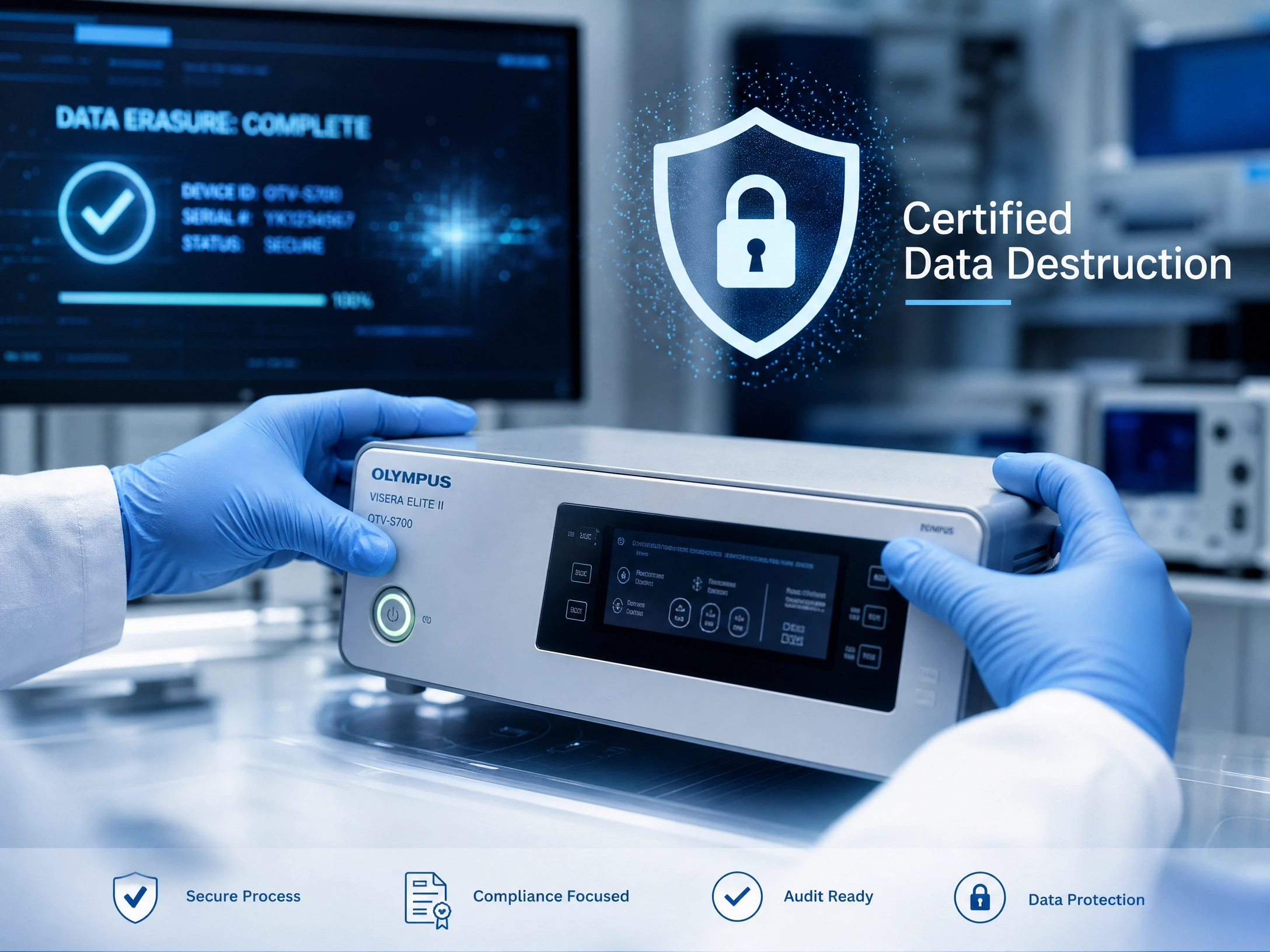
Modern endoscopy video processors store patient images, procedure recordings, and examination data directly on internal storage media. Under the Privacy Act 1988 (Cth) and the My Health Records Act, healthcare facilities have a legal obligation to ensure patient health information is securely destroyed before equipment leaves their control. EwasteCollect provides certified data destruction for endoscopy processors, with written certification confirming that all patient data has been irreversibly removed prior to or during the recycling process.
Infection Control and Biocontamination
Endoscopy equipment, particularly flexible scopes and reprocessing units, operates in environments with significant biocontamination risk. Equipment collected for disposal must meet infection control standards to protect transport workers, recycling facility staff, and the broader community. EwasteCollect requires that flexible endoscopes and reprocessing equipment undergo appropriate decontamination before collection, and our team can provide guidance on acceptable decontamination protocols in line with NSQHS Standards for endoscope reprocessing. In cases where decontamination cannot be confirmed, collection can be arranged under additional containment measures.
Therapeutic Goods Administration Obligations
Endoscopes and related instruments are regulated as medical devices under the Therapeutic Goods Administration (TGA) framework. When disposing of TGA-regulated medical devices, facilities must ensure the devices are rendered unusable or disposed of in a manner that prevents re-entry into the supply chain without appropriate clearance. EwasteCollect’s recycling process physically processes all endoscopy equipment, ensuring instruments cannot be re-used or resold without the facility’s knowledge or authorisation.
Hazardous Materials in Ageing Equipment
Older endoscopy equipment, particularly light sources, processors, and monitors manufactured prior to the widespread adoption of RoHS-equivalent design standards, may contain lead solder, mercury in fluorescent backlights, cadmium in batteries, and beryllium in certain electronic components. These hazardous materials are subject to specific handling requirements under Australian environmental legislation and must not enter general landfill streams. EwasteCollect’s recycling processes are designed to identify and appropriately manage hazardous components across all endoscopy equipment types.
Asset Register and Decommissioning Documentation
Hospitals and health networks operating under accreditation frameworks need to maintain accurate asset registers and demonstrate compliant decommissioning of medical equipment. Endoscopy equipment disposal Australia through EwasteCollect includes itemised collection documentation, equipment manifests, and a certificate of recycling, providing the records needed for asset register updates, internal audits, and accreditation evidence.
The EwasteCollect Endoscopy Equipment Disposal Process
Our endoscopy equipment disposal Australia process is designed around the practical realities of healthcare facility operations. We understand that endoscopy departments have high patient throughput, limited storage space, and strict infection control requirements, and our process is structured to minimise disruption while ensuring full compliance.
- Enquiry and Assessment — Contact EwasteCollect with details of the equipment you need to dispose of. Our team will review the scope, identify any equipment that requires special preparation or access planning, and provide a collection proposal tailored to your facility.
- Decontamination Confirmation — For flexible endoscopes and reprocessing equipment, our team will confirm decontamination requirements with your infection control or biomedical engineering team. We provide written guidance on acceptable decontamination protocols for items collected for disposal.
- Data Destruction Planning — For endoscopy video processors and any other equipment with internal data storage, we confirm the data destruction method to be applied, either on-site prior to collection or at our processing facility, and arrange for the relevant documentation to be issued.
- Scheduled Collection — We attend your facility at an agreed time, coordinated with your endoscopy department schedule to minimise operational disruption. Our team can arrange after-hours, weekend, or staged collections for facilities that cannot accommodate removal during operating hours.
- Transport and Chain of Custody — All equipment is transported under documented chain of custody from your facility to our processing location. A manifest is issued at collection confirming every item removed.
- Certified Recycling and Documentation — Equipment is processed at our recycling facility, with a certificate of recycling and data destruction certificate issued within three business days of collection. These documents confirm compliant disposal and are suitable for asset register, audit, and accreditation purposes.
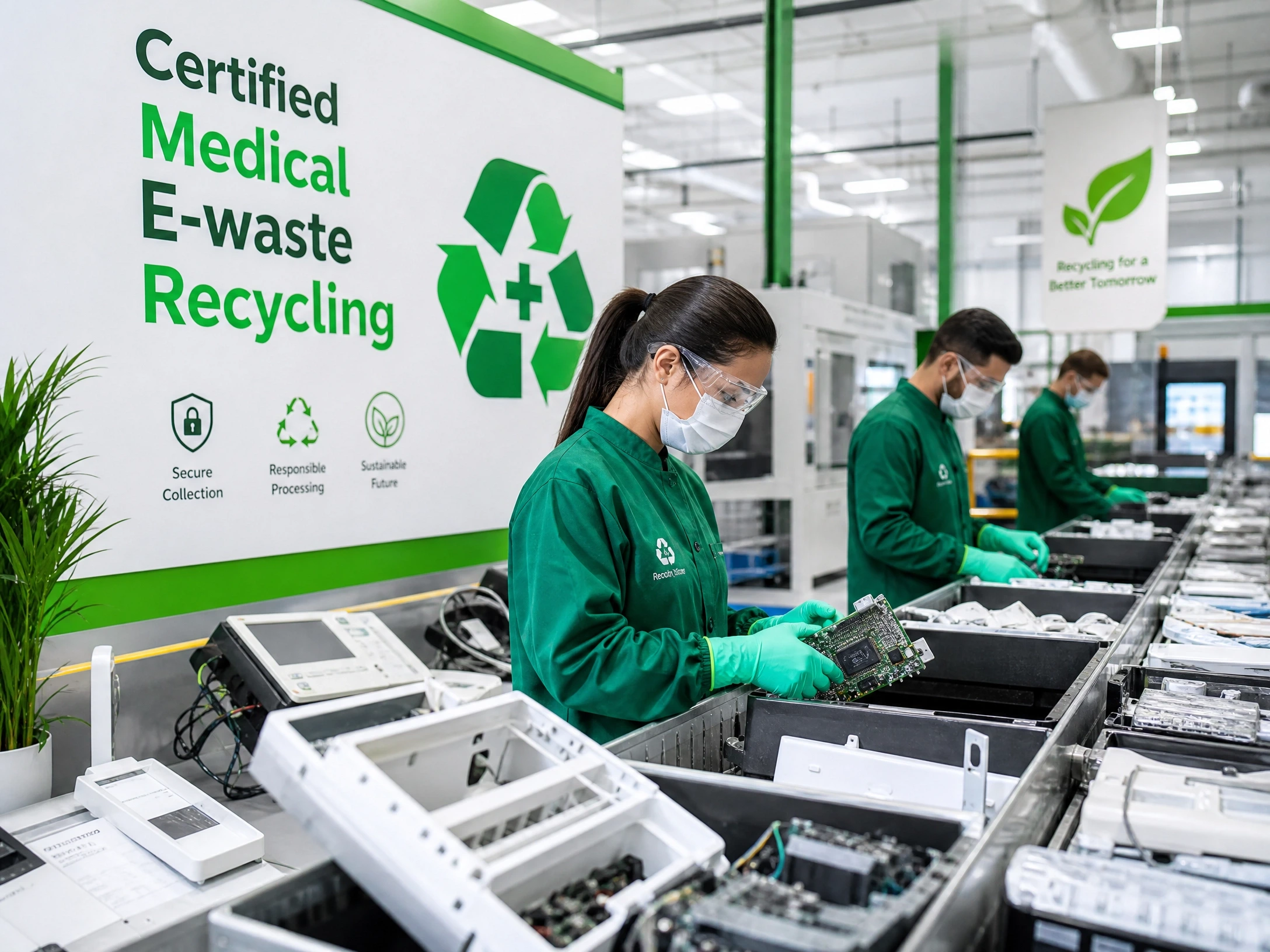
EwasteCollect targets certificate issue within 3 business days of collection for endoscopy equipment disposal Australia projects. This fast turnaround supports facilities that need to close out asset records, report to health network management, or satisfy accreditation requirements promptly after equipment removal.
Documentation Issued for Endoscopy Equipment Disposal
Documentation is a core component of responsible endoscopy equipment disposal Australia. EwasteCollect issues the following records for every endoscopy collection project.
Collection Manifest
Itemised list of every piece of equipment collected, including description, serial number where available, and quantity. Issued at the time of collection and signed by both parties.
Certificate of Recycling
Confirms that collected endoscopy equipment has been processed through compliant Australian recycling streams and has not entered landfill. Suitable for environmental reporting and accreditation evidence.
Data Destruction Certificate
Issued for all endoscopy processors and equipment with internal data storage. Confirms that patient data and device records have been irreversibly destroyed in accordance with applicable privacy obligations.
Chain of Custody Record
Documents the movement of equipment from your facility to our recycling site. Provides a traceable record suitable for internal compliance reporting and health network governance requirements.
Endoscopy Equipment Disposal Coverage Across Australia
EwasteCollect provides endoscopy equipment disposal Australia services to facilities in every state and territory. Our national reach means you can arrange consistent, compliant disposal regardless of where your facility is located.
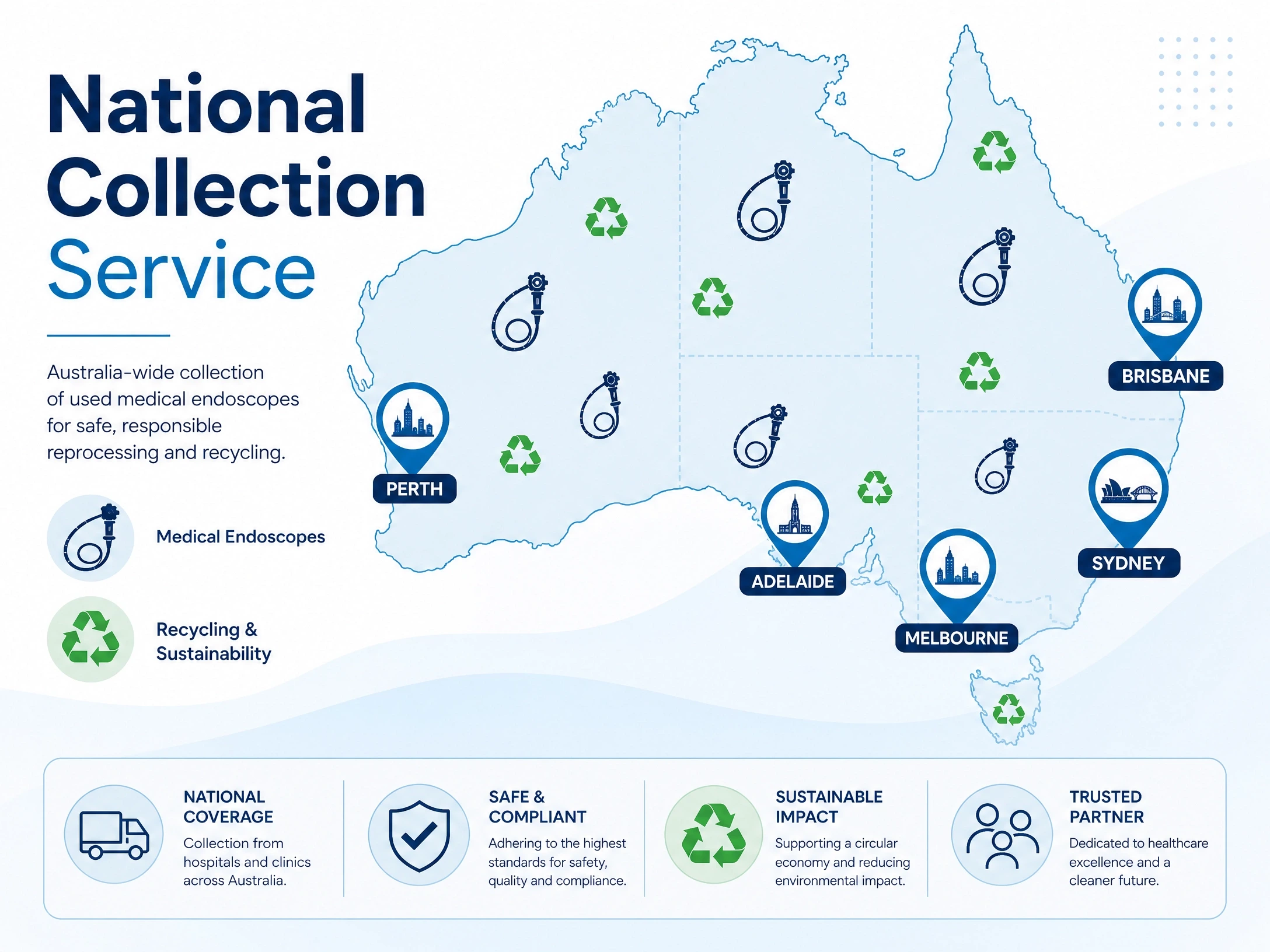
We regularly collect from major metropolitan facilities in Sydney, Melbourne, Brisbane, Perth, and Adelaide, as well as regional and rural hospitals, day surgeries, and specialist clinics across all states and territories. For facilities in more remote locations, we coordinate consolidated collection runs and can accommodate shipment arrangements for smaller facilities that cannot accommodate a full collection visit.
Facility Types We Serve
Endoscopy equipment disposal Australia requirements vary significantly depending on the type of facility and the volume of equipment involved. EwasteCollect works with the following facility types.
Public Hospitals and Health Networks
Public hospitals are among the largest users of endoscopy equipment in Australia, with many operating dedicated endoscopy suites across multiple campuses. Hospital network procurement teams regularly manage fleet upgrade projects that generate large volumes of end-of-life endoscopes, processors, and tower systems. EwasteCollect can coordinate multi-site endoscopy equipment disposal Australia projects across an entire health network, providing consolidated documentation and a single point of contact for procurement and compliance teams.
Private Day Surgeries and Endoscopy Centres
Private day surgery facilities and standalone endoscopy centres are the fastest-growing sector of endoscopy equipment disposal Australia enquiries. These facilities often operate with smaller teams and may not have in-house biomedical engineering support to manage equipment disposal. EwasteCollect provides a full-service collection that removes the burden from the facility’s administrative and clinical teams.
Gastroenterology and Specialist Clinics
Gastroenterology practices and specialist clinics that perform procedures in-office or in attached procedure rooms accumulate endoscopy equipment that reaches end of life outside the hospital setting. These facilities often have smaller volumes but equally complex compliance requirements, particularly around patient data destruction for endoscopy processors and decontamination of flexible scopes.
Respiratory and Pulmonary Units
Respiratory medicine units and pulmonary function laboratories use bronchoscopes and related flexible endoscopy equipment for diagnostic and therapeutic procedures. End-of-life bronchoscopes and associated video processors are accepted under EwasteCollect’s endoscopy equipment disposal Australia service.
Surgical and Theatre Departments
Surgical departments that perform laparoscopic, thoracoscopic, and arthroscopic procedures use rigid endoscopes and associated camera, light source, and recording systems. End-of-life surgical telescope systems, camera heads, and stack systems from theatre environments can be collected under the same endoscopy equipment disposal Australia framework.
Urology and Gynaecology Departments
Urology and gynaecology units use a range of endoscopes including cystoscopes, ureteroscopes, hysteroscopes, and laparoscopes, often in both flexible and rigid configurations. These specialties generate regular end-of-life equipment volumes as instrument fleets are updated and video platforms are upgraded to current-generation systems.
Preparing Your Endoscopy Department for Disposal
The following steps will help your endoscopy department prepare for an efficient and compliant endoscopy equipment disposal Australia collection.
- Create an inventory of all equipment to be disposed of, including brand, model, and serial numbers where available. This information is used to prepare the collection manifest and certificate of recycling.
- Confirm with your infection control team or biomedical engineering department that flexible endoscopes and reprocessing equipment have been appropriately decontaminated and are cleared for collection.
- Identify and label any equipment with internal data storage, particularly video processors, camera systems, and electronic control units that may store patient records or procedure data.
- Arrange for access to the endoscopy suite, equipment storage areas, and loading areas at the agreed collection time, including any access card, key, or eisort requirements in your facility.
- Notify your biomedical engineering, infection control, procurement, and compliance teams of the planned collection so the appropriate personnel are available on the day.
- Remove or confirm the removal of any single-use accessories or consumable items that are to be disposed of through clinical waste streams rather than the endoscopy equipment recycling collection.
- Confirm the address and contact details for certificate delivery, as the certificate of recycling and data destruction certificate will be issued to the nominated contact after collection.
Environmental Considerations in Endoscopy Equipment Disposal
Endoscopy equipment contains a diverse range of materials, many of which have significant environmental value when recovered through responsible recycling, and significant environmental risk when managed irresponsibly. EwasteCollect’s approach to endoscopy equipment disposal Australia is designed to maximise material recovery while managing hazardous components under applicable Australian environmental regulations.
Flexible endoscopes contain precision optical components, stainless steel in the insertion tube and biopsy channel, polymer materials in the outer sheath, electronic components in video endoscopes, and tungsten wire in angulation mechanisms. Video processors contain printed circuit boards with recoverable precious metals including gold, silver, and palladium, as well as copper wiring and aluminium chassis components. Light sources contain glass, aluminium, electronic components, and in xenon units, xenon arc lamp assemblies that require specialist gas handling.
All endoscopy equipment collected by EwasteCollect is processed through Australian-compliant recycling facilities. No equipment is exported as whole units to markets where it may be reused without appropriate quality assurance or medical device regulatory clearance. Material recovery is maximised within the constraints of applicable hazardous materials handling requirements.
Combining Endoscopy Equipment Disposal with Broader Medical Equipment Collection
Many facilities that request endoscopy equipment disposal Australia also have other end-of-life medical equipment that needs to be managed. EwasteCollect’s broad medical equipment collection scope means a single visit can cover multiple equipment categories, reducing disruption to your facility and simplifying the compliance documentation process.
| Equipment Category | Common Items | Included in Combined Collection |
|---|---|---|
| Endoscopy | Scopes, processors, light sources, towers, reprocessors | Yes |
| Medical imaging | Ultrasound machines, X-ray units, fluoroscopy equipment | Yes |
| Patient monitoring | Vital signs monitors, ECG machines, infusion pumps | Yes |
| Laboratory | Analysers, centrifuges, microscopes, refrigerators | Yes |
| IT and AV | Computers, servers, printers, displays, dictation systems | Yes |
| Surgical equipment | Diathermy units, surgical lights, theatre tables | Yes |
Combining endoscopy equipment disposal Australia with other medical equipment collection reduces the number of vendor relationships your procurement team needs to manage, consolidates documentation into a single set of certificates, and often improves collection scheduling flexibility as the combined scope justifies a dedicated facility visit.
When to Schedule Endoscopy Equipment Disposal
Endoscopy equipment disposal Australia should be planned as part of structured lifecycle management rather than as a reactive response to equipment failure or sudden surplus. The following situations are common triggers for scheduling endoscopy equipment disposal.
Technology upgrades are the most frequent driver, as Australian endoscopy facilities transition from standard definition to high definition video platforms, adopt narrow band imaging or other enhancement technologies, or upgrade to current-generation processor platforms. Retirement of an established endoscopy fleet generates significant disposal volumes and should be planned well in advance to allow coordinated collection across the department.
Facility closures or relocations require complete endoscopy equipment disposal Australia for all items not being transferred to the receiving site. This includes not only the endoscopes and processors but also the towers, reprocessing equipment, storage cabinets, and all ancillary items in the suite. EwasteCollect can provide a staged collection that aligns with the facility closure or relocation timeline.
Lease surrenders and building refurbishments often require the endoscopy suite to be completely cleared within a defined timeframe. EwasteCollect can provide accelerated collection and documentation turnaround for facilities working to tight refurbishment schedules.
Regular fleet rotation is increasingly adopted by larger endoscopy facilities as a planned approach to managing instrument age and performance. Rather than waiting for individual instruments to fail, these facilities schedule periodic disposal of older instruments alongside the introduction of new units, maintaining a consistent fleet age profile across the department.
Frequently Asked Questions About Endoscopy Equipment Disposal Australia
What types of endoscopes does EwasteCollect accept for disposal?
EwasteCollect accepts all types of flexible and rigid endoscopes for endoscopy equipment disposal Australia, including gastroscopes, colonoscopes, bronchoscopes, duodenoscopes, enteroscopes, sigmoidoscopes, laparoscopes, arthroscopes, cystoscopes, ureteroscopes, hysteroscopes, and sinuscopes. All brands and models are accepted, including Olympus, Fujifilm, Pentax, Karl Storz, Richard Wolf, Stryker, and others.
Do endoscopes need to be decontaminated before collection?
Yes. Flexible endoscopes and reprocessing equipment should be appropriately decontaminated before collection. EwasteCollect provides guidance on acceptable decontamination protocols in line with NSQHS Standards for endoscope reprocessing. Our team works with your infection control and biomedical engineering staff to confirm preparation requirements before the collection date. For equipment where decontamination cannot be confirmed, collection under additional containment measures can be arranged.
What happens to patient data stored in endoscopy video processors?
Patient images, procedure recordings, and examination data stored on endoscopy video processors must be securely destroyed before the equipment is transferred outside the facility. EwasteCollect provides certified data destruction for endoscopy processors as part of every endoscopy equipment disposal Australia service. A written data destruction certificate is issued after collection confirming that all patient data has been irreversibly removed.
Can EwasteCollect collect entire endoscopy suite contents in a single visit?
Yes. EwasteCollect can manage a complete endoscopy suite clearance in a single scheduled visit, covering endoscopes, processors, light sources, insufflators, towers, monitors, reprocessing equipment, storage cabinets, and ancillary items. For larger suites or multi-room clearances, we coordinate the visit timing and team size to complete the collection efficiently within your operational constraints.
How long does it take to receive recycling certificates after collection?
EwasteCollect targets certificate issue within 3 business days of collection for endoscopy equipment disposal Australia projects. The certificate of recycling and data destruction certificate are issued together and sent to the nominated contact at your facility. For urgent requests, such as lease surrenders or accreditation timelines, expedited processing can be arranged.
Does EwasteCollect buy endoscopy equipment?
No. EwasteCollect is a recycling and collection service, not a buyer or reseller of used medical equipment. We collect end-of-life endoscopy equipment for responsible recycling and do not participate in the secondary market for used endoscopes or related instruments. If you are looking to sell functional equipment, that is a separate process from endoscopy equipment disposal Australia.
Is endoscopy equipment covered by Australian e-waste regulations?
Yes. Endoscopy video processors, monitors, light sources, insufflators, and electronic control systems fall under the Product Stewardship Act 2011 and associated co-regulatory arrangements that restrict these items from entering general landfill waste streams in participating states and territories. EwasteCollect’s endoscopy equipment disposal Australia service ensures full compliance with applicable product stewardship and e-waste legislation across all Australian jurisdictions.
Can EwasteCollect handle endoscopy disposal for facilities in regional and rural areas?
Yes. EwasteCollect provides endoscopy equipment disposal Australia services for facilities across metropolitan, regional, and rural locations in every state and territory. Collection scheduling for regional facilities is coordinated to align with consolidated collection runs or dedicated visits depending on equipment volume and location. Contact our team to discuss the options for your facility’s location.
Ready to Arrange Endoscopy Equipment Disposal?
EwasteCollect provides certified endoscopy equipment disposal Australia for hospitals, day surgeries, specialist clinics, and health networks. Contact our team to discuss your requirements and arrange collection.
Book Your Collection Now