Ophthalmology Equipment Recycling Australia: Eye Clinic Device Disposal & Pickup
Ophthalmology equipment recycling Australia helps eye clinics, optometry practices, ophthalmology centres, retinal imaging providers, hospital eye departments and healthcare groups remove old diagnostic equipment safely, responsibly and with practical documentation. E-Waste Collect supports pickup planning, packing, palletising, deinstallation coordination, data-aware handling and recycling pathways for retired eye clinic devices.
Ophthalmology equipment recycling Australia is a specialist service for eye care businesses that need to remove outdated, faulty, surplus or end-of-life equipment without treating it like ordinary rubbish. Ophthalmology and optometry devices can be delicate, data-bearing and expensive to move. Many devices contain precision optics, cameras, circuit boards, imaging sensors, screens, motors, software, metal frames, internal storage, cables, batteries and accessories that should be handled through a structured recycling and disposal process.
Eye clinics often delay disposal because the equipment is awkward to move, nobody knows whether it contains patient data, or the clinic is unsure whether it can be recycled. Old OCT scanners may stay in a back room. Fundus cameras may sit beside unused workstations. Slit lamps, autorefractors, keratometers, tonometers, visual field analysers, phoropters and diagnostic carts may remain in storage long after they stop being useful. This page is designed to help clinic managers, practice owners, optometrists, ophthalmologists, facility teams and procurement staff understand what can be collected and how to prepare it.
If your clinic has old OCT scanners, fundus cameras, retinal imaging devices, slit lamps, ophthalmic microscopes, autorefractors, keratometers, tonometers, phoropters, visual field analysers, ophthalmic lasers, lensmeters, diagnostic carts, eye clinic computers or medical printers, the safest first step is to create a device list, take clear photos, check data risks and arrange a planned pickup. This hub explains the full process and connects to our wider guide for medical equipment recycling in Australia.
Need to Clear Old Eye Clinic Equipment?
Send us your ophthalmology equipment list, photos and clinic location. We can help assess OCT scanners, fundus cameras, slit lamps, autorefractors, keratometers, diagnostic workstations and other eye clinic devices for pickup and recycling.
Request an Ophthalmology Equipment Pickup
Ophthalmology Equipment Recycling Australia: What This Service Covers
Ophthalmology equipment recycling Australia covers the collection, preparation and recycling assessment of electrical, electronic and diagnostic equipment used in eye care environments. These environments may include ophthalmology clinics, optometry practices, retinal imaging centres, day surgery facilities, hospital eye departments, university eye clinics, vision research laboratories and multi-site healthcare groups.
The service is designed for equipment that is retired, obsolete, damaged, surplus, replaced, stored, no longer supported, no longer economical to repair, or ready for responsible removal. Some devices are simple to collect once they are listed and photographed. Other devices need packing, palletising, crating, disconnection planning, data review, documentation or special access checks before they can be moved.
A proper ophthalmology equipment disposal process is especially important when the device has been connected to patient imaging software, practice management systems, diagnostic workstations or network storage. A clinic may think it is only getting rid of a “machine,” but the wider system may include computers, hard drives, printers, monitors, backup drives and software that need to be considered together.
Common Situations Where Eye Clinics Need Recycling
- A clinic upgrades from an older OCT scanner to a newer imaging platform.
- A retinal imaging device is faulty, unsupported or no longer used.
- Before handing over the lease, an optometry office that is moving wants to have its outdated equipment cleaned.
- A hospital eye department replaces older diagnostic equipment during a technology refresh.
- A multi-site clinic group needs one consistent pickup process across several locations.
- An old diagnostic workstation, computer, printer or server may contain patient data.
- A clinic has fragile ophthalmic equipment that is too risky for ordinary e-waste collection.
- A storage room contains mixed devices, cables, exam chairs, tables, carts and IT hardware.
Why Eye Clinic Equipment Needs a Different Approach
Ophthalmology devices often combine optics, imaging sensors, electronics, precision controls, patient-facing software and clinic IT connections. They may be light enough to move by hand, or heavy enough to require special access planning. Some units are fragile. Some have patient data. Some have attached computers or printers. Some may require deinstallation. This is why eye clinic device disposal should be planned as a healthcare asset retirement job, not a quick rubbish run.
Best Practice Mindset
Treat retired ophthalmology equipment as clinical asset retirement: identify it, document it, prepare it, protect data, move it safely and keep records.
Important Note
This page is general information for Australian clinics and healthcare organisations. Always follow your internal privacy, infection-control, work health and safety, asset management and procurement procedures before releasing equipment for pickup.
Why Eye Clinics Should Not Use General Rubbish Removal
Ordinary rubbish removal may be suitable for general office waste, but it is not the best pathway for diagnostic ophthalmology devices. A general rubbish team may not ask whether a device contains patient images, whether a connected workstation has a hard drive, whether the item has fragile optics, or whether accessories need to be packed separately. A recycler experienced with medical and laboratory equipment will usually ask more detailed questions because the risk profile is different.
Ophthalmology equipment recycling Australia should include a simple but careful process: confirm what the device is, check whether it is electronic, identify whether it may contain data, remove unrelated waste, secure fragile parts, photograph labels and accessories, confirm pickup access and request documentation if needed. This approach gives clinics confidence that equipment is not simply disappearing without records.
Another reason to avoid general rubbish removal is material recovery. Eye clinic equipment often contains metals, electronics, plastics, circuit boards, glass, motors, wiring and imaging components. A responsible recycling process gives these materials a better chance of being separated and recovered rather than sent to landfill.
What Ophthalmology Equipment Can Be Recycled?
Many eye clinic devices can be considered for recycling if they are safe to handle, free from loose clinical waste and properly prepared. A device may be suitable for ophthalmology equipment recycling Australia if it contains electronics, cameras, circuit boards, screens, wiring, motors, sensors, power supplies, internal storage, batteries, metal frames or connected IT equipment.
The equipment does not need to be working. Faulty, broken, outdated or incomplete units may still contain recyclable materials such as steel, aluminium, copper wiring, printed circuit boards, plastics, glass and electronic components. The main question is whether the item can be safely collected and processed through the right pathway.
| Equipment Type | Examples | Recycling Considerations | Preparation Notes |
|---|---|---|---|
| Retinal imaging | OCT scanners, fundus cameras, retinal cameras | Data, imaging storage, optics, cameras, circuit boards | Check patient images and workstation connections |
| Exam room devices | Slit lamps, ophthalmic microscopes, tonometers | Optical components, electronics, metal frames | Secure fragile optics and accessories |
| Refraction equipment | Phoropters, autorefractors, keratometers, lensmeters | Sensors, motors, screens, internal electronics | Take photos of brand, model and accessories |
| Diagnostic systems | Visual field analysers, imaging workstations, diagnostic carts | Data, monitors, electronics, plastics, wiring | Identify storage media and connected computers |
| Clinic IT | Eye clinic computers, servers, printers, monitors | Patient data, hard drives, SSDs, memory | Plan wiping, media removal or destruction |
| Powered furniture | Exam chairs, diagnostic tables, powered stands | Motors, wiring, metal frames, weight and access | Confirm size, weight, floor level and access |
Full Eye Clinic Device List for Recycling Assessment
This section gives a more complete device list for clinics preparing a pickup request. Not every device will follow the same pathway, and some equipment may need review first, but this list helps staff identify what to include when contacting E-Waste Collect.
Imaging and Retinal Diagnostic Equipment
- OCT scanners and OCT workstations
- Fundus cameras and retinal cameras
- Retinal imaging devices and scanning systems
- Fluorescein angiography-related imaging systems where applicable
- Diagnostic monitors and image review workstations
- Medical-grade printers, scanners and image output devices
- External storage drives, computers and backup devices connected to imaging systems
Exam Room and Ophthalmic Assessment Devices
- Slit lamps
- Ophthalmic microscopes
- Tonometers and pressure measurement devices
- Ophthalmic cameras and camera modules
- Chart projectors and electronic vision testing systems
- Exam room diagnostic carts and powered stands
Optometry and Refraction Equipment
- Autorefractors
- Keratometer units
- Combination autorefractor-keratometers
- Manual and digital phoropters
- Lensmeters
- Optical measurement devices
- Diagnostic tables and optometry workstations
Specialist and Larger Equipment
- Visual field analysers
- Ophthalmic lasers after safety review
- Powered ophthalmology chairs and exam chairs
- Large diagnostic carts and installed systems
- Clinic IT racks, servers and network equipment
- Multi-device clear-out equipment from relocations or closures
OCT Scanner Recycling and Disposal
OCT scanners are one of the most important categories in ophthalmology equipment recycling Australia. They are high-value diagnostic devices with imaging systems, screens, electronics, optics, data storage and connected workstations. When an OCT scanner is retired, clinics should avoid treating it like ordinary e-waste.
Before recycling an OCT scanner, check whether the device or connected workstation stores patient images, scan data, reports, user profiles or network settings. If the device has storage media, your clinic should follow its internal data security process before the equipment leaves the site. This may involve backing up required records, wiping storage, removing hard drives, destroying storage media or documenting the process.
OCT scanner disposal often includes more than the main device. The full system may include a workstation, monitor, printer, keyboard, external drive, table, power supply, network cable and software dongle. These connected items should be listed together so the recycling plan matches the real setup.
OCT Scanner Preparation Checklist
- Record the brand, model and serial number.
- Take photos of the unit, workstation, accessories and label plates.
- Identify connected computers, monitors, printers and external drives.
- Check whether patient images, reports or scan data are stored on the device.
- Remove unrelated clinical waste, paper, packaging and loose rubbish.
- Secure cables and fragile accessories before pickup.
- Confirm whether packing, palletising or crating is required.
- Provide access notes such as stairs, lift access, loading bay and parking details.
Fundus Camera and Retinal Imaging Device Disposal
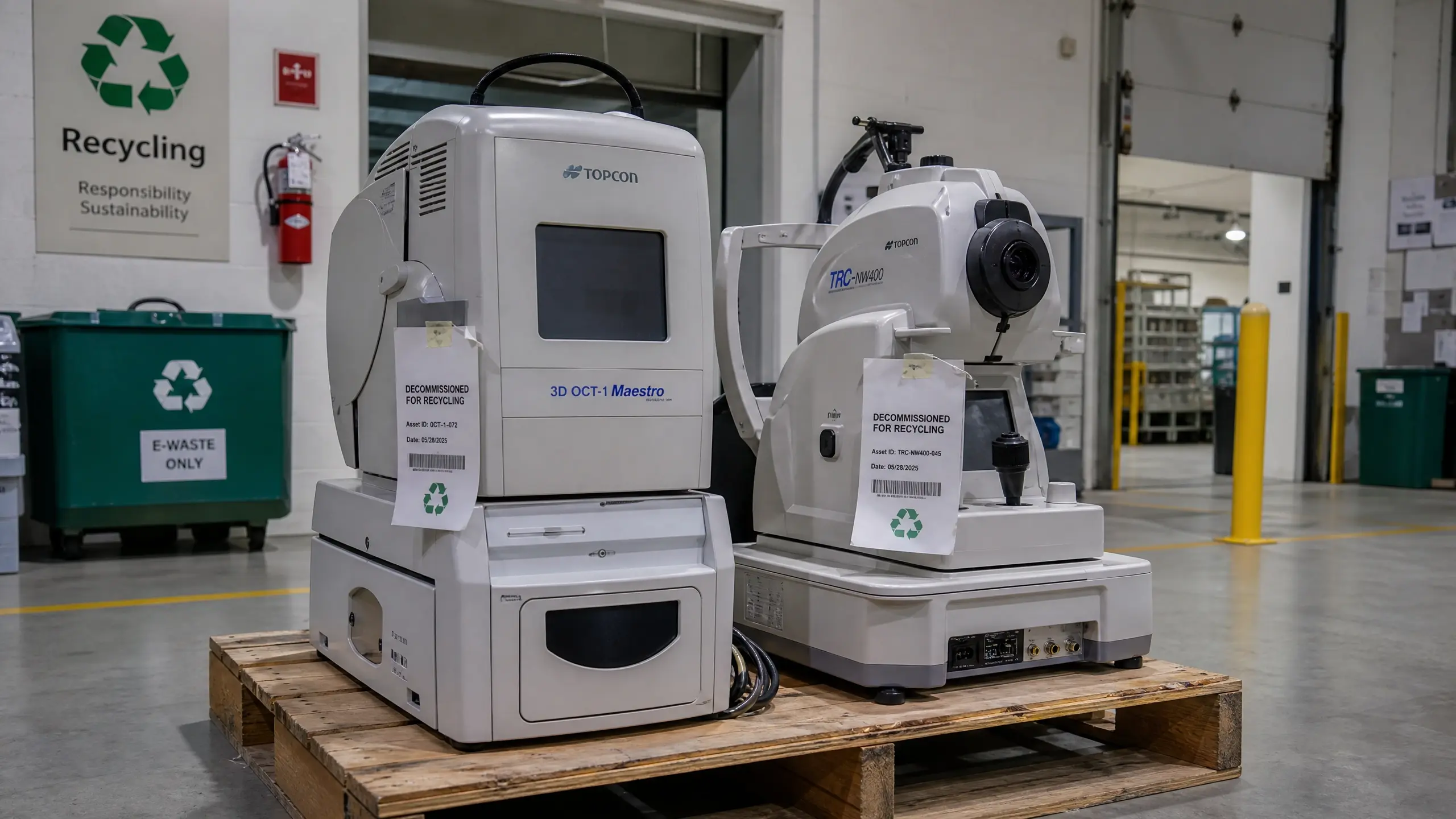
Fundus cameras and retinal imaging devices may contain cameras, optics, circuit boards, lamps, sensors, screens, workstations and data-bearing components. These systems are often replaced when clinics upgrade to newer imaging platforms, when software support ends, or when repair becomes too expensive.
A fundus camera may be suitable for recycling after assessment, but data review is important. Even if the camera itself does not store long-term patient records, the connected computer or imaging workstation may. That is why eye clinic equipment disposal should include both the device and its connected IT environment.
For clinics that want fast pickup, the best approach is to send photos of the camera, workstation, printer and accessories together. This helps the team understand whether the collection is a small equipment pickup, a fragile packing job or a data-sensitive device removal.
What to Include in Your Pickup Request
- Device name and brand.
- Approximate age and working condition.
- Whether a workstation, computer, printer or monitor is included.
- Whether patient images may be stored on the system.
- Whether accessories, tables, cables or carts are included.
- Clinic location, floor level and access information.
- Whether you need a recycling certificate or data destruction documentation.
Slit Lamp and Ophthalmic Microscope Recycling
Slit lamps and ophthalmic microscopes may be less data-heavy than imaging systems, but they can still contain valuable materials and delicate components. They may include metal frames, optical assemblies, lighting systems, cameras, power supplies, cables, stands and electronic controls.
For ophthalmology equipment recycling Australia, slit lamps and microscopes should be secured before transport so fragile optics and attachments are not loose. If the device includes a camera or digital imaging module, check whether any storage media or connected computer is involved.
Some clinics also have old slit lamp tables, powered stands, camera attachments and monitors stored with the device. These should be included in the equipment list because they may affect the pickup method. A single slit lamp on a bench may be simple to handle, while multiple units with stands and tables may require a more organised collection.
Slit Lamp Preparation Notes
- Remove loose accessories and pack them separately where practical.
- Secure moving parts and fragile optical components.
- Photograph the device, stand, power supply and accessories.
- Identify any connected camera, monitor or computer.
- Confirm whether the item is bench-mounted, table-mounted or freestanding.
- Include all related components in the pickup list.
Autorefractor, Keratometer, Phoropter and Lensmeter Recycling
Autorefractors, keratometers, phoropters and lensmeters are common in optometry and ophthalmology environments. Digital units may include sensors, motors, displays, circuit boards, controllers, software and optical components. Even when a device is no longer clinically useful, it may still contain recyclable materials.
These devices are usually easier to collect than large imaging equipment, but they still need proper preparation. The most important details are brand, model, quantity, condition, accessories and whether the unit is freestanding, table-mounted or connected to a workstation.
A clinic clearing multiple exam rooms should group these devices into a simple asset list. For example: two autorefractors, one keratometer, one lensmeter, three slit lamps, two diagnostic monitors and one old workstation. A clear list helps E-Waste Collect identify the most efficient pickup method.
Refraction Equipment That May Be Collected
- Autorefractors
- Keratometer units
- Combination autorefractor-keratometers
- Digital and manual phoropters
- Lensmeters
- Chart projectors and electronic vision testing systems
- Optometry tables and diagnostic carts with electrical components
Visual Field Analyser Disposal
Visual field analysers are another important category for ophthalmology and optometry equipment disposal. These devices often include a main diagnostic unit, patient interface, monitor, computer, printer, software and stored test results. Because of this, the device should be reviewed for data before pickup.
Visual field analyser recycling should consider both physical and digital risks. Physically, the device may contain screens, plastics, circuit boards, wiring, lights, sensors and metal components. Digitally, it may store patient names, test records, reports or linked workstation data. A data-aware disposal process is especially useful for clinics that need audit confidence.
Visual Field Analyser Pickup Checklist
- Verify whether the analyzer has a connected workstation or an internal computer.
- Check whether patient reports or test history are stored locally.
- Photograph the unit, label plate and accessories.
- List connected computers, printers, cables and power supplies.
- Secure moving parts for pickup.
- Request data handling documentation if required.
Ophthalmic Lasers and Diagnostic Device Deinstallation
Ophthalmic lasers require special attention. They should not be moved casually or collected without a proper safety review. Some may require deinstallation planning, manufacturer guidance, specialist checks, internal safety sign-off or confirmation that the device is safe for transport.
E-Waste Collect can help coordinate the recycling and removal conversation, but your clinic or hospital should first identify the laser type, condition, whether it is still connected, whether it contains data, whether accessories are included, and whether any safety or service documentation is available.
For laser-related equipment, it is better to provide too much information than too little. Include photos, model details, installation status, access details, service notes, warning labels and whether the device is still connected to power or other services. This allows the job to be assessed safely before a collection is confirmed.
Laser and Installed Equipment Review Points
- Is the device still connected to power, gas, water, network or building services?
- Does it require technician deinstallation before transport?
- Are there safety locks, keys, labels or warning documentation?
- Does it include a workstation, computer or storage media?
- Are accessories, foot pedals, cables or carts included?
- Does your facility require internal sign-off before removal?
- Does the provider need special handling, packing or access planning?
For phacoemulsification machines specifically, EwasteCollect manages the full decommissioning process for Alcon Centurion, Johnson and Vision Express, and other phaco systems used in Australian eye clinics and hospitals. See our complete guide to phacoemulsification machine recycling Australia, covering compliant collection, data wiping and recycling certificates.
Data Security for Eye Clinic Equipment
Data security is one of the biggest hidden issues in ophthalmology equipment recycling Australia. Eye clinic equipment can store or connect to patient data in several ways. OCT scanners, fundus cameras, visual field analysers, imaging workstations, diagnostic computers, printers and servers may contain images, reports, patient identifiers, user profiles or network settings.
Before any data-bearing device leaves your clinic, decide whether data needs to be backed up, wiped, removed or physically destroyed. For IT equipment and storage media, the Australian Cyber Security Centre provides guidance on media sanitisation. Clinics should also follow internal privacy and cybersecurity policies.
Data can sit in places staff may not immediately think about. A printer may have memory. A workstation may store exported images. A diagnostic device may retain test history. An external hard drive may have backups. A networked device may contain settings that should not leave the clinic. Because of this, any eye clinic equipment pickup should include a data review step.

Eye Clinic Devices That May Contain Data
- OCT scanners and connected workstations
- Fundus cameras and retinal imaging systems
- Visual field analysers
- Diagnostic computers and all-in-one workstations
- Printers, scanners and multifunction devices
- Servers, backup drives and network devices
- External drives, USB media, hard drives and SSDs
- Cloud-sync devices or systems connected to practice software
Data Handling Options
Depending on the device, data handling may include secure wiping, hard drive removal, media destruction, device reset, software decommissioning or documented chain-of-custody. If you need data destruction records, mention this before booking collection. Strong data handling is one of the reasons clinics choose a specialist medical equipment recycling service instead of a general pickup service.
Have Data-Bearing Eye Clinic Equipment?
OCT scanners, fundus cameras, visual field analysers, diagnostic computers and imaging workstations may contain patient data. Tell us what devices you have, and we can help plan pickup, data-aware handling and documentation options.
Ask About Secure Equipment DisposalPacking, Palletising, Crating and Pickup
Ophthalmology equipment can be fragile, heavy or awkward to move. OCT scanners, slit lamps, microscopes and retinal imaging systems may have delicate optics and moving parts. For this reason, pickup should be planned rather than rushed.
For ophthalmology equipment recycling Australia, the right preparation can reduce damage, improve handling safety and make pickup faster. Smaller devices may be boxed or grouped. Larger devices may need palletising. Fragile or high-value equipment may require crating or additional protection. Heavy or installed devices may need access planning before collection.
Packing does not always mean the clinic must package everything itself. It means the pickup plan should consider fragility, weight, access and transport. If a device is on a stand, attached to a table or includes a workstation, the team should know this before arrival. Clear photos are the simplest way to avoid confusion.
Pickup Information to Provide
- Clinic name and suburb.
- List of devices with brand, model and quantity.
- Clear photos of each device and label plate.
- Whether the equipment is loose, boxed, mounted or installed.
- Whether stairs, lifts or narrow doorways are involved.
- Whether loading bay access is available.
- Whether data destruction, certificates or audit trail records are required.
- Preferred collection timeframe and site contact person.
Clinic Clear-Outs, Relocations and Multi-Site Groups
Some eye clinic recycling jobs involve one or two devices. Others involve a full clinic clear-out, relocation, merger, closure or multi-site technology refresh. These larger projects need more structure because the equipment list may include ophthalmology devices, optometry equipment, IT hardware, furniture, powered chairs, printers, cabling, monitors and mixed e-waste.
For larger jobs, the best approach is to create a spreadsheet with site name, suburb, device type, quantity, condition, data risk, access notes and photos. This allows E-Waste Collect to plan the collection, identify which items are standard pickup, which need data handling, and which may need special access or deinstallation review.
Examples of Larger Eye Clinic Projects
- Ophthalmology practice relocation with storage room clear-out.
- Optometry group replacing equipment across several branches.
- Retinal imaging centre upgrading diagnostic workstations.
- Hospital eye department retiring older devices after procurement changes.
- Clinic closure requiring equipment removal before lease handover.
- Bulk pickup of diagnostic devices, workstations, printers and powered furniture.
Certificates, Audit Trail and Documentation
Clinics often want proof that old equipment was collected or recycled responsibly. Documentation may include pickup records, manifests, asset lists, recycling certificates, data destruction certificates or chain-of-custody records. The type of documentation depends on the equipment and service requested.
A strong documentation pack is especially useful for multi-site clinics, hospitals, imaging centres and corporate healthcare groups. It helps show what was removed, when it was collected, whether data was considered, and whether the equipment was sent through a responsible recycling pathway.
Documentation also helps internally. If a clinic owner asks what happened to the old OCT scanner, the practice manager can show the asset list, pickup confirmation and any certificate or data handling record. If a healthcare group wants sustainability reporting, collected equipment summaries can support internal records.
Useful Records to Keep
- Equipment list with brand, model, serial number and condition.
- Photos before pickup.
- Pickup confirmation or manifest.
- Recycling certificate where provided.
- Data destruction certificate where applicable.
- Chain-of-custody records for sensitive or data-bearing devices.
- Notes on packing, palletising, crating or deinstallation.
- Internal approval or asset retirement records.
What Not to Put in an Ophthalmology Equipment Recycling Pickup
Eye clinic equipment recycling should not be mixed with clinical waste, sharps, pharmaceuticals, chemicals, biological material or general rubbish. This keeps the collection safer and helps prevent delays. It also helps the recycling team focus on the equipment rather than sorting unrelated waste at pickup.
If you have cleaning chemicals, medicines, contaminated disposables or unknown liquids stored with the equipment, separate them before pickup and follow the correct internal pathway. If an item is uncertain, flag it before collection rather than hiding it inside a box.
| Do Not Include | Examples | Correct Action |
|---|---|---|
| Sharps | Needles, blades, lancets | Use approved sharps disposal pathway |
| Clinical waste | Contaminated wipes, swabs, dressings, disposables | Use clinical waste stream |
| Pharmaceutical waste | Medicines, drug residues, expired clinical products | Use pharmaceutical waste process |
| Chemicals | Cleaning fluids, reagents, solvents or unknown liquids | Check SDS and use hazardous chemical pathway where required |
| General rubbish | Paper, food waste, unrelated office waste | Separate before pickup |
How to Prepare Your Eye Clinic for Pickup
Preparation makes the biggest difference. A clinic that sends photos, equipment details and access notes will usually get faster pickup planning than a clinic that only says “we have old eye equipment”. The goal is not to make clinic staff dismantle complex devices. The goal is to provide enough information so the removal can be planned safely.
- Create a list of devices for collection.
- Take clear photos of the front, back, label plate and accessories.
- Identify connected computers, monitors, printers or storage media.
- Remove clinical waste, paper, disposable items and unrelated rubbish.
- Secure loose parts, cables and fragile accessories.
- Check whether patient data may be stored on the device or workstation.
- Confirm access: stairs, lift, loading bay, parking and room location.
- Ask whether packing, palletising, crating or deinstallation is required.
- Request certificates or data destruction records if your clinic needs documentation.
Ophthalmology Equipment Recycling by Location
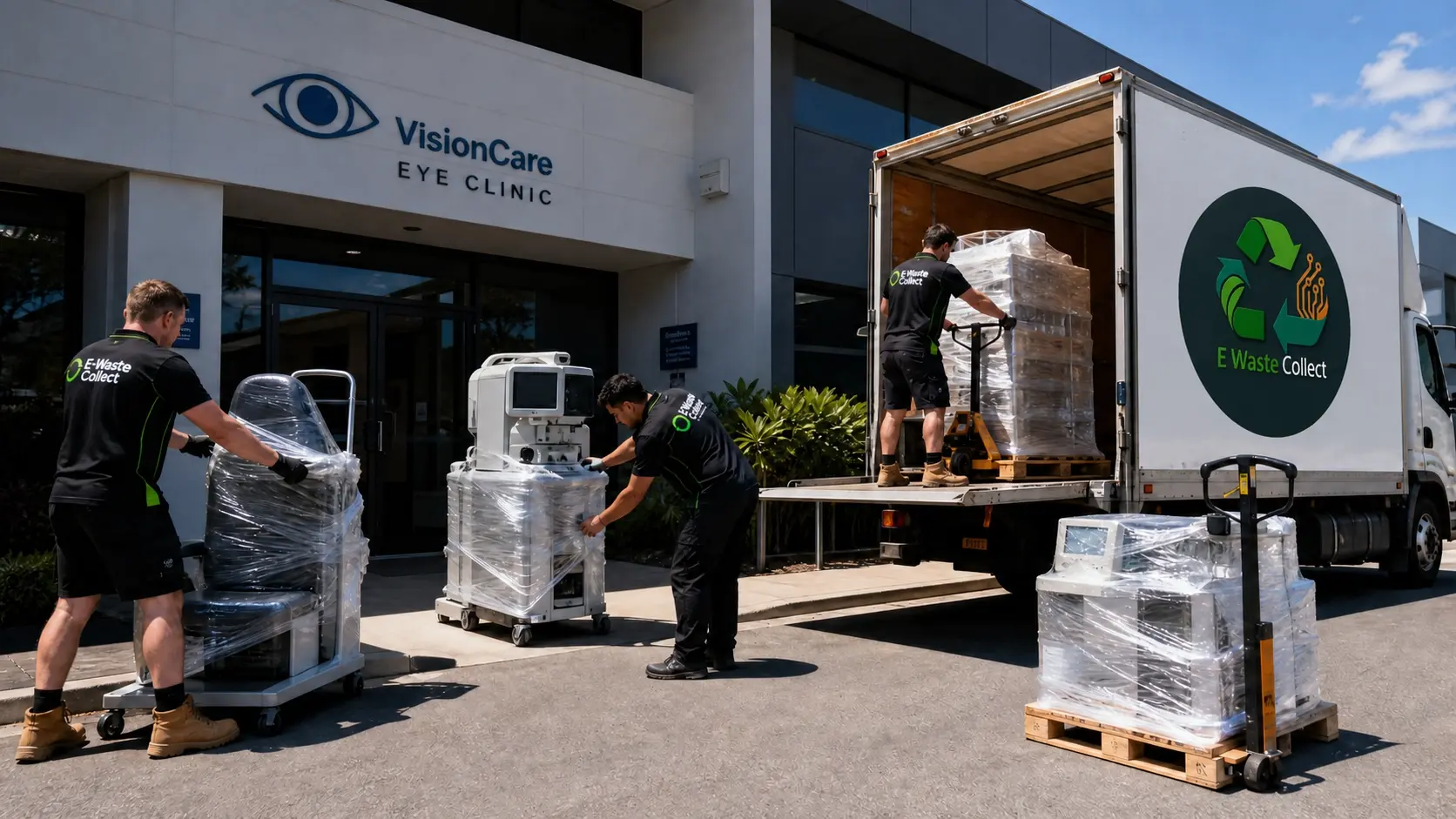
E-Waste Collect supports ophthalmology equipment recycling Australia across metro and regional areas, depending on equipment type, quantity, pickup access and scheduling. Eye clinic equipment can often be coordinated as a planned collection, especially when clinics provide a clear equipment list and photos.
For regional clinics, the best way to start is to send the suburb, device list, photos and preferred timeframe. Regional pickups may need route planning or scheduled collection windows, so clear information makes the process easier.
Common Service Areas
- Sydney and regional NSW
- Melbourne and regional Victoria
- Brisbane, Gold Coast and Queensland
- Perth and Western Australia
- Adelaide and South Australia
- Canberra and ACT
- Hobart and Tasmania
- Darwin and Northern Territory
External References for Safe Equipment Disposal
For a more comprehensive overview of product stewardship and e-waste in Australia, see Information on e-stewardship from the Australian Government and DCCEEW product stewardship information.
For data-bearing devices, see the Australian Cyber Security Centre media sanitisation guidance. For clinical waste separation, see NSW Health clinical waste management and NSW EPA clinical and related waste. For chemical or SDS context, see Safe Work Australia safety data sheets guidance.
Why Choose E-Waste Collect for Eye Clinic Equipment?
Eye clinics need a provider that understands medical equipment, not just general rubbish removal. E-Waste Collect focuses on medical, pathology, laboratory and healthcare equipment recycling, with practical support for pickup planning, asset lists, data-aware handling, packing advice, certificates and clinic clear-outs.
Our goal is to make ophthalmology equipment recycling Australia easier for clinics that do not have time to manage complex disposal projects. We can assist you in determining what may be gathered, what requires preparation, and what documentation would be helpful if you send us your photographs and device list.
We understand that many clinics do not have a dedicated facilities team. That is why our process is practical: tell us what you have, send clear photos, explain access and data concerns, and we help guide the next step. This is designed to make it easier for clinic managers and owners to say yes to responsible recycling instead of leaving old equipment in storage.
Best-Fit Customers
- Ophthalmology clinics upgrading diagnostic equipment
- Optometry practices clearing old devices
- Retinal imaging providers replacing older systems
- Hospital eye departments managing asset retirement
- Multi-site healthcare groups needing organised pickup
- Clinics requiring certificates, audit trail or data destruction options
- Practice managers preparing for relocation or refurbishment
- Owners wanting old equipment cleared without landfill-focused disposal
How to Book an Ophthalmology Equipment Pickup
Booking starts with information. A simple message with “we have old equipment” is not enough for the fastest response. A strong request includes device names, photos, location, access details and whether data handling or documentation is needed.
For ophthalmology equipment recycling Australia, we recommend sending one email or form submission with all devices grouped together. This avoids back-and-forth and makes it easier to plan the pickup. If you are unsure what a device is called, photos are usually enough to start the assessment.
- Clinic name and suburb
- Contact person and phone/email
- Device list and approximate quantity
- Photos of devices and labels
- Whether any device may contain patient data
- Whether certificates or data destruction records are required
- Notes on access points such parking, lifts, loading docks, and staircases
- Preferred pickup timeframe
Conclusion: Turn Old Eye Clinic Equipment Into a Responsible Recycling Outcome
Ophthalmology equipment recycling Australia gives clinics a practical way to clear old OCT scanners, fundus cameras, slit lamps, autorefractors, keratometers, phoropters, visual field analysers, diagnostic workstations and related eye clinic electronics without treating them as ordinary rubbish.
The key is preparation. Identify the equipment, take pictures, look for data, secure vulnerable parts, eliminate loose waste, verify access, and, if necessary, obtain documentation. This strategy keeps valuable metal and technological materials out of landfills, safeguards your clinic, and encourages responsible recycling.
If your clinic is ready to clear unwanted ophthalmology equipment, E-Waste Collect can help you plan the next step with a practical, equipment-focused pickup process.
Book a Free Ophthalmology Equipment Pickup
Ready to remove old ophthalmology, optometry or retinal imaging equipment? Send your device list, photos and clinic suburb. E-Waste Collect can help with pickup planning, recycling, packing, palletising, certificates and data-aware handling.
Book a Free PickupFrequently Asked Questions About Ophthalmology Equipment Recycling
1) What ophthalmology equipment can be recycled?
Many eye clinic devices can be assessed for recycling, including OCT scanners, fundus cameras, retinal imaging systems, slit lamps, ophthalmic microscopes, autorefractors, keratometers, phoropters, lensmeters, visual field analysers, diagnostic carts, monitors, printers and computers.
2) Can OCT scanners be recycled?
Yes, OCT scanners can often be recycled after assessment.Prior to collecting, clinics should examine patient photos, linked workstations, storage media, accessories, and access needs.
3) Do fundus cameras contain patient data?
Some fundus camera systems may store images directly or through a connected computer or workstation. Data-bearing devices should be reviewed before recycling.
4) Can you collect slit lamps and ophthalmic microscopes?
Slit lamps and ophthalmic microscopes can often be collected for recycling. Fragile optics, cameras, cables and accessories should be secured and photographed before pickup.
5) Do you collect autorefractors and keratometers?
Yes. Autorefractors, keratometers, lensmeters and related refraction equipment can be assessed for pickup and recycling. Send photos, quantity, brand and location details.
6) Can visual field analysers be recycled?
Visual field analysers can often be assessed for recycling. Clinics should check whether the device or connected workstation stores patient test records or reports.
7) Can ophthalmic lasers be recycled?
Ophthalmic lasers may need safety review, deinstallation planning and internal sign-off before pickup. Send device details, photos and connection information before arranging removal.
8) What should eye clinics remove before pickup?
Remove clinical waste, disposable items, paper, unrelated rubbish, chemicals and loose accessories that do not belong with the equipment. Secure fragile parts and identify any data-bearing devices.
9) Do you provide certificates?
Documentation options may include pickup records, recycling certificates, data destruction certificates or chain-of-custody records depending on the equipment and service requested.
10) Do you collect from optometry practices?
Yes. Optometry practices with old autorefractors, keratometers, phoropters, lensmeters, slit lamps, computers, printers and diagnostic devices can request assessment and pickup planning.
11) Can you help with eye clinic clear-outs?
Yes. Eye clinic clear-outs can include equipment lists, photos, pickup planning, packing, palletising, documentation and coordination for multiple devices.
12) How do I book ophthalmology equipment recycling Australia-wide?
Provide the suburb of your clinic, a list of the equipment, pictures, access information, and information about if certificates or data destruction are needed. This helps the pickup plan move faster.
Tip: For multi-site groups, prepare one spreadsheet with clinic location, device type, quantity, condition, data risk and photos.