Pathology Equipment Disposal in Australia
Pathology equipment disposal in Australia is a specialist process. Analysers, centrifuges, microscopes, PCR machines and diagnostic refrigerators do not belong in general waste, standard e-waste skips or kerbside collections. They contain biological residues, hazardous chemicals, data-bearing components and regulated materials that require specialist handling from collection through to material recovery.
- Free pickupFor eligible jobs
- Own teamNo subcontractors
- Blancco erasureFor data bearing devices
- Recycling certificateFor every job
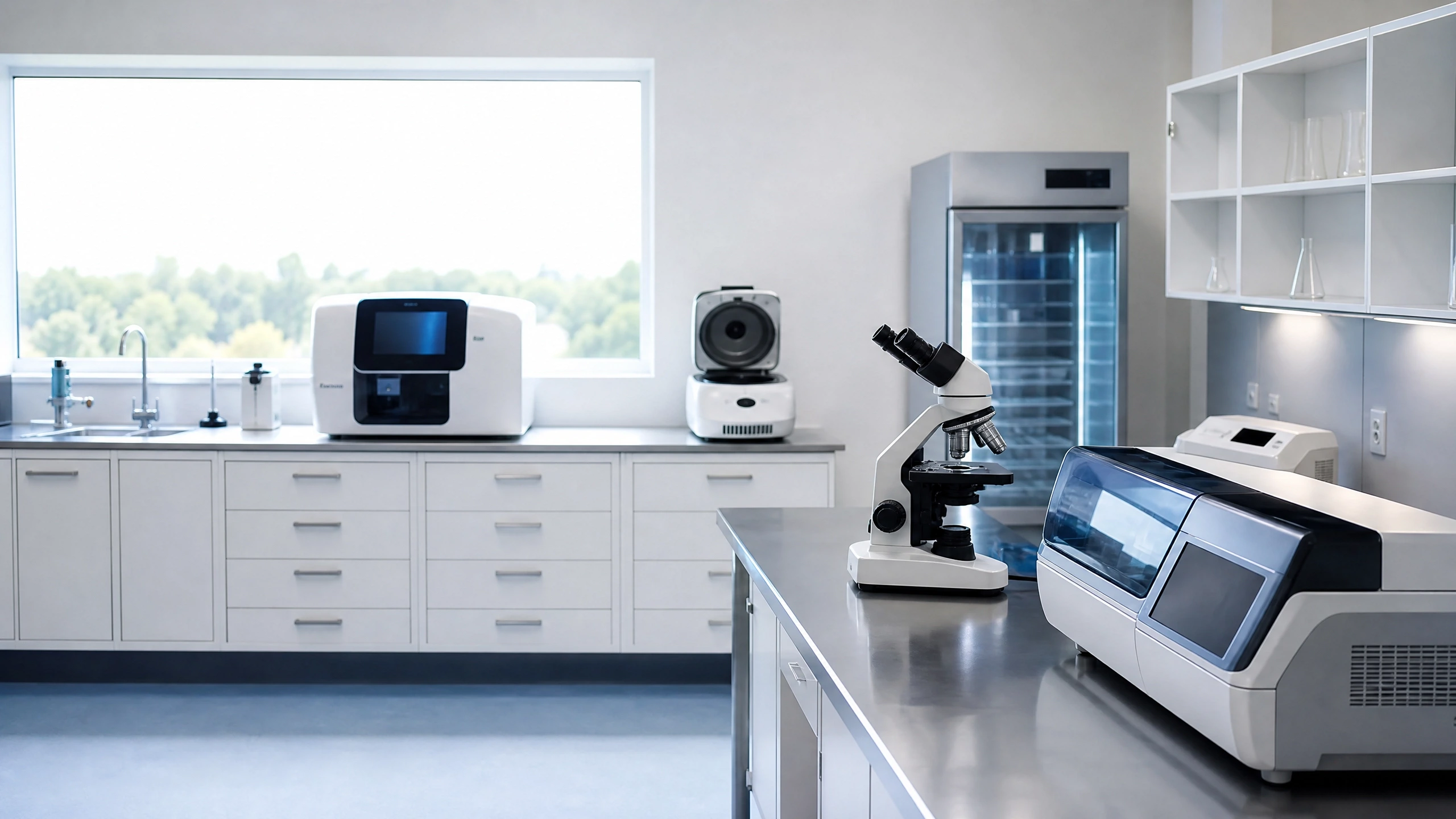
E-Waste Collect provides pathology equipment disposal services across all Australian states and territories. We collect directly from pathology laboratories, hospital pathology departments, general practice clinics, diagnostic imaging centres and research institutions. Our service is free for qualifying organisations and comes with full documentation including a certificate of recycling and, where applicable, a data destruction certificate.
What Pathology Equipment We Accept for Disposal
Our pathology equipment disposal service covers the full range of clinical laboratory devices, including:
- Haematology analysers and blood gas analysers
- Biochemistry and immunology analysers
- Centrifuges (including high-speed and refrigerated centrifuges)
- PCR machines, thermocyclers and gel electrophoresis equipment
- Microscopes (light, fluorescence and electron)
- Laboratory refrigerators and freezers (including ultra-low temperature units)
- Incubators, ovens and autoclaves
- Pipetting systems and liquid handling robots
- Flow cytometers and cell counters
- Mass spectrometers and chromatography systems
- Slide stainers, tissue processors and microtomes
- Point-of-care testing devices
- Laboratory information systems workstations and printers
If your device is not listed, contact us. In most cases, pathology equipment removal can be arranged regardless of brand, age or condition.
Why Pathology Equipment Removal Requires a Specialist Recycler
Standard e-waste recyclers are not equipped to handle pathology equipment decommissioning safely. The reasons are specific to the nature of laboratory devices.
Biological Contamination Risk
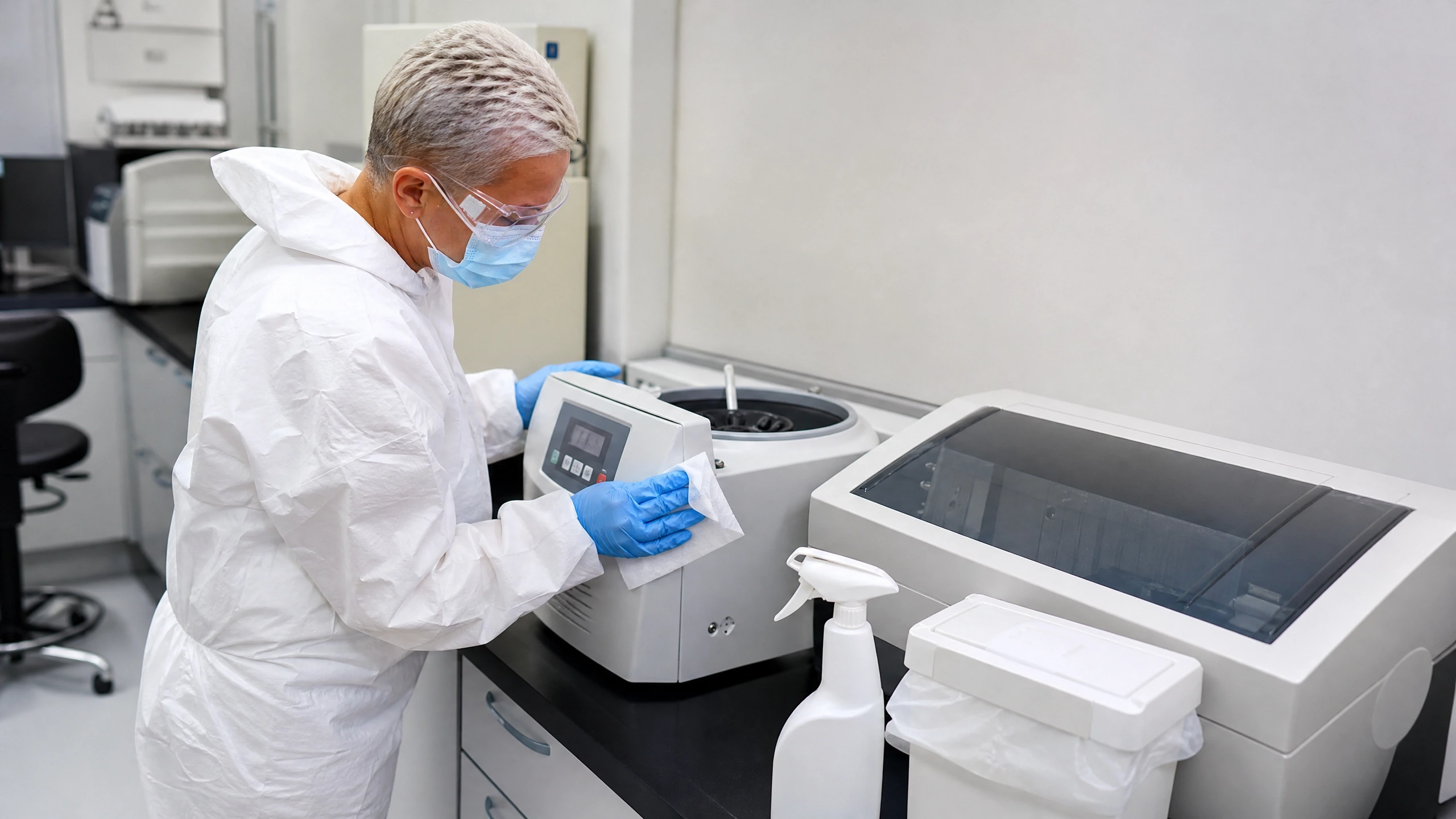
Many laboratory instruments are exposed to blood, urine, tissue samples and other biological materials during routine operation. Even after cleaning, residual biological contamination may be present in fluid pathways, rotors and tubing. Pathology equipment removal must account for this risk at every stage of the collection and processing chain.
Chemical Hazards
Pathology laboratories use reagents, solvents, fixatives and staining compounds that can contaminate the instruments used with them. Xylene, formalin, acetone and various acid-based reagents may be present in analysers, tissue processors and staining equipment. These substances require careful management during pathology equipment decommissioning and material separation.
Data and Privacy Obligations
Many analysers, LIS workstations and point-of-care devices store patient data including test results, identifiers and sample records. Under the Australian Privacy Act 1988 and the Therapeutic Goods Administration requirements, this data must be securely destroyed before decommissioning. E-Waste Collect provides a data destruction certificate for every device that carries patient information.
Regulated Substances
Pathology equipment such as refrigerators and ultra-low temperature freezers may contain HFC or HCFC refrigerants regulated under the Ozone Protection and Synthetic Greenhouse Gas Management Act. Centrifuge rotors may contain beryllium. Certain analysers contain radioactive calibration sources. Pathology equipment removal through a specialist provider ensures these substances are managed in compliance with applicable Australian law.
The Pathology Equipment Decommissioning Process: 4 Steps
E-Waste Collect follows a structured four-step process for every pathology equipment removal engagement.
Pathology Equipment Decommissioning by Facility Type
Hospital Pathology Departments
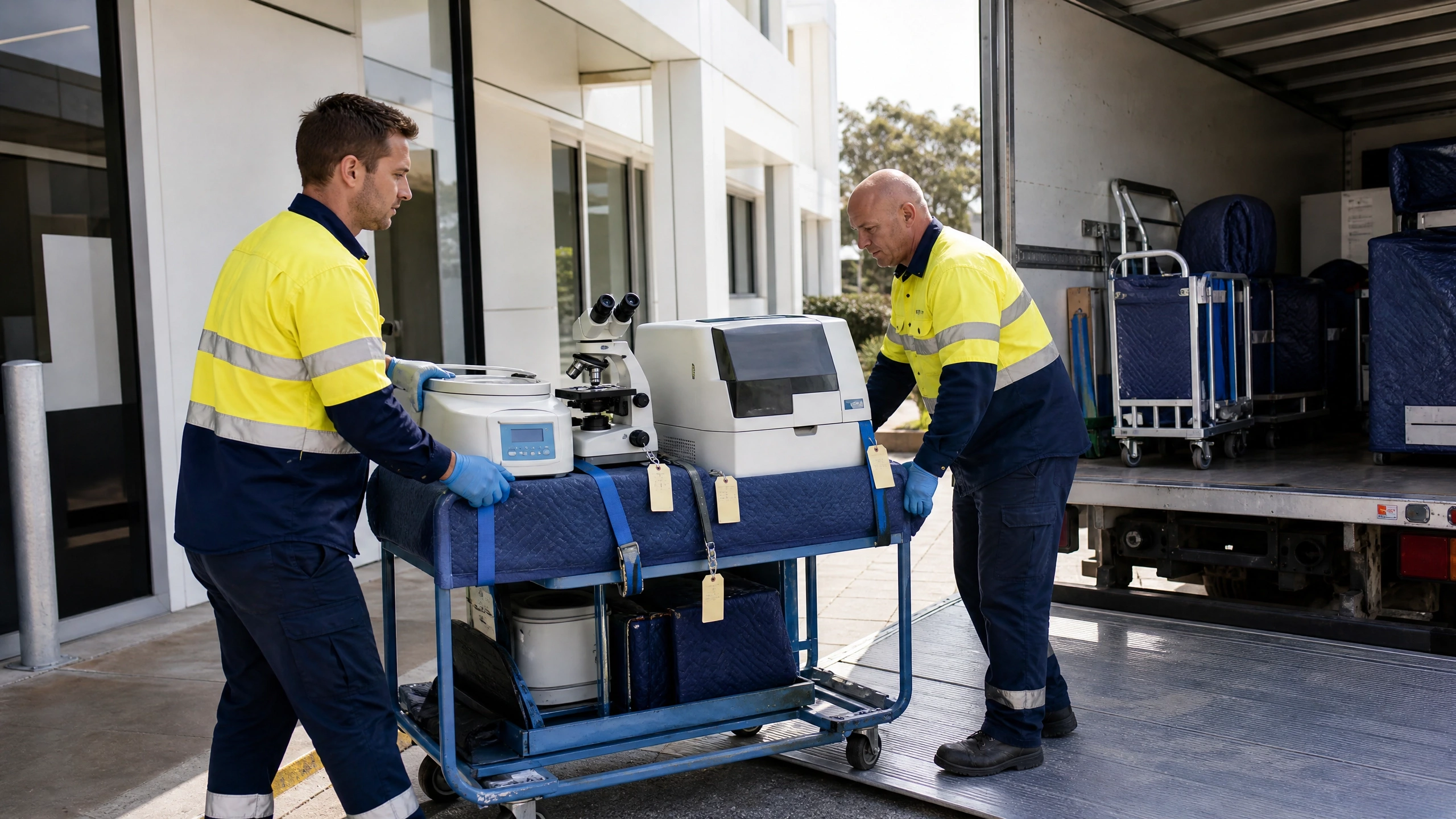
Hospital pathology departments upgrading major analysers or decommissioning a laboratory require coordinated pathology equipment removal that minimises disruption to ongoing diagnostic services. E-Waste Collect works with facilities managers and infection control teams to schedule collections at agreed times that limit disruption.
Private Pathology Laboratories
Private pathology groups consolidating sites or upgrading equipment generate significant volumes of instruments requiring specialist disposal. E-Waste Collect supports multi-site collections for private pathology operators, including full audit trails for each collection point.
General Practice and Specialist Clinics
Many GP clinics and specialist practices operate point-of-care testing devices, small analysers and centrifuges. Pathology equipment decommissioning for clinic settings is typically a single-visit collection covering a small number of items, provided at no cost to qualifying clinical practices.
Research Institutions and Universities
Research laboratories regularly decommission high-value analytical instruments including mass spectrometers, flow cytometers and specialised centrifuges. Pathology equipment removal for research settings must account for proprietary data stored on connected workstations and for the potential presence of radioactive or chemical standards.

Compliance Requirements for Pathology Equipment Decommissioning in Australia
Pathology facilities in Australia operate under a range of regulatory frameworks that directly affect equipment disposal obligations.
| Regulation | Applies To | Disposal Relevance |
|---|---|---|
| NPAAC standards | All accredited pathology labs | Equipment records and decommissioning documentation |
| Australian Privacy Act 1988 | All healthcare providers | Data destruction before device disposal |
| State and territory e-waste legislation | All businesses | Prohibition on landfill disposal of e-waste |
| Ozone Protection Act | Labs with refrigerants | Proper recovery of HFC and HCFC refrigerants |
| Radiation Act (state-specific) | Labs with radioactive sources | Licence requirements for disposal |
E-Waste Collect pathology equipment removal service is designed to satisfy all applicable compliance requirements. Our recycling certificates and chain-of-custody records support your internal and external audits.
Brands We Collect
We collect pathology and histology equipment made by these manufacturers, working or broken.
Brand names describe the equipment only. We are not affiliated with these manufacturers.
More Pathology Equipment We Recycle
Pathology lab e-waste recycling covers far more than the main analysers. These are the items we are asked about most often.
Histology and cryostats
Microtome and cryostat recycling, tissue processor and tissue embedding centre, including Sakura Tissue-Tek processor, Thermo Shandon cryostat and Leica histology equipment. Mohs surgery cryostat from skin clinics is handled the same way. Paraffin and stains must be removed before pickup.
Stainers and coverslippers
Automated slide stainer recycling, coverslipper, automated gram stainer and blood smear maker stainers. IHC platforms such as the Ventana Benchmark IHC stainer, Leica Bond IHC stainer and Dako Omnis Autostainer are collected once reagent packs and waste containers are out.
Bench equipment
Slide warmer and paraffin dispenser recycling, flotation water bath and pathology grossing station. Grossing stations need to be drained of formalin and cleaned by your team first.
Digital pathology
Digital pathology slide scanner recycling for Aperio, Hamamatsu NanoZoomer and 3DHistech Pannoramic scanners. Drives in scanners and image servers are wiped with Blancco secure data erasure or destroyed.
Analysers and automation
Clinical pathology analyser recycling for chemistry, haematology and immunoassay systems, plus lab track automation conveyor and specimen archiving storage module when a core lab is upgraded. All samples must be removed from archive modules.
Collection centres
Pathology collection centre equipment recycling, including phlebotomy chair, vein viewer, small centrifuges and specimen fridges from collection rooms.
IT and dictation
Server room decommissioning for pathology laboratories, LIS workstations, printers and pathology voice dictation microphone recycling. Every data bearing device is wiped with Blancco or its drives are destroyed.
NSW and Melbourne
Recycling obsolete pathology analysers in NSW is simple: our team is based in Campbelltown NSW and drop-offs are accepted there by arrangement. Our own collection team also travels to Melbourne and other cities across Australia and New Zealand.
Frequently Asked Questions
What is pathology equipment disposal?
It is the safe decommissioning and recycling of laboratory instruments and clinical testing devices, including analysers, centrifuges, microscopes, PCR machines and refrigerators used in pathology laboratories. It needs a specialist recycler to manage decontaminated equipment, patient data and regulated materials safely.
Who provides pathology equipment disposal in Australia?
E-Waste Collect collects and recycles pathology equipment across Australia and New Zealand with its own collection team. Pickup is free for eligible jobs at hospitals, private pathology laboratories, GP clinics, specialist practices and research institutions and every job receives a recycling certificate.
Do pathology instruments need decontamination before disposal?
Yes. All pathology instruments used with biological samples must be emptied and decontaminated by your laboratory team before collection. E-Waste Collect provides guidance for common device types.
Is patient data destroyed during pathology equipment removal?
Yes. Data bearing devices are wiped with Blancco secure data erasure or their drives are destroyed. This supports your obligations under the Australian Privacy Act 1988 and your NPAAC accreditation records.
How much does pathology equipment removal cost?
Pickup is free for eligible jobs, depending on equipment type, quantity, location and access. Call our team on 0402 457 565 to confirm eligibility and arrange a collection.
What documentation is provided for pathology equipment removal?
Every job receives a recycling certificate for your audit and NPAAC accreditation records. Data bearing devices are wiped with Blancco or their drives are destroyed.
What is the best way to recycle broken pathology analysers in Melbourne?
Book a collection with E-Waste Collect. Our own collection team picks up broken and working analysers in Melbourne and across Australia. Your team empties and decontaminates the analyser first and you receive a recycling certificate for every job. Pickup is free for eligible jobs.
Can you recycle obsolete pathology analysers in NSW?
Yes. We are based in Campbelltown NSW, collect across the state and accept drop-offs at our Campbelltown site by arrangement. Hard drives in analysers and LIS computers are wiped with Blancco secure data erasure or destroyed.
Do tissue processors and slide stainers need to be emptied before collection?
Yes. Paraffin, stains, reagents, fixatives and waste containers must be removed and the unit decontaminated by your team. We do not collect chemicals or reagents left inside machines.
Book Your Pathology Equipment Decommissioning
Free collection for eligible jobs at pathology laboratories, hospital departments, clinics and research institutions across Australia. Certificate of recycling and data destruction documentation provided.
Book a Free CollectionFor more information on our full range of recycling services, see our complete guide to medical equipment recycling in Australia.
What We Do Not Accept
We collect equipment, not waste streams. Please keep the following separate and use your existing licensed providers:
- Hospital beds, bed frames and mattresses
- X-ray film and radiology film archives
- Clinical and biohazard waste
- Sharps such as needles, blades, lancets and scalpels
- Chemicals, solvents, reagents and fixatives
- Samples and biological material, including sample tubes, plates and used consumables
- Pharmaceuticals and medicines
- Pressurised gas cylinders and liquid nitrogen
- Contaminated consumables
- Loose radioactive sources on their own. Equipment with a sealed source still fitted is assessed case by case.
Everything else is welcome, including working, non-working, surplus, outdated, damaged and end-of-life equipment and single personal or home devices such as CPAP machines, nebulisers and mobility equipment.
Pathology instruments are one part of what we retire. For the full range, free pickup eligibility and the documentation you receive, see medical and laboratory equipment recycling in Australia.
Where we collect
We collect medical and lab equipment across Australia and New Zealand, including Sydney, Melbourne, Brisbane, Canberra and Hobart, plus Wellington in New Zealand. For local pickup details see our Sydney medical equipment collection page, or browse every service area we cover. For large or installed items we also handle medical equipment deinstallation.
More laboratory equipment guides
Related guides from E-Waste Collect.
The main guide to lab equipment recycling and disposal.
Benchtop, floor and refrigerated centrifuges.
Lab fridges, freezers and ULT freezers with refrigerant.
Sterilisers and autoclaves from labs, clinics and hospitals.
Your options for recycling in Australia.
A clear definition with examples.