X-Ray Disposal Melbourne | EwasteCollect
X-ray disposal Melbourne is a specialist medical equipment recycling service required by hospitals, dental practices, GP clinics, radiology centres, chiropractic practices, and veterinary facilities across Victoria. When X-ray equipment reaches end of life, when a practice upgrades to newer digital imaging technology, or when a facility closes or relocates, the decommissioned equipment cannot be sent to general waste or a standard e-waste collection bin. X-ray machines contain hazardous materials including lead shielding, beryllium window components, and silver-bearing chemistry that require handling by accredited recyclers under Victorian and Commonwealth environmental legislation.
EwasteCollect provides scheduled collection and certified x-ray disposal Melbourne service across the region, covering all metropolitan suburbs and regional Victoria by arrangement. Every collection includes a Decommissioning Certificate issued within 3 business days, giving your facility the documentation needed for regulatory compliance, accreditation audits, and internal asset management records. Whether you are decommissioning a single dental intraoral unit or coordinating the complete imaging suite disposal for a private radiology group, our team manages every step of the process.
Book Your x-ray disposal Melbourne collection
Contact EwasteCollect to arrange expert, certified pickup and recycling of your X-ray equipment anywhere in Melbourne and greater Victoria. All facility types and equipment sizes catered for.
Request a Collection Quote
X-Ray Disposal Melbourne: Types of Equipment We Collect
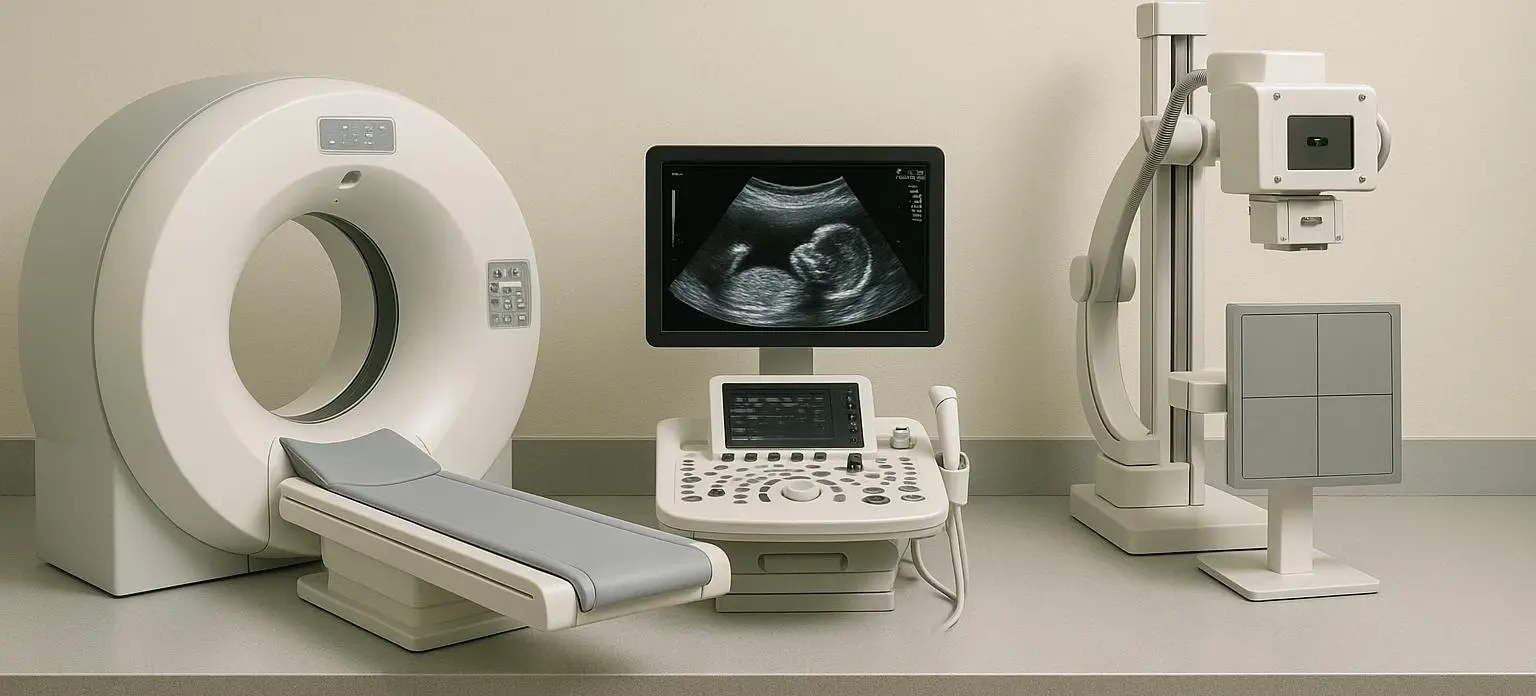
Professional specialist x-ray disposal Melbourne services must cover the full range of imaging devices in use across Victorian healthcare facilities. EwasteCollect collects all of the following equipment categories, from standalone units through to complete imaging suites.
Digital X-Ray Systems
Computed radiography (CR) and direct digital radiography (DR) systems are the most common X-ray equipment type requiring disposal in Melbourne today. These units contain flat panel detectors, imaging plates, and onboard storage drives that may hold patient imaging data, requiring secure data destruction as part of the disposal process.
Conventional Analogue X-Ray Machines
Older film-based X-ray generators, wall-mounted units, and ceiling-suspended systems remain in service at some Melbourne facilities. These contain lead shielding panels, high-voltage transformers filled with insulating oil, and in older models, beryllium windows in the X-ray tube assembly. Each of these components requires specialist processing.
Dental X-Ray Equipment
Intraoral X-ray units, panoramic OPG machines, and cone beam CT (CBCT) systems from Melbourne dental practices are among the most frequently replaced medical imaging devices. Dental X-ray equipment typically has a shorter replacement cycle than other imaging categories and generates high volumes of decommissioning requirements across Victoria annually.
Portable and Mobile X-Ray Units
Mobile X-ray systems used in hospital wards, emergency departments, and intensive care settings contain lithium battery packs, electronics, and imaging components requiring specialist recycling. Portable POCUS-style units with X-ray capability are also collected as part of our Melbourne service.
Fluoroscopy and C-Arm Systems
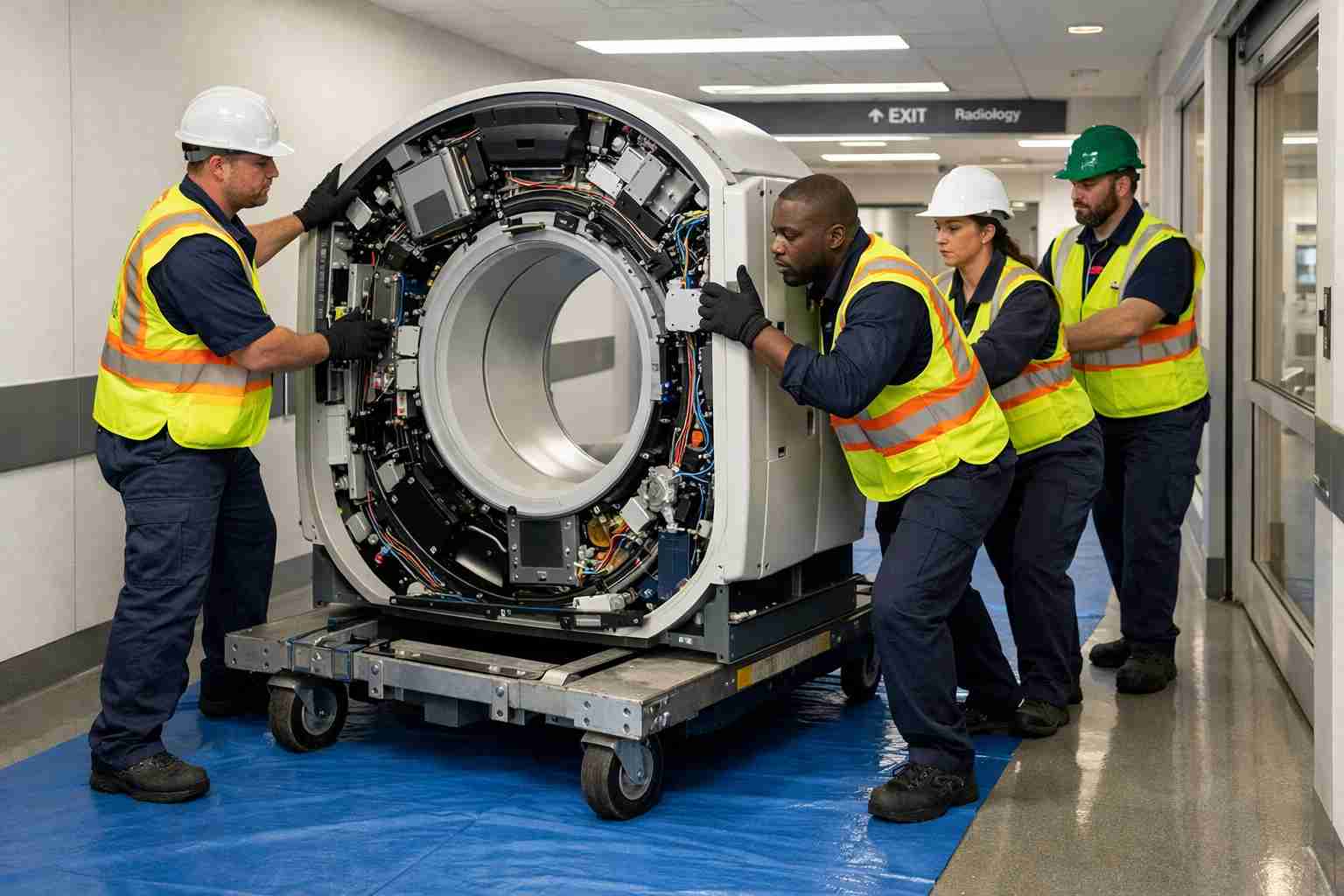
Fluoroscopy units and C-arm imaging systems used in surgical theatres, orthopaedic suites, and interventional radiology are large, complex devices with multiple hazardous components. EwasteCollect brings appropriate handling equipment for safe removal from clinical environments, including operating theatres on upper floors.
Film Processors and Darkroom Equipment
Automatic film processors, daylight loaders, darkroom safelights, and associated chemical processing equipment from radiology and dental facilities. Film processing chemistry contains silver thiosulphate compounds and developer chemicals requiring chemical waste handling separate from electronic recycling streams.
In addition to the main imaging units, our x-ray disposal Melbourne service covers lead aprons and protective apparel, X-ray viewing boxes and light panels, DICOM workstations and reporting computers associated with imaging suites, and PACS servers and archiving hardware that may hold large volumes of patient imaging data.
Why X-Ray Disposal Melbourne Requires Specialist Handling
X-ray equipment cannot be placed in general waste, left for kerbside collection, or deposited in standard consumer e-waste drop-off bins. Victorian legislation and Commonwealth regulations create specific obligations for health facilities when decommissioning imaging equipment, and the physical characteristics of X-ray machines mean specialist handling is required for safe removal.
Hazardous Materials in X-Ray Equipment
The materials that make X-ray equipment effective in clinical use are the same materials that require careful management at end of life. Lead is used extensively as a radiation shielding material in X-ray machine housings, tube assemblies, and aprons. A single conventional X-ray generator cabinet may contain several kilograms of lead in its shielding panels. When sent to general waste, this lead enters landfill where it can leach into groundwater over time.
Beryllium is used in the windows of some X-ray tubes because its low atomic number allows X-rays to pass through efficiently. Beryllium dust is highly toxic and a known carcinogen. Improper dismantling of X-ray tubes containing beryllium creates an occupational health hazard and requires handling under specific safety protocols. Accredited recyclers have the procedures and personal protective equipment to manage beryllium-containing components safely.
Oil-filled high-voltage transformers in older X-ray generator units may contain insulating oils that require chemical waste disposal. Silver compounds in conventional X-ray film and processing chemistry have both commercial recovery value and environmental risk if landfilled. Lithium batteries in portable units present fire risk if damaged during disposal. Each of these components requires specialist downstream processing.
Under the Environment Protection Act 2017 (Vic) and the EPA Victoria e-waste regulations, businesses and health facilities have a general environmental duty to manage waste in a way that minimises risk of harm to human health and the environment. Sending X-ray equipment containing lead, beryllium, or chemical residues to general waste may constitute a breach of this duty. Using a documented, accredited recycler demonstrates compliance and provides an audit trail for accreditation purposes.

Radiation Safety Considerations
X-ray equipment that generates ionising radiation is subject to oversight under the Radiation Act 2005 (Vic) and the national framework administered by the Australian Radiation Protection and Nuclear Safety Agency (ARPANSA). While most decommissioned X-ray equipment does not retain radioactive material after it is powered down, facilities should confirm the specific regulatory requirements for their equipment type with their radiation safety officer before arranging collection. EwasteCollect works within these regulatory frameworks and can advise on documentation requirements for decommissioning.
Patient Data on Digital X-Ray Systems
Modern digital X-ray systems store patient imaging data on internal hard drives, solid-state drives, or flash memory. Before any x-ray disposal Melbourne service removes digital imaging equipment from your facility, patient data must be permanently destroyed in accordance with the Privacy Act 1988 (Cth) and the Australian Privacy Principles. EwasteCollect offers secure data destruction for data-bearing devices collected during our service, with a Certificate of Data Destruction issued for each device processed.
The Legal and Compliance Framework for X-Ray Disposal in Melbourne
Melbourne health facilities decommissioning X-ray equipment must navigate several overlapping regulatory frameworks. Understanding these obligations helps facilities choose an appropriate specialist provider for your facility and maintain the documentation needed for compliance audits.
Victorian E-Waste Regulations
Victoria introduced mandatory e-waste regulations that prohibit the disposal of electronic equipment, including medical imaging devices, in general household and commercial waste streams. Electronic equipment must be directed to accredited collection and recycling channels. Facilities that send X-ray equipment to landfill risk enforcement action from EPA Victoria and may face liability for remediation costs if hazardous materials contaminate soil or groundwater.
NSQHS Accreditation Requirements
Health facilities accredited under the National Safety and Quality Health Service (NSQHS) Standards are required to demonstrate that equipment is managed and disposed of in a manner consistent with safety and environmental obligations. A Decommissioning Certificate from an accredited recycler provides the documentary evidence needed to satisfy auditors that decommissioned imaging equipment was handled appropriately. Facilities without documentation may face findings during accreditation surveys.
Asset Disposal Records
Many Melbourne health facilities are required to maintain capital asset registers and produce evidence of disposal for auditing purposes. A Decommissioning Certificate listing the equipment serial numbers, collection date, and recycling destination serves as the formal disposal record for asset management purposes. EwasteCollect issues this certificate for every collection as a standard part of our x-ray disposal Melbourne collection service.
| Regulatory Framework | Obligation | Documentation Provided |
|---|---|---|
| EPA Victoria E-Waste Regulations | No general waste disposal of electronics | Decommissioning Certificate |
| Privacy Act 1988 (Cth) | Secure destruction of patient data | Certificate of Data Destruction |
| NSQHS Standards | Documented compliant disposal | Decommissioning Certificate |
| Radiation Act 2005 (Vic) | Safe decommissioning of radiation equipment | Collection records |
How to Prepare Your X-Ray Equipment for Collection
Proper preparation before your x-ray disposal Melbourne collection appointment helps the process run smoothly and ensures all compliance obligations are met before the equipment leaves your facility.
Step 1: Identify All Equipment for Collection
Prepare a list of all equipment being decommissioned, including the make, model, and serial number where available. This information is used to prepare your Decommissioning Certificate and may be needed for asset register updates. Include ancillary items such as transducers, lead aprons, film processors, and associated IT hardware if these are also being collected.
Step 2: Address Patient Data on Digital Systems
Before collection, your IT or biomedical engineering team should confirm whether internal data has been wiped according to your facility’s data disposal policy. If your facility requires data destruction to be performed by the collection service provider rather than internally, advise EwasteCollect at the time of booking so we can schedule data destruction as part of the service. Do not remove hard drives before collection if you want us to perform certified data destruction, as we need the drives in situ to issue the Certificate of Data Destruction.
Step 3: Disconnect Equipment and Clear Access
Disconnect X-ray equipment from mains power and network connections before the collection date. Ensure clear access to the equipment location, including lifts if the equipment is on an upper floor, adequate doorway clearance for large cart-based systems, and parking access for our collection vehicle. Advise us at booking if there are any specific site access requirements such as swipe card access, loading dock booking requirements, or clinical area access protocols.
Step 4: Notify Relevant Staff
Inform clinical, biomedical, and facilities staff of the planned collection date and time. Our teams are trained to work efficiently in clinical environments, but coordination with on-site staff helps ensure the collection proceeds without disruption to clinical services. For large or complex collections, we recommend scheduling a pre-collection site visit.
The EwasteCollect X-Ray Equipment Collection Process
- Request a quote for x-ray equipment recycling services by providing your equipment details, facility location, and preferred collection timeframe. We provide fixed pricing where possible and site-specific pricing for large or complex collections.
- Schedule your collection date at a time that suits your clinical schedule. We work around operating hours, clinical sessions, and patient flow to minimise disruption to your facility.
- Our team arrives on the agreed date with appropriate handling equipment for your specific X-ray system type. Large ceiling-mounted or mobile units require specialist lifting equipment that we bring as standard for these collections.
- Data destruction is performed on-site or at our facility for data-bearing digital imaging systems, prior to any physical recycling processing. A serial-number-specific Certificate of Data Destruction is prepared for each device.
- Equipment is transported to our accredited recycling facility where hazardous components are separated and directed to appropriate downstream recyclers. Lead, beryllium, silver compounds, electronic components, and plastics are all processed appropriately.
- Your Decommissioning Certificate and, where applicable, Certificate of Data Destruction are issued by email within 3 business days of collection. These documents serve as your compliance record for regulatory, accreditation, and asset management purposes.

What Happens to X-Ray Equipment After Collection?
Once collected as part of our collection service, equipment is directed to our accredited recycling facility where a systematic dismantling and materials recovery process begins. Understanding this process helps facilities explain the disposal pathway to accreditation auditors, board members, and sustainability stakeholders.
Lead shielding panels and components are separated for recovery as secondary lead metal. Lead recovered from X-ray equipment is a valuable material that re-enters the metals supply chain, reducing the need to mine virgin lead ore. This recovery makes accredited X-ray recycling both environmentally and economically preferable to landfill disposal.
Electronic circuit boards, components, and cabling are processed for precious metal recovery including gold, silver, palladium, and copper from printed circuit boards. Plastics and polymers are separated by type for recycling where viable. High-voltage transformers are drained of insulating oil, which is processed separately as chemical waste.
EwasteCollect does not landfill any component that can be recycled or recovered. Our downstream processing partners are audited for compliance with applicable environmental standards. The recycling pathway for every material stream is documented and available to clients on request.
X-Ray Disposal Melbourne for Different Facility Types
Public Hospitals and Health Services
Melbourne’s major public hospital networks, including those operated by Austin Health, Alfred Health, Melbourne Health, and Monash Health, regularly decommission diagnostic imaging equipment as part of capital equipment refresh programs and building works. EwasteCollect provides staged x-ray disposal Melbourne services for hospital networks, with dedicated account management, multi-site coordination, and consolidated documentation packages covering all equipment collected across a project. We work within hospital procurement and facilities management processes and can provide documentation required for public sector asset disposal reporting.
Private Radiology Groups
Melbourne has a high concentration of private radiology groups operating across multiple clinic locations. When these groups upgrade equipment across their network, a coordinated approach to coordinated x-ray equipment disposal reduces administrative burden and ensures consistency in documentation. EwasteCollect provides single-engagement multi-site collection for radiology networks, with a project manager assigned for groups decommissioning equipment across three or more sites. Consolidated Decommissioning Certificates covering all sites are issued at project completion.
GP Clinics and Medical Centres
Many Melbourne GP practices operate in-house X-ray units, particularly in outer suburban areas where patients may have limited access to standalone radiology services. When a GP practice upgrades or closes, specialist disposal service is required even for single-unit collections. EwasteCollect handles single-unit collections with the same documentation standards as larger facilities, making compliant disposal accessible and affordable for smaller practices throughout greater Melbourne.
Dental Practices
Melbourne dental practices are among the most active generators of decommissioned X-ray equipment in Victoria. With thousands of dental practices across the city and a typical intraoral unit replacement cycle of seven to ten years, the volume of dental X-ray equipment requiring disposal is significant. EwasteCollect provides efficient, low-disruption efficient recycling collections for dental practices, collecting intraoral units, OPG machines, and CBCT systems with or without the rest of a practice’s e-waste. Same-week collection is often available for dental practices in metropolitan Melbourne.
Chiropractic and Allied Health Practices
Chiropractic practices using X-ray for spinal and postural assessment, physiotherapy practices with imaging capability, and other allied health providers represent a growing segment of x-ray equipment recycling demand as these practices upgrade to digital systems or consolidate services. EwasteCollect provides collection services for allied health practices of all sizes, with flexible scheduling to accommodate practices that operate from leased commercial premises with limited parking or loading access.
Veterinary Clinics
Veterinary practices across Melbourne, from inner-city small animal clinics to outer suburban mixed practices and specialist veterinary hospitals, regularly upgrade diagnostic X-ray systems. X-ray disposal for veterinary facilities follows the same process and documentation standards as human healthcare facilities. EwasteCollect collects veterinary X-ray equipment across all Melbourne suburbs and can combine veterinary X-ray collection with other practice e-waste on the same visit.
How Much Does X-Ray Disposal Melbourne Cost?
The cost of x-ray equipment recycling in Melbourne depends on several factors that vary between facilities and equipment types. EwasteCollect provides fixed and project-based pricing following an initial assessment of the collection requirements.
Factors That Affect Pricing
Equipment type and size is the primary pricing factor. A single intraoral dental X-ray unit requires minimal handling and is priced accordingly. A ceiling-suspended fluoroscopy system or large mobile C-arm requires specialist dismantling, handling equipment, and additional transport capacity, and is priced to reflect that complexity. The number of units being collected at a single visit affects per-unit pricing, with volume discounts available for larger collections.
Location within Melbourne affects scheduling and transport logistics. Inner and middle ring suburbs are serviced on regular collection routes and attract standard metropolitan pricing. Outer suburban and growth corridor locations may involve additional scheduling considerations. Regional Victoria by arrangement involves site-specific pricing based on distance and collection volume.
Data destruction requirements are priced separately where requested. Facilities that have performed internal data wiping and do not require a Certificate of Data Destruction from EwasteCollect will not incur this component of the service cost. For facilities requiring certified destruction, this is priced per data-bearing device.
Additional services such as de-installation of ceiling-mounted or wall-mounted equipment, coordination with building management for loading dock access, or multi-site project management for network-wide collections may involve additional service fees discussed at the time of quote.
Melbourne Coverage Areas
EwasteCollect services all Melbourne metropolitan areas and many regional locations for x-ray disposal Melbourne collections across Melbourne. Our regular metropolitan routes cover the following areas.
Inner Melbourne
CBD, Fitzroy, Collingwood, Richmond, South Yarra, St Kilda, Port Melbourne, Docklands, Carlton, Parkville, and surrounding suburbs.
Eastern Suburbs
Box Hill, Camberwell, Glen Waverley, Knox, Ringwood, Mitcham, Doncaster, Templestowe, Balwyn, and surrounds.
Northern Suburbs
Preston, Heidelberg, Bundoora, Epping, Craigieburn, Sunshine, Footscray, Coburg, Brunswick, and the northern growth corridor.
Southern Suburbs
Frankston, Dandenong, Berwick, Pakenham, Springvale, Clayton, Moorabbin, Bentleigh, and the Mornington Peninsula by arrangement.
Western Suburbs
Werribee, Hoppers Crossing, Laverton, Altona, Point Cook, Melton, Sunshine, and the western growth corridor.
Regional Victoria
Geelong, Ballarat, Bendigo, and regional VIC by arrangement for larger collection volumes. Contact us to confirm scheduling.
Frequently Asked Questions About X-Ray Equipment Disposal in Melbourne
What documentation do I receive after x-ray disposal Melbourne collection?
Every x-ray collection in Melbourne includes a Decommissioning Certificate issued within 3 business days. This document lists all items collected, the collection date, your facility details, and our recycling commitment. Where data destruction services are included, a separate Certificate of Data Destruction is also issued listing each data-bearing device processed. Both documents are provided by email and can be used for regulatory compliance, accreditation audits, and asset register updates.
Do you collect dental X-ray equipment from Melbourne practices?
Yes. EwasteCollect collects intraoral X-ray units, OPG machines, and CBCT systems from dental practices across Melbourne as a core part of our x-ray disposal Melbourne service. Dental X-ray collection is one of our most common service types. We can collect dental X-ray equipment on its own or as part of a broader practice e-waste collection. Same-week collection is often available for metropolitan dental practices.
Can you remove a ceiling-mounted or wall-mounted X-ray system?
Yes. Our teams are equipped and trained to handle the de-installation of ceiling-mounted, wall-mounted, and overhead tube carrier X-ray systems. Please advise us at booking if specialist de-installation is required so we can plan the removal appropriately. For large systems in operating theatres or procedure rooms, we recommend a pre-collection site visit to assess access and de-installation requirements.
How is patient data handled during x-ray disposal Melbourne?
Digital X-ray systems including CR readers, DR systems, and CBCT units store patient data on internal drives. Before or during our medical x-ray collection, we can perform secure data destruction on these devices and issue a Certificate of Data Destruction for each device processed. We recommend that your IT or biomedical team also review any PACS or network archive connections before the device leaves your facility, as data may reside in network-connected systems as well as on the device itself.
How quickly can you collect X-ray equipment in Melbourne?
Metropolitan Melbourne collections are generally available within 1 to 2 weeks of booking. Scheduling depends on collection volume, location, and any specialist de-installation requirements. For urgent decommissioning requirements, contact us to discuss priority scheduling. Larger multi-site projects and collections in outer suburban or regional areas may require more lead time for logistics coordination.
We are closing our medical practice. Can you collect all our equipment?
Yes. EwasteCollect provides complete practice decommissioning collections covering X-ray equipment, digital imaging systems, computers, monitors, printers, servers, and all other e-waste. Contact us as early as possible in your practice closure planning process. We can coordinate a single-visit collection covering all equipment categories or stage the collection across multiple visits to align with your practice wind-down timeline.
Do you collect X-ray film and processing chemistry?
No. We do not collect X-ray film, film archives or darkroom processing chemistry. X-ray film contains silver halide compounds and processing chemistry contains silver thiosulphate and developer chemicals, so both need a licensed film recovery or chemical waste contractor. We do collect the hardware around them, including automatic film processors, daylight loaders, safelights and viewing boxes, once the film and chemistry have been removed.
Is x-ray disposal Melbourne available for veterinary practices?
Yes. EwasteCollect collects veterinary X-ray equipment following the same process and documentation standards as human healthcare facilities. Veterinary practices with digital X-ray systems, OPG units, or older conventional systems can book x-ray equipment disposal collections using the same booking process. Decommissioning Certificates are issued for veterinary practice collections as standard.
What suburbs in Melbourne do you service?
Our x-ray equipment collection covers all metropolitan Melbourne suburbs including inner city, eastern, northern, southern, and western suburbs. This includes Box Hill, Camberwell, Dandenong, Frankston, Bundoora, Epping, Werribee, and all suburbs in between. For outer growth areas such as Pakenham, Melton, and Craigieburn, collection is available as part of our regular metropolitan routes. Regional Victoria including Geelong, Ballarat, and Bendigo is available by arrangement.
We have X-ray equipment at multiple Melbourne clinic locations. Can you manage a coordinated collection?
Yes. EwasteCollect provides multi-site collection services for radiology groups, hospital networks, and group practices with equipment at multiple Melbourne locations. We coordinate scheduling across sites, provide a single point of contact for the project, and issue consolidated documentation covering all equipment collected. Contact us to discuss your multi-site multi-site x-ray requirements and we will put together a tailored project plan.
EwasteCollect provides comprehensive medical equipment recycling services across Australia, including our national X-ray disposal Australia service for facilities in other states.
Ready for Expert X-Ray Disposal in Melbourne?
Contact EwasteCollect to arrange certified, compliant collection and recycling of your X-ray machines, dental imaging equipment, or complete imaging suite anywhere in Melbourne and regional Victoria. Decommissioning Certificate issued within 3 business days.
Book Your Melbourne Collection Today