Medical Equipment Disposal Documentation: Manifests, SDS and Certificates Clinics Should Keep
Medical equipment disposal documentation helps clinics, hospitals, laboratories and imaging centres prove that retired healthcare equipment was identified, prepared, collected, recycled, disposed of or data-sanitised through a responsible process. This guide explains what records to keep, when to request certificates, and how documentation supports compliance and audit readiness.
Medical equipment disposal documentation is one of the most important parts of a safe healthcare equipment recycling process. A clinic can remove old monitors, a hospital can clear a storage room, or a pathology laboratory can retire analysers and centrifuges, but without records it becomes difficult to show what was collected, who handled it, whether data was addressed, and whether hazardous or clinical waste risks were separated correctly.
Good documentation does not need to be complicated. It should answer practical questions: what equipment was removed, where did it come from, was it cleaned or prepared, did it contain data, were there batteries or hazardous components, was an SDS relevant, was a manifest or pickup record issued, and did the facility receive recycling or data destruction confirmation?
This cluster supports the main pillar page for medical equipment disposal regulations in Australia. If your clinic, hospital or laboratory wants to make recycling easier, faster and more credible, the documentation system should be built before the pickup is booked.

Why Documentation Matters in Medical Equipment Disposal
Healthcare equipment is different from ordinary office waste. A retired ultrasound machine may contain patient images or storage media. A chemistry analyser may have reagent pathways or residual chemical concerns. A laboratory freezer may contain refrigeration components. A medical computer may contain patient data. A patient monitor may contain batteries and electronic boards. Because of these risks, documentation creates a clear record of how the asset was handled.
Medical equipment disposal documentation protects your organisation in four ways. First, it creates an internal audit trail. Second, it helps staff demonstrate responsible environmental handling. Third, it supports privacy and data security processes for data-bearing devices. Fourth, it makes it easier to prove that clinical waste, sharps, chemicals, pharmaceuticals or radioactive materials were not mixed into the wrong recycling stream.
Documentation Is Proof of Process
A certificate alone is not a full compliance system. The strongest documentation pack includes records from the beginning of the process through to final collection, recycling or data destruction. That means asset lists, photos, preparation notes, SDS where relevant, pickup confirmations, manifests, chain-of-custody records, recycling certificates and data destruction certificates where applicable.
What Clinics and Hospitals Should Aim For
The goal is simple: if a manager, auditor, owner, insurer, regulator, internal privacy officer or sustainability team asks what happened to old equipment, your facility should be able to show a clear record.
Best Practice Mindset
Treat every equipment disposal project as a small asset retirement project, not a rubbish removal task.
Important Note
This article is general information for Australian healthcare organisations and does not replace legal advice, regulator instructions or your internal WHS, infection-control, privacy, procurement or clinical governance procedures.
The Core Documentation Pack: What to Keep
The most useful medical equipment disposal documentation pack is practical, consistent and easy to repeat. It should be simple enough for a small clinic but strong enough to support hospitals, laboratories and multi-site healthcare groups.
| Document Type | What It Records | Why It Matters | When to Use It |
|---|---|---|---|
| Asset list | Device name, brand, model, serial number, quantity, condition and location | Creates the basic disposal record | Every pickup or disposal project |
| Photos | Equipment condition, labels, accessories, connections and access issues | Helps confirm item type and removal requirements | Before booking collection |
| Preparation checklist | Cleaning, consumable removal, decontamination status and access notes | Reduces safety and handling risk | Before pickup day |
| SDS records | Hazardous chemical information for reagents, fluids or chemicals | Supports safe handling where hazardous chemicals are involved | Where chemicals or residues may be relevant |
| Pickup manifest | What was collected, date, site, quantities and service provider | Documents transfer from your site | At collection |
| Recycling certificate | Confirmation that equipment was received or processed for recycling | Supports sustainability and internal records | After collection or processing |
| Data destruction certificate | Data wiping, media removal or physical destruction details | Supports privacy and cybersecurity governance | For data-bearing devices |
1. Asset Lists: The Starting Point for Every Disposal Job
An asset list is the foundation of medical equipment disposal documentation. It does not need to be complicated. A spreadsheet is usually enough. The purpose is to create a basic record of the equipment before it leaves the clinic, hospital, laboratory or imaging centre.
A good asset list helps the recycling provider plan the pickup and helps your organisation maintain internal control. It also reduces confusion if there are multiple departments involved, such as biomedical engineering, infection control, IT, procurement, facilities and sustainability teams.
What to Include in an Asset List
- Equipment type: patient monitor, ECG machine, centrifuge, analyser, autoclave, ultrasound, workstation or other item.
- Brand and model number where available.
- Serial number or asset tag if accessible.
- Quantity of each device type.
- Condition: working, faulty, damaged, obsolete, incomplete or unknown.
- Current location: room, department, floor, storage area or loading bay.
- Data risk: possible hard drive, SSD, memory, patient data, logs or images.
- Hazard notes: batteries, fluids, refrigerants, chemical residues or radiation concerns.
- Removal notes: heavy, wall-mounted, bench-mounted, connected, requires lift access or deinstallation.
Why Asset Lists Help You Win Faster Pickup Approval
When you send a clear asset list, the recycling provider can respond faster. They can identify which items may be straightforward, which may need photos, which may need data handling, and which may require deinstallation or special access. This makes the process smoother and helps your facility move from “we have old equipment” to “we are ready for collection”.
2. Pickup Manifests: Proof of What Left the Site
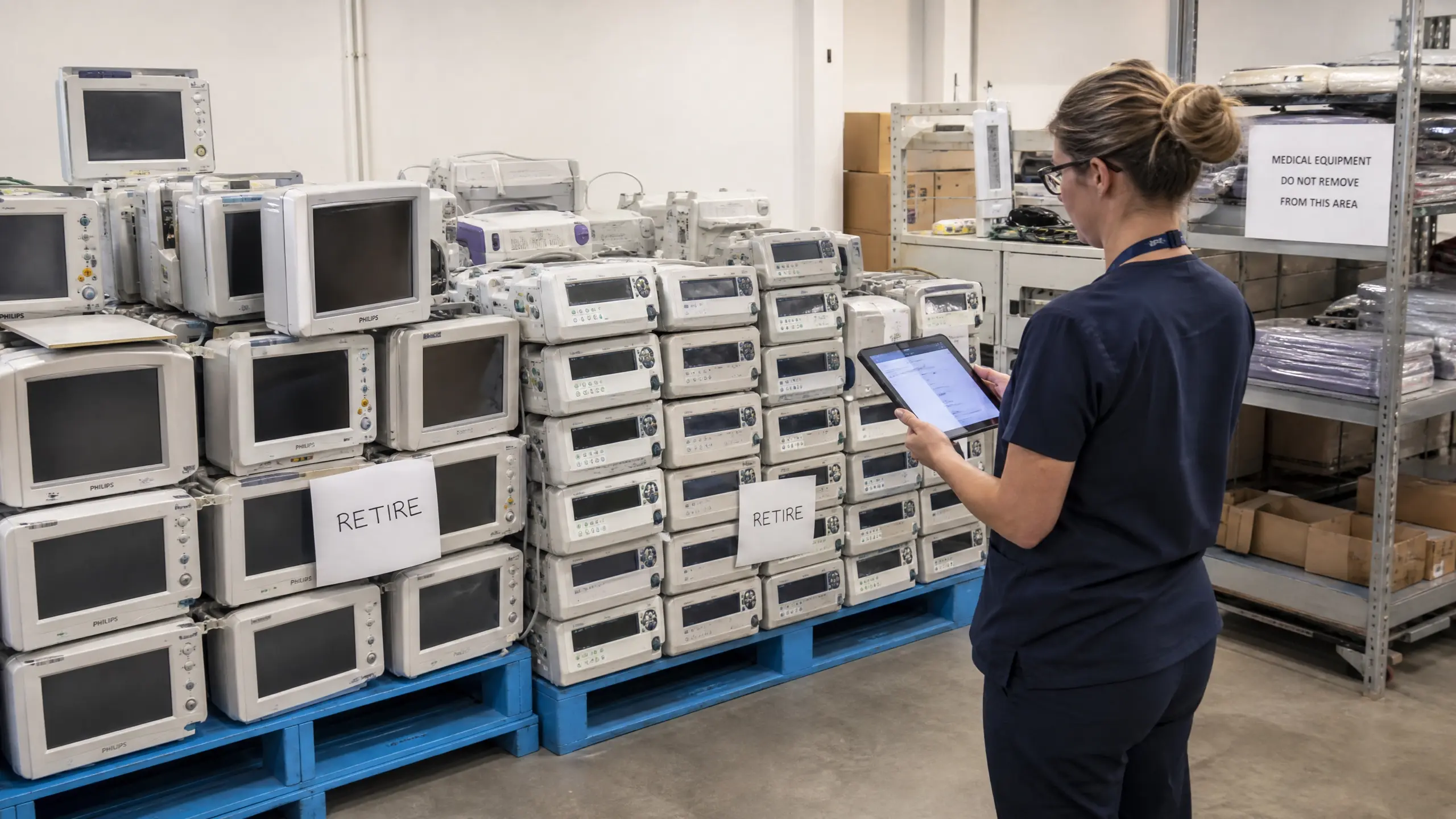
A pickup manifest is a record of the equipment collected from a site. It is one of the most useful documents for internal tracking because it shows what was removed and when. For many clinics and hospitals, the manifest becomes the bridge between internal asset retirement and external recycling or disposal processing.
In medical equipment disposal, the word “manifest” may be used differently depending on the provider and the type of waste stream. For equipment recycling, it may be a pickup docket, collection summary, job sheet, transport record or itemised collection report. The key is not the name. The key is that the document records the transfer clearly.
What a Good Pickup Manifest Should Include
- Pickup date and time.
- Collection address and department or site contact.
- Service provider or collection team details.
- Equipment category and quantity.
- Reference to asset list, job number or booking number.
- Notes on pallets, crates, loose items or large equipment.
- Sign-off by site representative and/or collection team.
- Special notes for data-bearing devices, batteries, hazardous concerns or deinstallation.
Manifest vs Certificate
A manifest usually confirms collection or transfer. A certificate usually confirms recycling, disposal, data destruction or processing outcome. Clinics and hospitals should avoid treating them as the same thing. Both can be valuable, but they answer different questions.
3. Safety Data Sheets: When SDS Records Matter
Safety Data Sheets, commonly called SDS, are important when equipment disposal involves hazardous chemicals, reagents, laboratory fluids, cleaning agents, disinfectants, solvents or chemical residues. Safe Work Australia states that if hazardous chemicals are supplied, used or stored, copies of the SDS must be kept in the workplace.
In the context of medical equipment disposal documentation, SDS records are especially relevant for laboratories, pathology providers, research facilities and clinical areas where equipment may have handled chemicals or reagents. The SDS helps staff and service providers understand hazards, handling requirements, storage considerations, spill response and exposure risks.
When to Check for SDS Before Equipment Disposal
- Laboratory analysers with reagent packs or internal fluid lines.
- Histology, pathology or chemistry equipment that used chemical solutions.
- Equipment that contains cleaning chemicals, disinfectants or solvents.
- Devices with unknown liquids or residues.
- Containers, reagent bottles or chemical packs stored with equipment.
- Any equipment where staff are unsure whether chemical residue remains.
What to Keep With SDS Records
Keep SDS copies or references for chemicals associated with the equipment, notes confirming whether chemicals were removed, and any internal sign-off that the equipment was cleared of reagents or hazardous residues before pickup. For a laboratory, this can be one of the most important parts of the disposal file.
If laboratory equipment still contains reagents, fluids or chemical residues, do not treat it as ordinary e-waste. Remove or manage chemicals through the correct internal hazardous waste process before arranging equipment recycling.
4. Decontamination and Preparation Records
Equipment that has been used in clinical or laboratory environments may need cleaning, preparation or decontamination before collection. The required process depends on the equipment type, site policy, infection-control procedures and whether the device has contacted patients, samples, body fluids, reagents or biological materials.
A decontamination record does not need to be overcomplicated, but it should show that the facility considered safety before releasing equipment. For a small clinic, this may be a checklist. For a hospital or laboratory, it may be part of an internal asset disposal form.
What a Preparation Record Should Include
- Equipment name and asset reference.
- Whether consumables, samples and loose waste were removed.
- Whether surfaces were cleaned according to internal procedures.
- Whether fluids or reagents were removed.
- Whether the equipment was labelled as prepared for pickup.
- Name or role of the person completing the check.
- Date of preparation.
- Notes for equipment that could not be fully cleaned or has unknown history.
5. Data Destruction Certificates and Media Sanitisation Records
Some of the most important medical equipment disposal documentation relates to data. Healthcare equipment may store patient information, diagnostic images, reports, logs, network settings, user profiles, research records or business data. This can include ultrasound systems, ECG machines, imaging workstations, laboratory analysers, medical computers, tablets, printers, servers and backup devices.
The Australian Cyber Security Centre provides media sanitisation guidance for reducing the risk of data remaining on storage media. For healthcare organisations, the practical point is clear: before data-bearing equipment leaves your control, decide whether data needs to be wiped, removed, destroyed, documented or handled through a chain-of-custody process.
Data Documentation to Keep
- List of data-bearing devices included in the pickup.
- Serial numbers, asset tags or storage media identifiers where available.
- Method used: wiping, media removal, shredding, crushing or other destruction method.
- Date and person/provider responsible for data destruction.
- Certificate of data destruction where provided.
- Chain-of-custody records for sensitive assets.
- Exception notes for devices that could not be accessed, powered on or assessed.

6. Recycling Certificates: What They Should Prove
A recycling certificate can support internal sustainability reporting and provide confidence that retired equipment was handled through a responsible recycling process. It may confirm that a provider collected or processed equipment, diverted materials from landfill, or handled electronic assets for recovery.
A certificate does not automatically tell the full story unless it is linked to the equipment list or job reference. For stronger medical equipment disposal documentation, keep the certificate together with the asset list, pickup manifest and any data or decontamination records.
Useful Details in a Recycling Certificate
- Provider name and contact details.
- Customer name, site or facility reference.
- Collection or processing date.
- Job number or manifest reference.
- Equipment category or material type.
- Weight, quantity or summary of collected equipment where available.
- Statement of recycling, recovery or processing outcome.
- Any limitations or exclusions.
Be Careful With Vague Certificates
A vague certificate that simply says “items recycled” may not be enough for internal audit purposes. Ask whether the certificate can reference the job number, pickup date, site and broad equipment category.
7. Disposal Certificates: When Recycling Is Not the Full Story
Some equipment or components may not be fully recyclable. For example, certain hazardous parts, contaminated materials, damaged batteries, chemical residues, refrigeration components or specialist waste items may need a different treatment or disposal pathway. In these cases, a disposal confirmation or disposal certificate may be more relevant than a recycling certificate.
Clinics and hospitals should understand what the certificate covers. Does it refer to the whole item, the electronic components, the data-bearing storage, the hazardous component, or a separate disposal stream? Clear wording matters.
Questions to Ask About Disposal Certificates
- What exact items or waste streams does the certificate cover?
- Does it include data-bearing devices or only physical equipment?
- Does it cover batteries, chemicals, refrigerants or hazardous components?
- Does it include the collection site and date?
- Does it link to a manifest, job number or asset list?
- Are exclusions clearly stated?
8. Chain-of-Custody Records
Chain-of-custody records document the movement of equipment from your site to the next stage of handling. This is especially useful for data-bearing devices, high-value assets, sensitive hospital equipment, multi-site pickups and equipment that requires secure processing.
A chain-of-custody record may include pickup sign-off, vehicle or driver details, transfer records, storage records, processing confirmation and certificate references. The level of detail depends on the sensitivity of the assets and the requirements of the organisation.
When Chain-of-Custody Is Most Important
- Devices containing patient or research data.
- Imaging systems, workstations, computers and servers.
- High-value or controlled assets.
- Hospital clear-outs or multi-department projects.
- Multi-site healthcare group collections.
- Any project requiring data destruction documentation.
Documentation by Facility Type
The right documentation pack depends on the facility. A small clinic may need a simpler set of documents than a hospital or laboratory, but every site should keep enough records to show that equipment was handled responsibly.
| Facility Type | Minimum Records to Keep | Extra Records to Consider |
|---|---|---|
| Private clinic | Asset list, photos, pickup confirmation, recycling certificate | Data destruction record for computers or diagnostic devices |
| Hospital department | Asset list, manifest, preparation notes, certificates | Chain-of-custody, deinstallation record, data destruction certificate |
| Pathology laboratory | Asset list, photos, SDS where relevant, cleaning notes, pickup record | Chemical clearance notes, hazardous waste references, processing certificate |
| Imaging centre | Asset list, photos, data review notes, pickup manifest | Media sanitisation certificate, deinstallation record, access plan |
| Aged care facility | Equipment list, photos, collection confirmation | Data review for computers, tablets, monitoring devices or printers |
What to Keep Before Pickup
The best time to create documentation is before pickup, not after. Before collection, your facility should already have a basic equipment list, photos, preparation notes and data risk notes. This allows the provider to quote, plan and collect more efficiently.
Pre-Pickup Documentation Checklist
- Equipment list with brand, model, quantity and condition.
- Photos of each equipment type and asset label where possible.
- Notes on access, stairs, lifts, loading dock and parking.
- Cleaning or decontamination notes where relevant.
- SDS references if chemicals, reagents or residues are involved.
- Data-bearing device list for computers, workstations, monitors, analysers or imaging systems.
- Notes on batteries, refrigerants, fluids, radiation concerns or hazardous parts.
- Internal approval or disposal authorisation where required.
What to Keep During Pickup
Pickup day is where equipment changes hands. The most important record at this stage is usually a manifest, collection docket or pickup confirmation. Staff should compare the items collected against the asset list and note any differences.
Pickup-Day Records
- Signed pickup manifest or collection confirmation.
- Job number or booking reference.
- Quantity of items or pallets collected.
- Site contact and collection team details.
- Notes on excluded items left behind.
- Notes on data-bearing devices requiring further processing.
- Photos of staged equipment or loaded pallets if useful.
What to Keep After Processing
After pickup, the final documentation may include recycling certificates, disposal confirmations, data destruction certificates, weight summaries or sustainability reports. The exact documents depend on the service requested and the equipment collected.
For strong medical equipment disposal documentation, match the final certificates back to the asset list and manifest. This creates a full chain from internal identification to collection and final outcome.
Post-Processing Records
- Certificate of recycling.
- Certificate of data destruction where applicable.
- Certificate or confirmation of disposal for non-recyclable components where relevant.
- Weight or material recovery summary where available.
- Chain-of-custody records for sensitive assets.
- Final invoice, service report or job completion record.

How Documentation Helps Clinics Get Recycling Approved Faster
Many healthcare teams delay equipment recycling because nobody knows what information is needed. A clear documentation pack removes uncertainty. It helps decision-makers understand that the pickup is controlled, the equipment has been identified, risks have been considered, and records will be kept.
This is where documentation becomes more than compliance. It becomes a sales and approval tool. If a clinic manager can show the owner that the equipment list is ready, photos are attached, data-bearing devices have been flagged and certificates can be requested, approval becomes easier.
Documentation That Helps Convert a Pickup Request
- Clear equipment list.
- Photos showing item type and condition.
- Access notes for pickup planning.
- Data risk notes for sensitive devices.
- Request for certificate or recycling confirmation.
- Preferred pickup timeframe.
Common Documentation Mistakes to Avoid
1. Keeping Only a Certificate
A certificate is useful, but it is stronger when supported by an asset list, manifest and preparation notes. Without those records, it may be hard to show exactly what the certificate relates to.
2. Forgetting Data-Bearing Devices
Computers, servers, printers, ultrasound systems and diagnostic workstations may need data destruction records. Do not assume that physical removal is enough.
3. Not Keeping SDS Where Chemicals Are Involved
Laboratory equipment linked to reagents, solvents or hazardous chemicals should trigger an SDS check. Keep SDS references and notes confirming whether chemicals were removed.
4. Mixing Clinical Waste Notes With Equipment Records
Clinical waste and equipment recycling are different streams. Keep notes clear so staff can show that sharps, contaminated consumables and biological materials were separated before equipment pickup.
5. Not Linking Certificates to Job Numbers
If a recycling certificate does not reference a site, job number, pickup date or equipment category, it may be less useful later. Ask for certificates that can be matched to your internal records.
External References for Documentation and Compliance
For broader Australian electronic equipment stewardship context, see Australian Government e-stewardship information and DCCEEW product stewardship information.
For SDS obligations and workplace chemical information, see Safe Work Australia safety data sheets guidance. For clinical waste separation context, see NSW Health clinical waste management and NSW EPA clinical and related waste. For data-bearing devices, see Australian Cyber Security Centre media sanitisation guidance.
Final Documentation Checklist
Use this checklist before booking medical or laboratory equipment collection:
- Asset list with device type, brand, model, serial number and quantity.
- Photos of equipment, labels, accessories and access areas.
- Preparation notes showing consumables, samples and clinical waste were removed.
- SDS records or references for chemicals, reagents or hazardous substances.
- Decontamination or cleaning confirmation where relevant.
- Data-bearing device list and data destruction plan.
- Pickup manifest, collection docket or job sheet.
- Certificate of recycling where provided.
- Certificate of data destruction where applicable.
- Chain-of-custody records for sensitive devices.
- Final report, invoice, sustainability summary or disposal confirmation.
Conclusion: Better Records Help You Recycle With Confidence
Medical equipment disposal documentation gives clinics, hospitals and laboratories confidence that old equipment has been handled properly. It turns a messy storage-room problem into a controlled asset retirement process. The right records help show what was collected, how it was prepared, whether data was addressed, whether SDS information was relevant, and what certificates or confirmations were issued after processing.
The best approach is to build a repeatable documentation pack: asset list, photos, preparation checklist, SDS where relevant, pickup manifest, recycling certificate, data destruction certificate and chain-of-custody records for sensitive devices. This supports compliance, protects your organisation and makes it easier to book responsible recycling.
If your facility is unsure what records are needed, start with the equipment list and photos. From there, E-Waste Collect can help identify which items may need SDS checks, data documentation, deinstallation planning, recycling certificates or additional handling.
Need a Documented Medical Equipment Pickup?
Send your equipment list, photos and location details. E-Waste Collect can help your clinic, hospital or laboratory plan responsible equipment recycling with clear pickup records and documentation options.
Book a Free PickupFrequently Asked Questions About Medical Equipment Disposal Documentation
1) What medical equipment disposal documentation should clinics keep?
Clinics should keep an asset list, photos, pickup confirmation, preparation notes, data destruction records where applicable, and a recycling or disposal certificate where provided.
2) What is a pickup manifest?
A pickup manifest is a collection record that shows what was removed from the site, when it was collected, where it came from and which provider handled the pickup. It may also be called a collection docket, job sheet or transport record.
3) Do we need SDS records for medical equipment recycling?
SDS records are relevant when hazardous chemicals, reagents, solvents, fluids or residues may be involved. This is common in laboratories and pathology environments, especially when analysers or chemical handling equipment are retired.
4) What is a certificate of recycling?
A certificate of recycling is a document confirming that equipment was collected or processed through a recycling pathway. It is most useful when it references the job number, site, date or equipment category.
5) What is a certificate of data destruction?
A certificate of data destruction confirms that data-bearing media was wiped, removed, shredded, crushed or otherwise destroyed according to the agreed process. It is important for computers, imaging systems, servers and diagnostic workstations.
6) Should hospitals keep chain-of-custody records?
Chain-of-custody records are useful for sensitive, high-value or data-bearing equipment. They help show how equipment moved from the facility through collection, storage, processing and final recycling or destruction.
7) How long should we keep disposal records?
Retention periods depend on your organisation’s internal policy, audit requirements, privacy procedures and regulatory obligations. Many facilities keep records with asset management, procurement or compliance files.
8) Do small clinics need the same documentation as hospitals?
Small clinics usually need a simpler documentation pack, but the principles are the same: identify the equipment, prepare it safely, protect data, keep pickup records and request certificates where useful.
9) What records help with sustainability reporting?
Recycling certificates, weight summaries, material recovery notes and landfill diversion information can support sustainability reporting, ESG records and internal environmental performance reviews.
10) How do we start a documented pickup request?
Start with a simple equipment list, clear photos, location details, access notes, data concerns and any SDS or hazardous material information. This gives the recycling provider enough information to plan the collection and documentation.
Tip: For multi-site healthcare groups, use one spreadsheet with columns for site, suburb, contact, equipment type, quantity, condition, data risk, SDS relevance and photos.