Medical Equipment Recycling in Australia: The Definitive Guide (2026)
This guide is written to support medical equipment recycling in Australia for hospitals, pathology laboratories, and private clinics focusing on equipment, systems, and high-value assets (not household rubbish and not general bin waste).
Introduction: The Urgent Need for Sustainable Healthcare Solutions
In the rapidly evolving landscape of Australian healthcare, the life cycle of medical technology has reached a critical juncture. As hospitals, pathology laboratories, and private clinics across Australia upgrade their diagnostic and therapeutic capabilities to include the latest AI-driven imaging and precision laboratory instruments, the volume of decommissioned equipment continues to surge. This phenomenon, often categorized under the broader umbrella of electronic waste (e-waste), presents unique challenges that distinguish it from residential or general commercial recycling. The sheer complexity of medical devices ranging from heavy duty MRI scanners and CT machines to sensitive patient monitors and automated laboratory analyzers requires a specialized approach that balances environmental responsibility with stringent operational controls, documentation discipline, and data security.
The Australian healthcare sector is estimated to contribute significantly to the nation's carbon footprint, with a substantial portion of this impact derived from the procurement and disposal of high-value assets. Traditionally, many healthcare facilities viewed end-of-life equipment as a liability, often leading to improper storage in valuable clinical space or, worse, disposal in landfills where hazardous components like lead, mercury, and lithium-ion batteries pose long-term environmental risks. However, the shift toward a circular economy in 2026 has redefined medical equipment recycling in Australia as an essential component of clinical asset management.
At E-Waste Collect, we recognize that the transition to sustainable practices must be seamless and secure. Specializing in the collection and recycling of medical, pathology, and laboratory equipment, our mission is to provide Australian healthcare providers with a professional, compliant, and often free alternative to traditional disposal methods. This guide serves as a comprehensive resource for healthcare administrators, facility managers, and clinical engineers, outlining the operational, practical, and environmental of responsible medical equipment recycling in Australia.
Definition + What Counts as Medical E-waste
Understanding the distinction between general e-waste and medical electronic waste is fundamental to establishing a controlled recycling program. In the Australian context, medical e-waste refers to any end-of-life electrical or electronic equipment (EEE) that was primarily designed for use in a clinical, diagnostic, or laboratory environment. Unlike clinical waste which consists of biohazardous materials, sharps, and single use consumables medical e-waste focuses on the durable hardware and infrastructure that powers modern medicine.
The Scope of Medical Electronic Equipment (MEE)
Generally, any device that requires a power source whether via a mains connection or internal batteries and contains integrated circuitry is considered a candidate for electronic recycling. This includes a vast array of technologies used across various medical specialties, where the end-of-life workflow must consider not only materials recovery but also safe handling and traceable processing.
| Category | Examples of Medical E-waste | Key Components for Recovery |
|---|---|---|
| Diagnostic Imaging | MRI suites, CT scanners, X-ray machines, Ultrasound units | Copper, high-grade steel, lead glass, precious metals |
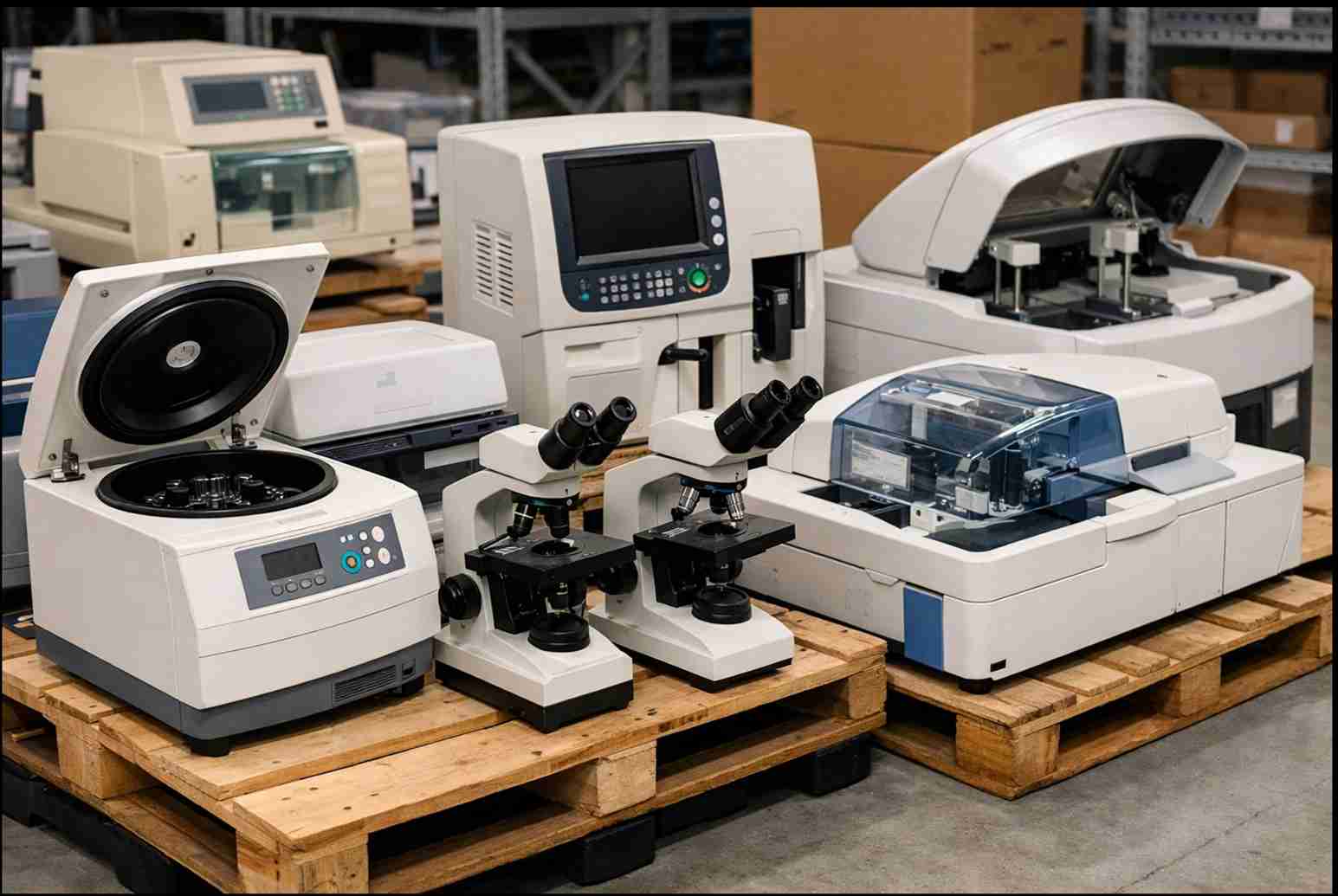
| Laboratory & Pathology | Automated analyzers, centrifuges, microscopes, incubators | Circuit boards, stainless steel, optical components |
| Patient Monitoring | ECG/EKG machines, pulse oximeters, fetal monitors | Plastic housings, lithium batteries, LCD screens |
| Therapeutic Devices | Infusion pumps, ventilators, dialysis machines, electric beds | Motors, sensors, power supplies, rechargeable batteries |
| IT & Infrastructure | Medical-grade servers, workstations, tablets, networking gear | Data storage (HDDs/SSDs), processors, RAM |
Why Medical E-waste Requires Specialized Handling
The reason medical e-waste cannot be treated like standard office electronics lies in its composition and the environment in which it operates. Many medical devices are constructed with specialized alloys and high performance plastics designed to withstand rigorous sterilization and heavy clinical use. Furthermore, these devices often contain hazardous materials that require expert extraction to prevent environmental contamination.
For instance, older imaging equipment may contain lead-lined components or cooling systems with specialized refrigerants. Laboratory analyzers often have residual reagents or internal plumbing that must be cleared before the physical recycling process can begin. By defining medical e-waste as a distinct category, Australian healthcare facilities can ensure that these assets are handled by specialists who understand both the value of the materials being recovered and the risks associated with their end-of-life processing an essential mindset for medical equipment recycling in Australia.
As we move through 2026, the emphasis has shifted from mere "disposal" to "resource recovery," where the goal is to achieve near-zero landfill rates for medical technology. This requires a sophisticated breakdown of components, where plastics are pelletized, metals are smelted, and rare earth elements are reclaimed for use in new manufacturing cycles.
By partnering with a dedicated service like E-Waste Collect, healthcare providers ensure that their decommissioned assets are not just "thrown away" but are systematically dismantled using structured collection, storage, transport, and treatment practices aligned with industry expectations for end-of-life electrical and electronic equipment. This professional approach transforms a potential waste stream into a sustainable resource cycle, reflecting the high standards of the Australian medical community and strengthening trust in medical equipment recycling in Australia.
Operational Notes: Practical Decommissioning Without Guesswork
In day-to-day operations, what matters most is repeatability: a facility should be able to retire equipment using the same internal workflow every time. That usually means creating a simple retirement pack that includes an asset list (model/serial/location), a prep checklist for cleaning and safe handling, a plan for data-bearing devices, and a clear pickup reference. When those elements are consistent, multi-site organisations can scale medical equipment recycling in Australia without confusion between departments or locations.
It also helps to separate equipment retirement into two streams: standard items that can be palletised and collected in bulk, and complex items that require project coordination (such as imaging suites, heavy installations, or equipment located in tight access areas). This separation reduces downtime, avoids surprises on pickup day, and preserves safety and traceability from the moment an item is staged for collection.
What Can/Can’t be Recycled (Devices List)
Navigating the complexities of medical equipment recycling in Australia requires a clear understanding of which devices are suitable for electronic recycling and which must be handled through alternative waste streams. In the Australian healthcare sector, the distinction is primarily based on whether a device is a durable electronic asset or a consumable medical product. While many modern medical devices are designed for long term use, their end-of-life processing is governed by both environmental standards and clinical safety protocols.
The Comprehensive List of Recyclable Medical Devices
At E-Waste Collect, we focus on the recovery and recycling of durable electronic medical equipment. This category encompasses a wide range of diagnostic, therapeutic, and laboratory technologies that contain valuable materials like high-grade steel, copper, aluminum, and precious metals within their integrated circuits. A strong device list also helps facilities plan storage, decontamination, and data handling ahead of pickup, which improves outcomes for medical equipment recycling in Australia.

| Specialty | Recyclable Medical Equipment | Key Electronic Components |
|---|---|---|
| Diagnostic Imaging | MRI machines, CT scanners, X-ray units, Ultrasound machines, Mammography systems | Power supplies, cooling systems, high-voltage cables, detectors |
| Laboratory & Pathology | Blood gas analyzers, centrifuges, microscopes, incubators, spectrophotometers | Circuit boards, motors, optical sensors, stainless steel |
| Patient Monitoring | ECG/EKG monitors, pulse oximeters, fetal monitors, telemetry units | LCD screens, internal batteries, signal processors |
| Therapeutic Devices | Ventilators, infusion pumps, dialysis machines, defibrillators | Pumps, sensors, lithium-ion batteries, control units |
| Hospital Infrastructure | Electric hospital beds, surgical tables, ceiling-mounted lights | Actuators, motors, wiring, heavy-duty metal frames |
| IT & Clinical Support | Medical-grade workstations, servers, tablets, networking hardware | Hard drives (SSDs/HDDs), CPUs, RAM, power units |
The recycling process for these devices involves systematic dismantling, where each component is sorted by material type. For example, the high-grade stainless steel from surgical tables and the copper from MRI cabling are sent to specialized smelting facilities for reuse in new manufacturing. The integrated circuits are processed to recover gold, silver, and palladium, while the plastics are pelletized for secondary use in industrial applications.
Items That Cannot Be Recycled Through E-waste Channels
It is equally important to identify items that are not suitable for electronic recycling. These items typically fall under the categories of clinical waste, biohazardous materials, or radioactive waste, which require specialized disposal through certified medical waste contractors. Keeping these streams separate is one of the most practical risk controls in medical equipment recycling in Australia.
| Category | Non-Recyclable Items | Alternative Disposal Method |
|---|---|---|
| Biohazardous Waste | Used bandages, gloves, gowns, contaminated tubing | Clinical waste bins (Yellow bins) |
| Sharps | Needles, scalpels, lancets, glass slides | Sharps containers |
| Chemical Waste | Liquid reagents, laboratory solvents, disinfectants | Hazardous chemical waste disposal |
| Radioactive Sources | Brachytherapy seeds, specialized imaging isotopes | Radioactive waste management |
| Single-Use Consumables | Disposable sensors, tubing, masks, syringes | General or clinical waste depending on contamination |
If a device contains a radioactive source (common in some older oncology or specialized imaging equipment), it must be decommissioned by a licensed radiological service before the electronic components can be recycled. Similarly, any device that has been in contact with infectious materials must undergo rigorous decontamination before it can be accepted for recycling.
Decontamination / Infection-Control Prep Checklist
In a clinical environment, the safety of the recycling process begins long before the equipment leaves the facility. Decontamination is the critical first step in the chain of custody for any medical device being retired. The practical goal is straightforward: treat every used device as potentially contaminated until internal infection control processes confirm it is safe for handling and transport an important part of safe medical equipment recycling in Australia.
Why Decontamination is Non-Negotiable
Every medical device that has been used in a clinical or laboratory setting must be treated as potentially contaminated until proven otherwise. This is essential not only for the safety of the recycling personnel who will handle the equipment but also to prevent the cross-contamination of recycling facilities.
Step-by-Step Decontamination Checklist
Before scheduling a pickup with E-Waste Collect, facility managers and clinical engineers should follow this standardized checklist to ensure alignment with infection control guidance and safe handling practices:
- Initial Cleaning: Remove all visible soil, dust, and organic matter from the exterior and accessible interior surfaces of the device. Use a hospital-grade detergent or specialized cleaning agent as recommended by the manufacturer.
- Disinfection: Apply an appropriate disinfectant (chemical or thermal) to all surfaces. For electronic equipment, ensure that the disinfectant is compatible with the materials to avoid damaging internal components, although the primary goal is safety for handling.
- Fluid Removal: Drain all internal fluids, including reagents, cooling oils, or lubricants. Ensure that any residual liquids are disposed of according to the facility’s hazardous waste protocols.
- Battery Isolation: If possible, remove internal batteries, especially if they are leaking or damaged. Lithium-ion batteries should be isolated and handled with care to prevent fire risks during transport.
- Reagent & Consumable Removal: EMake sure that all disposable sensors, reagent packs, and sample tubes are taken out of the apparatus and placed in the proper clinical waste stream.
- Final Inspection: A qualified staff member (e.g., an infection control officer or clinical engineer) must inspect the device to confirm it meets the decontamination standards.
- Certification: Complete and sign a Decontamination Certificate. This document should include the device's serial number, the method of decontamination used, and the date of the procedure.
- Labeling: Attach a "Decontaminated & Safe for Transport" label to the exterior of the device. This provides clear visual confirmation for the pickup team and the recycling facility.
Managing Complex Equipment De-installation
For larger systems like MRI suites or CT scanners, the decontamination and de-installation process may require specialized expertise. In these cases, E-Waste Collect can coordinate with your facility's engineering team to ensure that the removal process is conducted safely, minimizing disruption to ongoing clinical operations. By following these rigorous prep steps, Australian healthcare providers can ensure that their commitment to sustainability is matched by their commitment to safety and infection control an outcome that strengthens medical equipment recycling in Australia programs over time.

The Role of Clinical Asset Management in Sustainability
In 2026, the role of the clinical engineer and facility manager has evolved to include a strong focus on sustainability. Clinical asset management is no longer just about maintaining equipment in working order; it is about managing the entire life cycle of the asset, from procurement to disposal. This "cradle-to-grave" approach is essential for fulfilling the Australian healthcare industry's sustainability objectives.
A key component of this approach is the development of a Clinical Asset Retirement Plan (CARP). This plan outlines the criteria for decommissioning equipment, the steps for decontamination and data destruction, and the selection of a certified recycling partner. By integrating recycling into the asset management process, healthcare facilities can:
- Optimize Clinical Space: Removing obsolete or non-functional equipment frees up valuable space for new technology and patient care.
- Reduce Maintenance Costs: Decommissioning older equipment that is no longer cost-effective to maintain can lead to significant savings.
- Enhance Environmental Performance: Demonstrating a high level of resource recovery and landfill diversion can improve the facility's overall environmental rating.
- Improve Data Security: Ensuring that all data-bearing assets are handled through a certified destruction process minimizes the risk of a data breach.
By viewing medical equipment recycling in Australia as a strategic component of clinical asset management, Australian healthcare providers can achieve a balance between operational efficiency, patient safety, and environmental responsibility.
Secure Data Destruction (Wiping/Shredding) + Chain-of-Custody
In the modern healthcare environment, a medical device is more than just a piece of physical hardware; it is a repository of sensitive patient information. From the diagnostic data stored on an MRI workstation to the patient records on a bedside monitor, medical devices are inherently data-bearing assets. In Australia, the protection of this information is not just a matter of clinical ethics:it is a legal requirement under the Privacy Act 1988. When a device is decommissioned for recycling, the risk of a data breach is at its highest, making secure data destruction a cornerstone of medical equipment recycling in Australia.
Why Secure Data Destruction is Mandatory
Patient privacy is paramount in the Australian healthcare system. A data breach involving medical records can lead to significant legal liabilities, reputational damage, and, most importantly, a compromise of patient confidentiality. Therefore, every device with internal storage (Hard Disk Drives (HDDs), Solid State Drives (SSDs), or embedded flash memory) must undergo a certified data destruction process. This ensures that no residual data remains on the device before it is dismantled for material recovery.
Data Destruction Methods: Wiping vs. Shredding
At E-Waste Collect, we employ two primary methods for secure data destruction, each tailored to the specific needs of the device and the facility's security protocols.
| Method | Description | Standards Compliance |
|---|---|---|
| Software Wiping | A specialized software overwrites every sector of the drive with random data, making the original information unrecoverable. This is ideal for devices that may be suitable for refurbishment or reuse. | NIST 800-88, DoD 5220.22-M |
| Physical Shredding | The storage media is physically crushed or shredded into small particles, ensuring that the data is destroyed beyond any possibility of recovery. This is the gold standard for high-security medical data. | AS/NZS 5377, ISO 27001 |
The Importance of Chain-of-Custody
The security of your data is only as strong as the process used to manage it. A robust "Chain-of-Custody" is essential to ensure that every device is tracked from the moment it leaves the healthcare facility until it is fully processed. This process involves several critical stages:
- Secure Collection: Equipment is collected by a professional team and loaded into secure, GPS-tracked vehicles.
- Asset Tagging: Each device is assigned a unique asset tag and scanned into a secure inventory management system.
- Secure Storage: Devices are stored in a monitored, access-controlled facility prior to processing.
- Certified Destruction: The data destruction process is performed by trained technicians, with each step documented for the audit trail.
- Documented Handover: Every stage of the process is recorded, providing a clear and transparent history of the asset’s journey.
By maintaining a rigorous chain-of-custody, E-Waste Collect ensures that your facility remains in full compliance with Australian privacy laws, providing peace of mind that patient data is handled with the highest level of security one of medical equipment recycling in Australia.

Certificates: Recycling + Data Destruction + Audit Trail
In the regulated environment of Australian healthcare, documentation is just as important as the physical recycling process itself. For hospitals and laboratories, having proof of compliant disposal is essential for regulatory audits, ISO 14001 environmental certification, and hospital accreditation. At E-Waste Collect, we provide a comprehensive suite of certificates that serve as a legal and professional record of your facility’s commitment to sustainability and data security supporting confident medical equipment recycling in Australia.
The Certificate of Recycling (COR)
The Certificate of Recycling is a formal document that provides a detailed account of the materials recovered from your decommissioned equipment. This certificate is a key component of your facility’s environmental reporting, demonstrating a tangible commitment to landfill diversion and resource recovery.
| Information Included in a COR | Benefit to the Healthcare Facility |
|---|---|
| Total Weight Collected | Quantifies the volume of waste diverted from landfill. |
| Material Breakdown | Details the amount of steel, copper, plastic, and glass recovered. |
| Environmental Impact | Calculates the carbon footprint reduction achieved through recycling. |
| Landfill Diversion Rate | Provides a percentage of the total weight that was successfully recycled. |
The Certificate of Data Destruction (CODD)
For every device that contains a data storage component, a Certificate of Data Destruction is issued. This document is your legal proof that the data has been destroyed in accordance with Australian privacy standards.
| Information Included in a CODD | Legal and Regulatory Importance |
|---|---|
| Device Serial Number | Provides a unique identifier for the specific asset destroyed. |
| Method of Destruction | Specifies whether the drive was wiped or physically shredded. |
| Date and Time of Destruction | Establishes a clear timeline for the destruction process. |
| Technician Signature | Provides accountability for the destruction procedure. |
Building a Transparent Audit Trail
Together, these certificates form a complete Audit Trail that tracks the entire life cycle of your decommissioned assets. This level of transparency is essential for several reasons:
- Regulatory Compliance: Provides proof of compliance with the Privacy Act 1988 and AS/NZS 5377 standards.
- ISO 14001 Certification: Supports the documentation required for international environmental management standards.
- Hospital Accreditation: Demonstrates a high standard of clinical asset management during accreditation reviews.
- Corporate Social Responsibility (CSR): Provides data for annual sustainability reports, highlighting your facility’s contribution to a greener healthcare sector.
By providing these detailed certificates, E-Waste Collect ensures that your facility’s recycling program is not only environmentally responsible but also fully transparent and audit-ready. This professional approach to documentation is what sets our service apart, providing the high level of accountability that the Australian medical community demands and supporting medical equipment recycling in Australia at scale.
Pricing Factors (Pickup, Weight, Hazardous, Imaging, Data)
In the Australian healthcare sector, the economics of medical equipment recycling in Australia are influenced by several key factors. While E-Waste Collect offers a professional and often free pickup service for many types of medical, pathology, and laboratory equipment, it is important to understand the variables that determine the cost and complexity of the recycling process. By identifying these factors early in the decommissioning phase, facility managers and clinical engineers can better plan their asset retirement strategies.
Logistics and Pickup Considerations
The logistics of collecting medical equipment from a hospital or laboratory environment are more complex than standard commercial pickups. Several factors can influence the logistical requirements:
- Location and Accessibility: Pickups from metropolitan areas like Sydney, Melbourne, or Brisbane are generally more straightforward. However, collections from regional or remote healthcare facilities may require additional travel and transport coordination.
- Facility Access: The physical environment of the facility is a major consideration. Factors such as the availability of loading docks, freight elevators, or the need for specialized lifting equipment (e.g., for heavy MRI components) can impact the time and resources required for the pickup.
- Stairs and Tight Spaces: If equipment is located on upper floors without elevator access or in confined laboratory spaces, additional labor and specialized handling equipment may be necessary.
Weight and Volume of Equipment
The total weight and volume of the equipment being recycled are primary drivers of the recycling process. While larger volumes of equipment can often be collected more efficiently, the weight of the materials recovered is a key metric for calculating the environmental impact and the value of the materials recovered.
| Weight and Volume Factor | Impact on Recycling Process |
|---|---|
| Bulk Collection | Consolidating multiple devices for a single pickup can improve efficiency and reduce the overall carbon footprint of transport. |
| Heavy-Duty Equipment | Large assets like electric hospital beds, surgical tables, and imaging units require specialized transport vehicles and handling equipment. |
| Material Recovery Value | The weight of high-value metals like copper and stainless steel recovered from the equipment can help offset the costs of the recycling process. |
Hazardous Materials Handling
Many medical devices contain hazardous components that require specialized extraction and disposal. The presence of these materials is a significant factor in the complexity of the recycling process:
- Lead and Heavy Metals: Older imaging equipment and CRT monitors contain lead glass and other heavy metals that must be processed in specialized facilities to prevent environmental contamination.
- Lithium-Ion Batteries: These batteries are common in portable medical devices and must be carefully isolated and recycled to prevent fire risks.
- Refrigerants and Cooling Systems: Devices like laboratory freezers or MRI cooling systems may contain specialized refrigerants that must be recovered by licensed technicians in accordance with Australian environmental regulations.
Complexity of Imaging Equipment De-installation
The de-installation and removal of large-scale imaging systems like MRI suites or CT scanners is a highly specialized task. These projects often require:
- Clinical Engineering Coordination: Working closely with the facility’s engineering team to ensure that the equipment is safely disconnected from power and cooling systems.
- Specialized Rigging and Transport: Using heavy-duty rigging equipment to move large, sensitive components through the facility and onto specialized transport vehicles.
- Site Remediation: Ensuring that the clinical space is left in a safe and clean condition after the equipment has been removed.
Specialized Data Destruction Requirements
While standard data destruction is included in our professional service, some facilities may have specialized requirements for high-security data:
- On-Site Shredding: For the most sensitive patient data, some healthcare providers may require on-site physical shredding of hard drives before they leave the facility.
- Enhanced Reporting: Detailed reporting on the destruction of individual storage media, including photographic evidence or video recording of the destruction process.
At E-Waste Collect, we work closely with each healthcare facility to understand their specific needs and provide a tailored recycling solution. Our goal is to make the process as transparent and cost-effective as possible, ensuring that the environmental and security benefits of recycling are accessible to all Australian healthcare providers and strengthening medical equipment recycling in Australia programs across states, cities, and regional areas.
The Future of the Circular Economy in Australian Healthcare
The transition to a circular economy is a long-term journey that requires the collaboration of all stakeholders in the healthcare sector.Looking ahead, a number of developments are influencing how medical equipment is made, utilized, and recycled:
- Design for Recyclability: Manufacturers are increasingly focusing on designing medical devices that are easier to dismantle and recycle at the end of their life. This includes using more recyclable materials and reducing the use of hazardous components.
- Modular Technology: The move toward modular medical technology allows for the easy upgrade of individual components, extending the overall life of the asset and reducing the volume of waste generated.
- Advanced Material Recovery: New technologies in the recycling sector are allowing for the recovery of a wider range of materials, including rare earth elements and specialized alloys used in high-performance medical devices.
- Digital Asset Tracking: The use of digital twins and blockchain technology is improving the traceability of medical assets throughout their life cycle, providing a more transparent and secure audit trail for recycling.
At E-Waste Collect, we are committed to staying at the forefront of these developments, ensuring that our recycling processes continue to meet the highest standards of the Australian medical community. By embracing the principles of the circular economy, we can create a more resilient and sustainable healthcare system for all Australians through medical equipment recycling in Australia.
Conclusion: Shaping a Sustainable Future for Australian Healthcare
As we move through 2026, the commitment of the Australian medical community to environmental sustainability has never been stronger. The shift to a circular economy from a linear "take-make-dispose" model is not just necessary for the environment; it is a professional standard that reflects the values of modern healthcare. By embracing the principles of medical equipment recycling, hospitals, laboratories, and clinics are not only reducing their environmental footprint but also ensuring the highest levels of data security and operational discipline.
The journey toward a sustainable healthcare sector is a collaborative effort. At E-Waste Collect, we are proud to be a partner in this mission, providing the expertise and infrastructure needed to transform end-of-life clinical assets into valuable resources. From the initial decontamination to the final certificate of recycling, our professional service is designed to be seamless, secure, and environmentally responsible.
By choosing to recycle your medical, pathology, and laboratory equipment, you are contributing to a greener future for Australia. Together, we can ensure that the technology that saves lives today does not compromise the environment of tomorrow. We invite all Australian healthcare providers to join us in this mission and experience the benefits of a professional, compliant, and sustainable approach to medical equipment recycling in Australia.
Ready to Recycle?
Contact E-Waste Collect today to book a free pickup or to learn more about our specialized recycling services for the Australian healthcare sector.Together, let's assure the safe disposal of your clinical assets and have a positive environmental impact.
For bookings and service details, visit our main page below.
Go to EwasteCollect.comFrequently Asked Questions (FAQ) : Medical Equipment Recycling in Australia
1) What counts as medical equipment recycling in Australia?
Medical equipment recycling in Australia usually refers to end-of-life electrical or electronic equipment used in hospitals, clinics, pathology labs, and research labs:such as monitors, analyzers, centrifuges, imaging components, and medical IT hardware. It is different from clinical waste (sharps, contaminated consumables, and biohazard bins).
2) What medical devices can be recycled, and what can’t?
Most durable electronic assets can be recycled (e.g., patient monitors, pumps, lab instruments, workstations, many imaging components). Items like sharps, contaminated consumables, liquid reagents/chemicals, and radioactive sources need separate specialist handling and should not be mixed into e-waste streams.
3) Do you recycle hospital and laboratory equipment Australia-wide?
Yes:Australia-wide programs are commonly handled via planned metro pickups and scheduled regional collections. The simplest way to confirm timing is to share your suburb/state, a basic device list, and approximate quantity so pickup logistics can be planned efficiently.
4) Does medical equipment need decontamination before pickup?
If equipment has been used in clinical or laboratory environments, it should be treated as potentially contaminated until your internal infection-control process confirms it is safe to handle. Many facilities clean, disinfect, remove consumables, drain fluids (if applicable), and label the device as prepared for transport before collection.
5) How do you handle devices that may store patient or research data?
Data-bearing devices (or devices that may contain storage media) should follow a clear data-destruction plan:typically secure wiping, physical destruction (shredding), or removal of storage components before the device is processed. A chain-of-custody approach helps keep asset movement traceable from pickup to processing.
6) What is “chain-of-custody” for medical e-waste?
Chain-of-custody is the documented tracking of equipment from the moment it leaves your site through transport, storage (if needed), data handling (if required), and final recycling. It helps clinics, labs, and hospitals maintain traceability for audits and internal governance.
7) Do you provide certificates for recycling and data destruction?
Many healthcare teams request documentation such as a recycling certificate (confirming responsible processing) and:when relevant:data-destruction documentation for storage media. Certificate types and detail level can depend on the equipment category and what your facility needs for reporting or audits.
8) Is medical equipment recycling free in Australia?
In many cases, collection and recycling can be free or low-cost for eligible equipment:especially when devices can be consolidated and handled through standard processing streams. Complex removals (e.g., large imaging deinstallation) or remote logistics may require a project-based plan.
9) What affects pricing: pickup, weight, hazardous parts, imaging, data?
Common cost drivers include access and logistics (metro vs regional), total weight/volume, whether hazardous components need special handling (batteries, refrigerants), whether it’s a deinstallation project (imaging suites), and whether itemised reporting or data destruction is required.
10) How should we prepare equipment for a smoother pickup?
A simple checklist: create an asset list (model/serial if available), remove consumables, clean/disinfect surfaces per internal SOPs, drain fluids if applicable, secure moving parts, and stage items in an accessible pickup area (loading dock or agreed location). Consolidating devices on pallets can also reduce handling time.
11) Can you collect large assets like imaging equipment or hospital clear-outs?
Yes. Large projects (hospital clear-outs, deinstallation work, imaging suites) usually require planning for access, lifting/rigging, disconnection steps, and timelines. Sharing photos and a device list helps create a safe removal plan with minimal disruption to clinical operations.
12) How do we book a pickup for medical equipment recycling in Australia?
The fastest way is to send your location, equipment types, quantities, and whether any devices may store data. That allows the pickup plan, packaging guidance, and documentation needs to be confirmed quickly.
Tip: For multi-site groups, include a simple spreadsheet of sites and quantities to coordinate a single Australia-wide collection plan.For healthcare data-bearing devices, many organisations align internal media sanitisation with guidance such as NIST SP 800-88 Revision 1 (Media Sanitization).
For broader national policy direction and recycling frameworks in Australia, see Australia’s Product Stewardship information (DCCEEW).